Loading...
Analysis will be generated on first visit.
Scores and timeline are available below. The page will refresh automatically when ready.
Chang Yuchun vs Qin Shi Huang
Qin Shi Huang leads by 25.7 pts · 2 figures compared
…

Chang Yuchun
General · Medieval
57.8Total
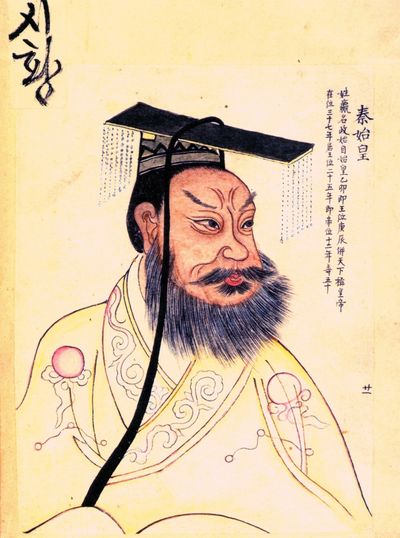
Qin Shi Huang
Emperor · Ancient
83.5Total
Basic Information
Born
1330
-259
Died
1369
-210
Era
Medieval
Ancient
Nationality
China
China
Occupation
General
Emperor
Civilization
Eastern
Eastern
Score Comparison
Military (10%)
86.4
80.0
Political (20%)
35.4
88.0
Influence (20%)
70.5
82.0
Legacy (20%)
65.6
85.0
Leadership (15%)
33.3
88.0
Strategy (15%)
65.5
75.0
TOTAL
57.8
83.5
Rankings
🥇
Qin Shi HuangLeader
Mil: 80.0Pol: 88.0Inf: 82.0
83.5
🥈
Chang Yuchun
Mil: 86.4Pol: 35.4Inf: 70.5
57.8
+25.7 behind
How This Comparison Works
Algorithm
Each figure is scored on 6 dimensions (0—100 scale) based on structured historical data: Military (10%), Political (20%), Influence (20%), Legacy (20%), Leadership (15%), Strategy (15%). The weighted total produces the final ranking.
Data Sources
Scores are computed from structured sub-indicators in the database. Scale factors adjust for era (Ancient ×0.85, Modern ×1.0) and civilization size (Eastern ×1.05, Other ×0.80) to account for differences in population and military scale.
Maximum 3 Figures
Comparisons are limited to 2—3 figures to ensure readability and statistical meaningfulness.
Error Margins
±5 points per dimension — Sub-scores are derived from historical records with inherent uncertainty. Two figures within 5 points on a dimension should be considered roughly equivalent in that area.
Total Score Accuracy
±3 points overall — The weighted combination of 6 dimensions produces a total score with approximately ±3 points of uncertainty. Differences of less than 3 points are not statistically significant— the figures are effectively tied.
Known Limitations
- Historical records are incomplete and uneven across civilizations
- Figures from oral-tradition societies may be underrepresented
- Occupation labels can misclassify multi-role figures
- Scores measure capability and impact, not moral character
- Quantitative scoring is a comparison tool, not absolute truth
Capability Radar
Military (10%) — Battles & Warfare
Battles
85
85
Win Rate
95
90
Expansion
80
90
Political (20%) — Governance & Reform
Reform
10
95
Diplomacy
15
75
Economy
10
90
Influence (20%) — Cultural & Global Reach
Cultural
40
95
Global
40
85
Legacy (20%) — Historical Impact
Historical
60
95
Longevity
50
95
Leadership (15%) — Power & Stability
Tenure
20
70
Stability
15
65
Strategy (15%) — Tactics & Innovation
Strategy
85
85
Tactics
90
80
Reform
30
95
Analysis will be generated on first visit.
Scores and timeline are available below. The page will refresh automatically when ready.
Chang Yuchun — Complete Timeline
1363 AD
Battle of Lake PoyangWar◆ Major
Chang Yuchun served as a key commander under Zhu Yuanzhang in the naval battle against Chen Youliang. The Ming victory at Lake Poyang eliminated a major rival and paved the way for the establishment of the Ming dynasty.
Naval BattleMing FoundingCivil War
Impact: regionalconstructive
1368 AD
Capture of Dadu (Beijing)War◆ Major
Chang Yuchun was the vanguard commander in the Ming army that captured Dadu. He led the assault that forced the Mongol emperor to flee, ending Yuan rule in China. He was later tasked with pursuing the Mongols into the steppe.
Ming ConquestYuan DynastyCapital Capture
Impact: regionalconstructive
1369 AD
Death on campaign against the MongolsWar◆ Major
Chang Yuchun died suddenly while returning from a successful campaign against the Mongols in Inner Mongolia. The cause was reported as illness, possibly plague. His death at age 39 cut short a brilliant military career.
DeathMilitary CampaignMing Dynasty
Impact: nationaltragic
Posthumous title of Prince of KaipingPolitical Action
The Hongwu Emperor posthumously honored Chang Yuchun as Prince of Kaiping, the highest military honor. His family was granted hereditary privileges, and he was enshrined in the Imperial Ancestral Temple.
Posthumous HonorImperial FavorMilitary Legacy
Impact: nationalconstructive
Qin Shi Huang — Complete Timeline
246 BC
Construction of the Mausoleum and Terracotta ArmyOther◆ Major
Qin Shi Huang commissioned a vast mausoleum complex near Xi'an, guarded by thousands of life-sized terracotta soldiers, horses, and chariots. The project employed hundreds of thousands of workers and reflected his obsession with immortality and imperial power.
Impact: global
230 BC
Conquest of the Six Warring StatesWar
From 230 to 221 BCE, Ying Zheng led the Qin state in a series of campaigns that conquered the Han, Zhao, Wei, Chu, Yan, and Qi states. This unified China under a single ruler for the first time, ending the Warring States period.
Impact: global
221 BC
Standardization of Writing, Currency, and MeasurementsReform◆ Major
Qin Shi Huang ordered the standardization of Chinese script, currency, and weights and measures across the unified empire. This facilitated administration, trade, and cultural integration, laying a foundation for future dynasties.
Impact: globalconstructive
Proclamation of the Qin DynastyPolitical Action
After conquering the last independent state, Ying Zheng declared himself Shi Huangdi (First Emperor), founding the Qin Dynasty. He adopted a new title to signify his supreme authority and initiated centralized imperial rule.
Impact: global
214 BC
Initiation of the Great Wall ConstructionOther◆ Major
Qin Shi Huang ordered the connection and extension of existing northern fortifications to create a unified defensive wall against nomadic Xiongnu raids. This project involved massive conscripted labor and became the precursor to the later Great Wall.
Impact: regional
213 BC
Burning of Books and Burying of ScholarsPolitical Action◆ Major
On the advice of Li Si, Qin Shi Huang ordered the burning of historical records and philosophical texts not aligned with Legalist doctrine. He also had 460 Confucian scholars buried alive to suppress dissent and consolidate ideological control.
Impact: nationaldestructive
Similar Comparisons
Comments & Discussion
ChangSweptGeneral6/17/2026
Chang Yuchun's 40-year-old corpse accomplished more than Qin Shi Huang's entire immortality quest. While the First Emperor sent thousands on futile ocean voyages for magic mushrooms, Chang was actually *doing the work* - capturing Dadu, smashing the Mongol Yuan dynasty that had ruled for a century. One created an empire through statecraft and terror; the other tore down an empire with nothing but cavalry and sheer will. Give me the sword over the elixir every time.
数据剔骨者6/17/2026
单凭在位时间差这数据陷阱就该给分析打七折——秦始皇37年横扫六国,常遇春不到10年就替朱元璋打下半壁江山。换算成“统一效率比”,常遇春每单位时间吞并的领土面积大概率碾压始皇帝。而且别忘了,老秦收割的是分崩离析的小国,小常啃的可是蒙古铁骑这块硬骨头。数据不撒谎,但图表会耍流氓。
OpsImperator6/17/2026
You revisionists miss the forest for the bloodshed. Qin Shi Huang wasn't just conquering - he was *system building*. Standardized writing, currency, weights, roads. Chang Yuchun was a brilliant wrecking ball, sure, but he died before seeing a single administrative decree. The First Emperor's terracotta army still stands watch; Chang's cavalry charges are just echoes in Mongol war songs. One created civilization's skeleton; the other was a spectacular surgical strike.
前朝考古员6/17/2026
拿常遇春对标始皇帝本身就是关公战秦琼——一个是被写进正史封面的大一统缔造者,一个是开国功勋百科里的小传常客。知道常遇春最出圈的战绩是什么?“攻克元大都”。可大都是谁建的?是忽必烈,是元世祖。始皇帝搞的是从无到有的制度发明,常遇春干的是帮换牌子的拆迁工程。把拆迁冠军和建筑师放一起比,荒谬程度堪比拿鲁班尺量核弹坑。
ShieldAndShadow6/17/2026
Both men died on the road chasing immortality of different kinds - one literal, one legacy. But here's what the stat-slingers ignore: Qin Shihuang's "failure" birthed China's first continuous bureaucratic empire. Chang Yuchun's "success" just oiled the gears of someone else's dynasty. The First Emperor's ghost haunted Chinese governance for 2000 years. Chang's ghost? He's lucky if he gets a footnote in the Ming annals next to his boss's name.