Loading...
Analysis will be generated on first visit.
Scores and timeline are available below. The page will refresh automatically when ready.
Diocletian vs Qin Shi Huang
Qin Shi Huang leads by 9.9 pts · 2 figures compared
…
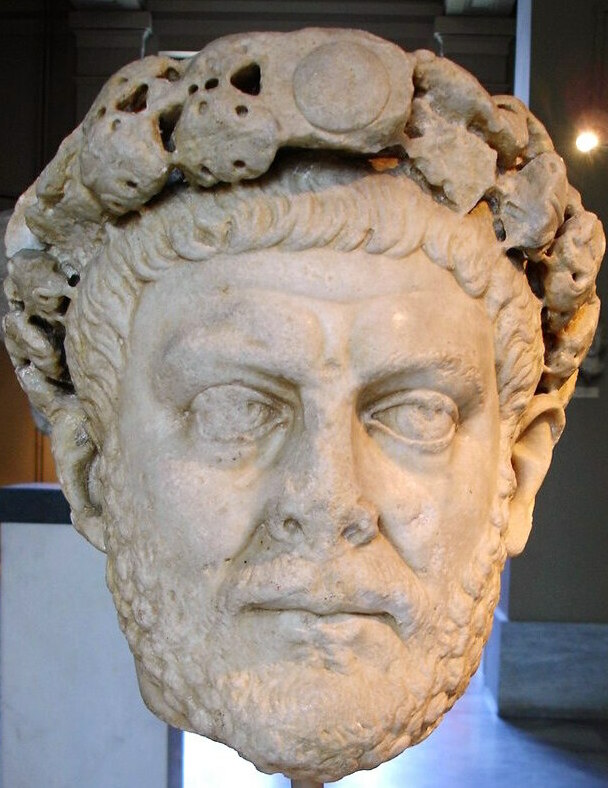
Diocletian
Emperor · Ancient
73.6Total
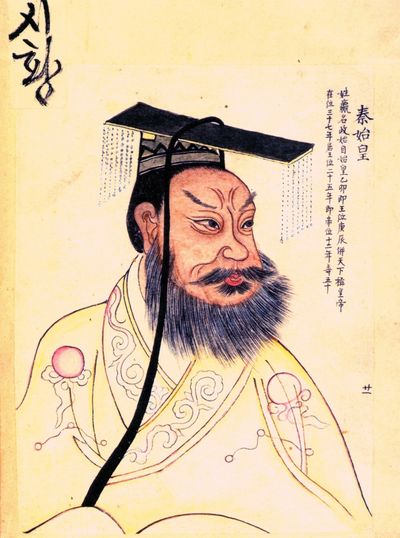
Qin Shi Huang
Emperor · Ancient
83.5Total
Basic Information
Born
244
-259
Died
311
-210
Era
Ancient
Ancient
Nationality
Roman Empire
China
Occupation
Emperor
Emperor
Civilization
Western
Eastern
Score Comparison
Military (10%)
57.4
80.0
Political (20%)
85.0
88.0
Influence (20%)
70.5
82.0
Legacy (20%)
77.5
85.0
Leadership (15%)
76.4
88.0
Strategy (15%)
65.6
75.0
TOTAL
73.6
83.5
Rankings
🥇
Qin Shi HuangLeader
Mil: 80.0Pol: 88.0Inf: 82.0
83.5
🥈
Diocletian
Mil: 57.4Pol: 85.0Inf: 70.5
73.6
+9.9 behind
How This Comparison Works
Algorithm
Each figure is scored on 6 dimensions (0—100 scale) based on structured historical data: Military (10%), Political (20%), Influence (20%), Legacy (20%), Leadership (15%), Strategy (15%). The weighted total produces the final ranking.
Data Sources
Scores are computed from structured sub-indicators in the database. Scale factors adjust for era (Ancient ×0.85, Modern ×1.0) and civilization size (Eastern ×1.05, Other ×0.80) to account for differences in population and military scale.
Maximum 3 Figures
Comparisons are limited to 2—3 figures to ensure readability and statistical meaningfulness.
Error Margins
±5 points per dimension — Sub-scores are derived from historical records with inherent uncertainty. Two figures within 5 points on a dimension should be considered roughly equivalent in that area.
Total Score Accuracy
±3 points overall — The weighted combination of 6 dimensions produces a total score with approximately ±3 points of uncertainty. Differences of less than 3 points are not statistically significant— the figures are effectively tied.
Known Limitations
- Historical records are incomplete and uneven across civilizations
- Figures from oral-tradition societies may be underrepresented
- Occupation labels can misclassify multi-role figures
- Scores measure capability and impact, not moral character
- Quantitative scoring is a comparison tool, not absolute truth
Capability Radar
Military (10%) — Battles & Warfare
Battles
65
85
Win Rate
70
90
Expansion
50
90
Political (20%) — Governance & Reform
Reform
95
95
Diplomacy
80
75
Economy
75
90
Influence (20%) — Cultural & Global Reach
Cultural
60
95
Global
75
85
Legacy (20%) — Historical Impact
Historical
85
95
Longevity
70
95
Leadership (15%) — Power & Stability
Tenure
85
70
Stability
80
65
Strategy (15%) — Tactics & Innovation
Strategy
75
85
Tactics
60
80
Reform
85
95
Analysis will be generated on first visit.
Scores and timeline are available below. The page will refresh automatically when ready.
Diocletian — Complete Timeline
293 AD
Establishment of the TetrarchyReform
Diocletian created the Tetrarchy, dividing the Roman Empire into four administrative regions ruled by two senior emperors (Augusti) and two junior emperors (Caesares). This system aimed to improve governance and defense, and stabilize imperial succession.
TetrarchyReformAdministration
Impact: globalconstructive
Administrative Reorganization of the EmpireReform◆ Major
Diocletian reorganized the Roman provinces into smaller units (dioceses) grouped into four prefectures, separating civilian and military authority. This reform improved tax collection and administration, but also increased bureaucracy.
AdministrationReformProvinces
Impact: globalconstructive
301 AD
Economic Reforms (Edict on Maximum Prices)Reform◆ Major
Diocletian issued the Edict on Maximum Prices, setting price ceilings on over 1,000 goods and services to combat inflation. The edict was largely ineffective and led to black markets, but demonstrated the state's attempt to control the economy.
Economic ReformPrice ControlsInflation
Impact: global
303 AD
Diocletianic Persecution of ChristiansPolitical Action◆ Major
Diocletian issued a series of edicts ordering the persecution of Christians throughout the Roman Empire. Churches were destroyed, scriptures burned, and Christians were executed or forced to sacrifice to Roman gods. This was the last and most severe state-sponsored persecution.
PersecutionChristianityReligion
Impact: globaldestructive
305 AD
Abdication of DiocletianPolitical Action
Diocletian voluntarily abdicated the throne, retiring to his palace in Split (modern Croatia). He forced his co-emperor Maximian to do the same, setting a precedent for orderly succession, though the Tetrarchy soon collapsed after his departure.
AbdicationRetirementTetrarchy
Impact: global
Qin Shi Huang — Complete Timeline
246 BC
Construction of the Mausoleum and Terracotta ArmyOther◆ Major
Qin Shi Huang commissioned a vast mausoleum complex near Xi'an, guarded by thousands of life-sized terracotta soldiers, horses, and chariots. The project employed hundreds of thousands of workers and reflected his obsession with immortality and imperial power.
Impact: global
230 BC
Conquest of the Six Warring StatesWar
From 230 to 221 BCE, Ying Zheng led the Qin state in a series of campaigns that conquered the Han, Zhao, Wei, Chu, Yan, and Qi states. This unified China under a single ruler for the first time, ending the Warring States period.
Impact: global
221 BC
Standardization of Writing, Currency, and MeasurementsReform◆ Major
Qin Shi Huang ordered the standardization of Chinese script, currency, and weights and measures across the unified empire. This facilitated administration, trade, and cultural integration, laying a foundation for future dynasties.
Impact: globalconstructive
Proclamation of the Qin DynastyPolitical Action
After conquering the last independent state, Ying Zheng declared himself Shi Huangdi (First Emperor), founding the Qin Dynasty. He adopted a new title to signify his supreme authority and initiated centralized imperial rule.
Impact: global
214 BC
Initiation of the Great Wall ConstructionOther◆ Major
Qin Shi Huang ordered the connection and extension of existing northern fortifications to create a unified defensive wall against nomadic Xiongnu raids. This project involved massive conscripted labor and became the precursor to the later Great Wall.
Impact: regional
213 BC
Burning of Books and Burying of ScholarsPolitical Action◆ Major
On the advice of Li Si, Qin Shi Huang ordered the burning of historical records and philosophical texts not aligned with Legalist doctrine. He also had 460 Confucian scholars buried alive to suppress dissent and consolidate ideological control.
Impact: nationaldestructive
Similar Comparisons
Comments & Discussion
Terra-Cotta Skeptic6/17/2026
Both men built walls and tombs, but Diocletian gets way too much credit for "preserving" Rome. His tetrarchy collapsed into civil war within twenty years of his retirement—Paul Krugman would call that a failed policy. Meanwhile, Qin's standardization of weights, writing, and axle lengths literally held China together for two millennia. Diocletian's price controls failed so badly they caused black markets; Qin's Legalist reforms actually worked.
书同文车同轨6/17/2026
数据对比最有说服力:秦朝统一后人口从约2000万增长到汉初的6000万,而戴克里先的税制改革把罗马公民逼成了农奴。别跟我扯什么“宽容改革”——他迫害基督徒的数量比尼禄还多。真正留下制度遗产的是秦始皇,不是那个退休种菜的达尔马提亚农民。
Lex Sine Misericordia6/17/2026
Classics scholar here: Everyone romanticizes Diocletian's "retirement," but forgets he was a military dictator who institutionalized the worst aspects of Roman autocracy. His Edict on Maximum Prices is a textbook case of economic illiteracy. By contrast, Qin Shi Huang's Legalist framework—however harsh—gave China a unified administrative code that outlasted any Roman constitution. The first emperor understood that horror and stability aren't mutually exclusive.
土豆与兵马俑6/17/2026
军事角度:戴克里先分拆军权是懦夫行为,把边防责任推给继子们。秦始皇统一岭南、北击匈奴时,可是亲率大军翻越五岭。戴克里先的“四帝共治”听起来聪明,本质上是用官僚主义替代战略决策。若让两人带兵对阵,我押注那位能用麻木军棍踢翻宰相的皇帝。
Reputation Arbitrageur6/17/2026
Revisionist take: The comparisons are lazy. Diocletian's tetrarchy was a desperate, failed experiment—it literally ended in the bloodiest civil war Rome ever saw (324 AD). Qin's unification, while brutal, produced the first sustainable centralized state in human history. Diocletian gets to be a footnote; Qin Shi Huang haunts every Chinese schoolbook. The difference isn't philosophy—it's results that last.