Loading...
Analysis will be generated on first visit.
Scores and timeline are available below. The page will refresh automatically when ready.
Gang Gam-chan vs Qin Shi Huang
Qin Shi Huang leads by 7.7 pts · 2 figures compared
…

Gang Gam-chan
General · Medieval
75.8Total
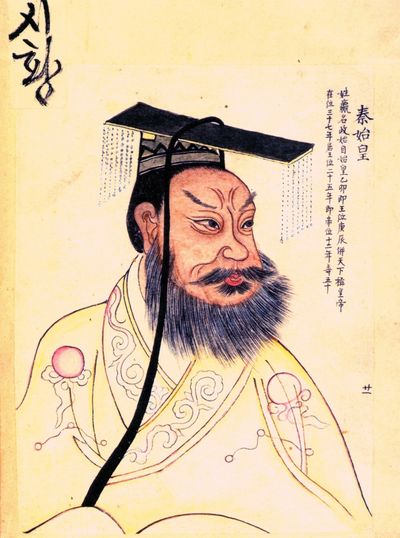
Qin Shi Huang
Emperor · Ancient
83.5Total
Basic Information
Born
948
-259
Died
1031
-210
Era
Medieval
Ancient
Nationality
Korea
China
Occupation
General
Emperor
Civilization
Eastern
Eastern
Score Comparison
Military (10%)
89.9
80.0
Political (20%)
72.0
88.0
Influence (20%)
73.8
82.0
Legacy (20%)
64.4
85.0
Leadership (15%)
87.2
88.0
Strategy (15%)
77.7
75.0
TOTAL
75.8
83.5
Rankings
🥇
Qin Shi HuangLeader
Mil: 80.0Pol: 88.0Inf: 82.0
83.5
🥈
Gang Gam-chan
Mil: 89.9Pol: 72.0Inf: 73.8
75.8
+7.7 behind
How This Comparison Works
Algorithm
Each figure is scored on 6 dimensions (0—100 scale) based on structured historical data: Military (10%), Political (20%), Influence (20%), Legacy (20%), Leadership (15%), Strategy (15%). The weighted total produces the final ranking.
Data Sources
Scores are computed from structured sub-indicators in the database. Scale factors adjust for era (Ancient ×0.85, Modern ×1.0) and civilization size (Eastern ×1.05, Other ×0.80) to account for differences in population and military scale.
Maximum 3 Figures
Comparisons are limited to 2—3 figures to ensure readability and statistical meaningfulness.
Error Margins
±5 points per dimension — Sub-scores are derived from historical records with inherent uncertainty. Two figures within 5 points on a dimension should be considered roughly equivalent in that area.
Total Score Accuracy
±3 points overall — The weighted combination of 6 dimensions produces a total score with approximately ±3 points of uncertainty. Differences of less than 3 points are not statistically significant— the figures are effectively tied.
Known Limitations
- Historical records are incomplete and uneven across civilizations
- Figures from oral-tradition societies may be underrepresented
- Occupation labels can misclassify multi-role figures
- Scores measure capability and impact, not moral character
- Quantitative scoring is a comparison tool, not absolute truth
Capability Radar
Military (10%) — Battles & Warfare
Battles
75
85
Win Rate
80
90
Expansion
40
90
Political (20%) — Governance & Reform
Reform
30
95
Diplomacy
45
75
Economy
35
90
Influence (20%) — Cultural & Global Reach
Cultural
55
95
Global
40
85
Legacy (20%) — Historical Impact
Historical
60
95
Longevity
55
95
Leadership (15%) — Power & Stability
Tenure
50
70
Stability
50
65
Strategy (15%) — Tactics & Innovation
Strategy
75
85
Tactics
78
80
Reform
30
95
Analysis will be generated on first visit.
Scores and timeline are available below. The page will refresh automatically when ready.
Gang Gam-chan — Complete Timeline
1010 AD
Siege of HeunghwajinWar◆ Major
Gang Gam-chan defended the fortress of Heunghwajin against Khitan forces during the Second Goryeo-Khitan War. The siege ended with a Goryeo victory, delaying the Khitan advance.
Goryeo-Khitan WarSiegeDefense
Impact: regionalconstructive
1019 AD
Battle of KwijuWar
Gang Gam-chan commanded Goryeo forces at the Battle of Kwiju against the Khitan Liao dynasty. His army decisively defeated the Khitan invaders, ending the Third Goryeo-Khitan War and securing Goryeo's independence.
Goryeo-Khitan WarBattleVictory
Impact: regionalconstructive
Qin Shi Huang — Complete Timeline
246 BC
Construction of the Mausoleum and Terracotta ArmyOther◆ Major
Qin Shi Huang commissioned a vast mausoleum complex near Xi'an, guarded by thousands of life-sized terracotta soldiers, horses, and chariots. The project employed hundreds of thousands of workers and reflected his obsession with immortality and imperial power.
Impact: global
230 BC
Conquest of the Six Warring StatesWar
From 230 to 221 BCE, Ying Zheng led the Qin state in a series of campaigns that conquered the Han, Zhao, Wei, Chu, Yan, and Qi states. This unified China under a single ruler for the first time, ending the Warring States period.
Impact: global
221 BC
Standardization of Writing, Currency, and MeasurementsReform◆ Major
Qin Shi Huang ordered the standardization of Chinese script, currency, and weights and measures across the unified empire. This facilitated administration, trade, and cultural integration, laying a foundation for future dynasties.
Impact: globalconstructive
Proclamation of the Qin DynastyPolitical Action
After conquering the last independent state, Ying Zheng declared himself Shi Huangdi (First Emperor), founding the Qin Dynasty. He adopted a new title to signify his supreme authority and initiated centralized imperial rule.
Impact: global
214 BC
Initiation of the Great Wall ConstructionOther◆ Major
Qin Shi Huang ordered the connection and extension of existing northern fortifications to create a unified defensive wall against nomadic Xiongnu raids. This project involved massive conscripted labor and became the precursor to the later Great Wall.
Impact: regional
213 BC
Burning of Books and Burying of ScholarsPolitical Action◆ Major
On the advice of Li Si, Qin Shi Huang ordered the burning of historical records and philosophical texts not aligned with Legalist doctrine. He also had 460 Confucian scholars buried alive to suppress dissent and consolidate ideological control.
Impact: nationaldestructive
Similar Comparisons
Comments & Discussion
高丽老炮6/17/2026
说句不好听的,姜邯赞要不是把契丹人揍回去了,高丽早就成辽国的一个省了,哪还有后来的什么韩民族叙事?你们光盯着秦始皇的暴政,可别忘了统一文字和度量衡也是他干的。姜邯赞是保卫了祖宗基业的人,这比空谈“千古一帝”实在多了。
QIN'S GHOST6/17/2026
You revisionists keep trying to moralize history, but Qin Shi Huang didn’t survive the Warring States by being nice—he unified China with iron discipline and standard script, weights, and roads. Gang Gam-chan? Fine general, sure, but he defended a feudal kingdom that collapsed anyway. Qin built something that lasted millennia. Give me the tyrant who actually changed the world over the "savior" of a footnote.
SkepticalScribe6/17/2026
Let's pump the brakes on the "existential threat" hype. The Khitan invasion of Goryeo in 1019 was a serious incursion, but it wasn't Armageddon—the Koryo court had already sued for peace before Gang's victory at Kuju. Meanwhile, Qin's unification wars killed hundreds of thousands. One guy stopped a raid, the other committed genocide. Scale matters, folks.
冷眼旁观6/17/2026
你们这些军事迷就知道比战绩,有没有想过政治逻辑?秦始皇是纯粹的法家赌徒,他必须统一天下才能活下去,不然秦国就是下一个被灭的。姜邯赞呢?他在文官体系里混上去的,打的是防御战,赢了就是民族英雄,输了顶多失地。一个拿命在赌,一个拿官位在赌,能一样吗?