Loading...
Analysis will be generated on first visit.
Scores and timeline are available below. The page will refresh automatically when ready.
Julius Caesar vs Sakura
Julius Caesar leads by 19.9 pts · 2 figures compared
…
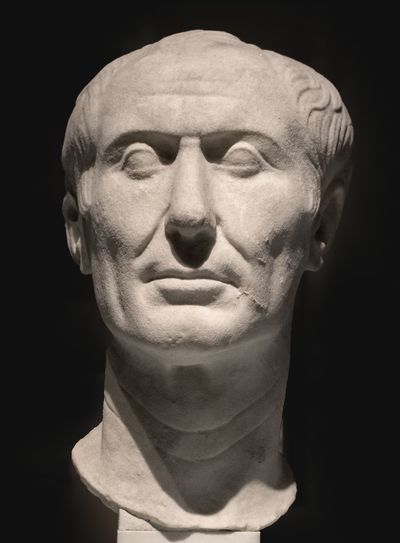
Julius Caesar
General · Ancient
83.3Total

Sakura
Emperor · Medieval
63.4Total
Basic Information
Born
-100
1250
Died
-44
1300
Era
Ancient
Medieval
Nationality
Roman Republic
Mali Empire
Occupation
General
Emperor
Civilization
Western
Other
Score Comparison
Military (10%)
88.0
60.4
Political (20%)
78.0
64.2
Influence (20%)
85.0
70.6
Legacy (20%)
82.0
57.8
Leadership (15%)
82.0
80.6
Strategy (15%)
88.0
45.0
TOTAL
83.3
63.4
Rankings
🥇
Julius CaesarLeader
Mil: 88.0Pol: 78.0Inf: 85.0
83.3
🥈
Sakura
Mil: 60.4Pol: 64.2Inf: 70.6
63.4
+19.9 behind
How This Comparison Works
Algorithm
Each figure is scored on 6 dimensions (0—100 scale) based on structured historical data: Military (10%), Political (20%), Influence (20%), Legacy (20%), Leadership (15%), Strategy (15%). The weighted total produces the final ranking.
Data Sources
Scores are computed from structured sub-indicators in the database. Scale factors adjust for era (Ancient ×0.85, Modern ×1.0) and civilization size (Eastern ×1.05, Other ×0.80) to account for differences in population and military scale.
Maximum 3 Figures
Comparisons are limited to 2—3 figures to ensure readability and statistical meaningfulness.
Error Margins
±5 points per dimension — Sub-scores are derived from historical records with inherent uncertainty. Two figures within 5 points on a dimension should be considered roughly equivalent in that area.
Total Score Accuracy
±3 points overall — The weighted combination of 6 dimensions produces a total score with approximately ±3 points of uncertainty. Differences of less than 3 points are not statistically significant— the figures are effectively tied.
Known Limitations
- Historical records are incomplete and uneven across civilizations
- Figures from oral-tradition societies may be underrepresented
- Occupation labels can misclassify multi-role figures
- Scores measure capability and impact, not moral character
- Quantitative scoring is a comparison tool, not absolute truth
Capability Radar
Military (10%) — Battles & Warfare
Battles
95
60
Win Rate
92
65
Expansion
97
70
Political (20%) — Governance & Reform
Reform
90
45
Diplomacy
85
50
Economy
82
55
Influence (20%) — Cultural & Global Reach
Cultural
88
40
Global
94
35
Legacy (20%) — Historical Impact
Historical
95
45
Longevity
96
30
Leadership (15%) — Power & Stability
Tenure
75
40
Stability
60
35
Strategy (15%) — Tactics & Innovation
Strategy
94
60
Tactics
96
55
Reform
88
50
Analysis will be generated on first visit.
Scores and timeline are available below. The page will refresh automatically when ready.
Julius Caesar — Complete Timeline
58 BC
Gallic WarsWar◆ Major
Caesar, as proconsul of Gaul, launched a series of campaigns that conquered all of Gaul (modern France, Belgium, and parts of Switzerland). He fought numerous battles, including against the Helvetii, the Belgae, and the Gallic chieftain Vercingetorix. The wars brought immense wealth and a loyal army to Caesar.
Gallic WarsConquestRoman Expansion
Impact: regional
49 BC
Crossing the RubiconPolitical Action◆ Major
Caesar led Legio XIII across the Rubicon River into Italy, defying the Roman Senate's order to disband his army. This act triggered a civil war against Pompey and the Optimates, ultimately leading to Caesar's dictatorship and the end of the Roman Republic.
Roman Civil WarEnd of RepublicPower Struggle
Impact: global
48 BC
Battle of PharsalusWar◆ Major
Caesar's outnumbered army defeated the larger forces of Pompey the Great at Pharsalus in Greece. Caesar's tactical use of a reserve line to counter Pompey's cavalry charge proved decisive. Pompey fled to Egypt, where he was assassinated, leaving Caesar as the undisputed master of the Roman world.
Roman Civil WarBattleDecisive Victory
Impact: regional
44 BC
Appointment as Dictator for LifePolitical Action◆ Major
The Roman Senate appointed Caesar dictator perpetuo (dictator for life), granting him unprecedented personal power. This move concentrated military, legislative, and judicial authority in one person, effectively ending the Roman Republic's traditional system of checks and balances and alarming many senators.
DictatorshipEnd of RepublicPower Consolidation
Impact: regionaldestructive
Assassination on the Ides of MarchPolitical Action◆ Major
A group of Roman senators, led by Marcus Junius Brutus and Gaius Cassius Longinus, stabbed Caesar to death at a meeting of the Senate in the Theatre of Pompey. The assassination was intended to restore the Republic, but instead triggered another civil war that led to the rise of the Roman Empire.
AssassinationRoman PoliticsEnd of Republic
Impact: globaldestructive
Sakura — Complete Timeline
1285 AD
Usurpation of the Mali thronePolitical Action◆ Major
Sakura, a former slave or court official, seized power in the Mali Empire after the death of Abubakari I. His usurpation ended the direct line of Sundiata Keita's descendants, establishing a new ruling dynasty.
UsurpationMali EmpireDynastic Change
Impact: national
1290 AD
Conquest of GaoWar◆ Major
Sakura led a military campaign that conquered the Songhai city of Gao, incorporating it into the Mali Empire. This expansion secured control over key trans-Saharan trade routes and increased Mali's wealth.
ConquestMali EmpireSonghaiTrade
Impact: regional
1300 AD
Pilgrimage to MeccaCultural◆ Major
Sakura undertook the Hajj pilgrimage to Mecca. During the journey, he was killed by bandits near the port of Tajura. His death ended his reign and allowed the Keita dynasty to reclaim the throne under Mansa Musa's predecessor.
PilgrimageDeathMali Empire
Impact: nationaltragic
Similar Comparisons
Comments & Discussion
Emperor's Architect6/17/2026
Caesar wasn't just a conqueror—he was a systematic reformer who transformed Rome from a dysfunctional republic into a functioning monarchy. The calendar, provincial administration, debt relief, colonization plans—these outlasted his assassins. Sakura expanded Mali's borders, sure, but what administrative legacy did he leave? Bandits on a road prove how fragile his personal rule was. Caesar's reforms shaped Europe for 1500 years. Sakura's Mali crumbled within generations. That's the real measure.
数据侦探6/17/2026
那个“十三世纪后”的对比根本不对。曼萨·萨库拉死于约1300年,距离公元前44年是一千三百四十四年,不是“十三个世纪后”。连基本年代都搞错的分析,还敢讨论历史意义?而且把西非帝国的兴衰和罗马帝国并置,忽略了完全不同的经济基础、技术条件和地理规模。这是典型的欧洲中心论者在找平衡,却连数字都算不明白。
拉丁火炬手6/17/2026
The comparison collapses on strategy. Caesar's Gallic Wars (58-50 BCE) involved 60,000-120,000 legionaries in systematic campaigns spanning modern France, Belgium, Germany, and Britain. He wrote the Commentaries—a masterclass in military propaganda still studied at West Point. Sakura's "expanded realms"?
边疆开拓者6/17/2026
萨库拉的“扩容”是他对西苏丹的征服,比如加奥和塔克鲁尔,但史料只有口头传说和伊本·白图泰的寥寥记载。没有战图,没有战略记录,没有士兵的手稿。拿两个完全不同的史料密度来做对比,本身就荒谬。与其说萨库拉被遗忘,不如说他根本就没被充分记录——这不等于他没影响力。欧洲中心文献垄断了“历史”的定义权。