Loading...
Analysis will be generated on first visit.
Scores and timeline are available below. The page will refresh automatically when ready.
Kim Il-sung vs Qin Shi Huang
Qin Shi Huang leads by 10.9 pts · 2 figures compared
…
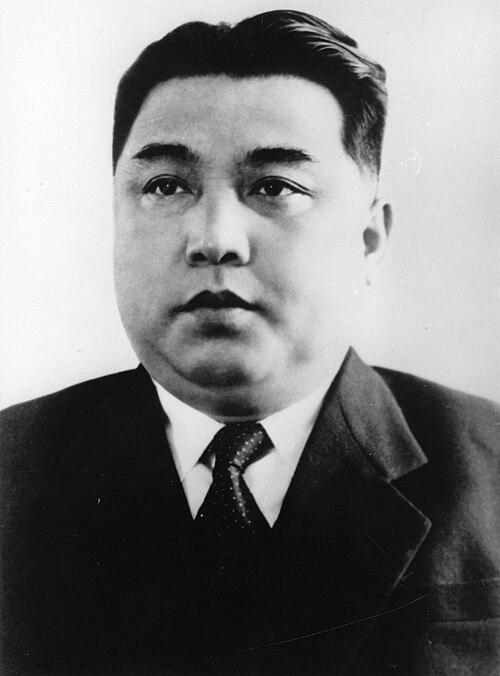
Kim Il-sung
Politician · Modern
72.6Total
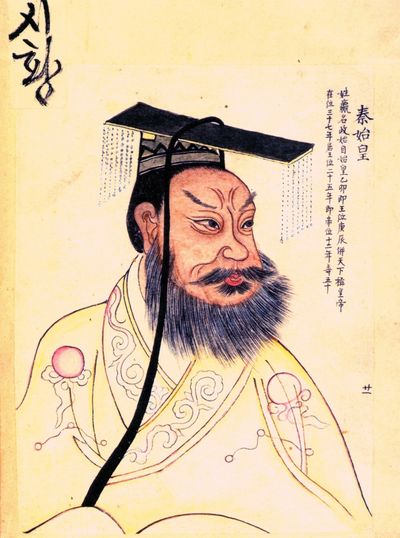
Qin Shi Huang
Emperor · Ancient
83.5Total
Basic Information
Born
1912
-259
Died
1994
-210
Era
Modern
Ancient
Nationality
North Korea
China
Occupation
Politician
Emperor
Civilization
Eastern
Eastern
Score Comparison
Military (10%)
59.7
80.0
Political (20%)
84.8
88.0
Influence (20%)
78.0
82.0
Legacy (20%)
69.9
85.0
Leadership (15%)
81.0
88.0
Strategy (15%)
52.9
75.0
TOTAL
72.6
83.5
Rankings
🥇
Qin Shi HuangLeader
Mil: 80.0Pol: 88.0Inf: 82.0
83.5
🥈
Kim Il-sung
Mil: 59.7Pol: 84.8Inf: 78.0
72.6
+10.9 behind
How This Comparison Works
Algorithm
Each figure is scored on 6 dimensions (0—100 scale) based on structured historical data: Military (10%), Political (20%), Influence (20%), Legacy (20%), Leadership (15%), Strategy (15%). The weighted total produces the final ranking.
Data Sources
Scores are computed from structured sub-indicators in the database. Scale factors adjust for era (Ancient ×0.85, Modern ×1.0) and civilization size (Eastern ×1.05, Other ×0.80) to account for differences in population and military scale.
Maximum 3 Figures
Comparisons are limited to 2—3 figures to ensure readability and statistical meaningfulness.
Error Margins
±5 points per dimension — Sub-scores are derived from historical records with inherent uncertainty. Two figures within 5 points on a dimension should be considered roughly equivalent in that area.
Total Score Accuracy
±3 points overall — The weighted combination of 6 dimensions produces a total score with approximately ±3 points of uncertainty. Differences of less than 3 points are not statistically significant— the figures are effectively tied.
Known Limitations
- Historical records are incomplete and uneven across civilizations
- Figures from oral-tradition societies may be underrepresented
- Occupation labels can misclassify multi-role figures
- Scores measure capability and impact, not moral character
- Quantitative scoring is a comparison tool, not absolute truth
Capability Radar
Military (10%) — Battles & Warfare
Battles
15
85
Win Rate
10
90
Expansion
10
90
Political (20%) — Governance & Reform
Reform
70
95
Diplomacy
30
75
Economy
20
90
Influence (20%) — Cultural & Global Reach
Cultural
60
95
Global
60
85
Legacy (20%) — Historical Impact
Historical
70
95
Longevity
80
95
Leadership (15%) — Power & Stability
Tenure
95
70
Stability
40
65
Strategy (15%) — Tactics & Innovation
Strategy
25
85
Tactics
20
80
Reform
30
95
Analysis will be generated on first visit.
Scores and timeline are available below. The page will refresh automatically when ready.
Kim Il-sung — Complete Timeline
1948 AD
Establishment of the Democratic People's Republic of KoreaPolitical Action
Kim Il-sung proclaimed the Democratic People's Republic of Korea (North Korea) with Soviet backing, becoming its first Premier. This established a communist state in the northern half of the Korean Peninsula, separate from the US-backed South.
FoundingNorth KoreaCold War
Impact: regional
1950 AD
Start of the Korean WarWar
Kim Il-sung ordered the North Korean invasion of South Korea, initiating the Korean War. The war resulted in millions of casualties and ended in a stalemate with the 1953 armistice, leaving Korea divided.
WarInvasionKorean War
Impact: globaldestructive
1955 AD
Adoption of the Juche IdeologyCultural◆ Major
Kim Il-sung formally introduced Juche, a self-reliance ideology, as the guiding principle of North Korea. Juche emphasized political independence, economic self-sufficiency, and military autonomy, shaping the country's isolationist policies.
IdeologyJucheSelf-Reliance
Impact: national
1960 AD
Consolidation of the Kim Il-sung Cult of PersonalityPolitical Action◆ Major
Kim Il-sung established an extensive cult of personality, portraying himself as the 'Great Leader' and founder of the Juche ideology. This included rewriting history, erecting statues, and mandating loyalty oaths, creating a totalitarian state.
Cult of PersonalityJucheTotalitarianism
Impact: nationaldestructive
1994 AD
Death and Designation as Eternal PresidentPolitical Action◆ Major
Kim Il-sung died of a heart attack, and the North Korean constitution was amended to designate him 'Eternal President'. His son Kim Jong-il succeeded him, continuing the dynastic rule of the Kim family.
DeathSuccessionEternal President
Impact: national
Qin Shi Huang — Complete Timeline
246 BC
Construction of the Mausoleum and Terracotta ArmyOther◆ Major
Qin Shi Huang commissioned a vast mausoleum complex near Xi'an, guarded by thousands of life-sized terracotta soldiers, horses, and chariots. The project employed hundreds of thousands of workers and reflected his obsession with immortality and imperial power.
Impact: global
230 BC
Conquest of the Six Warring StatesWar
From 230 to 221 BCE, Ying Zheng led the Qin state in a series of campaigns that conquered the Han, Zhao, Wei, Chu, Yan, and Qi states. This unified China under a single ruler for the first time, ending the Warring States period.
Impact: global
221 BC
Standardization of Writing, Currency, and MeasurementsReform◆ Major
Qin Shi Huang ordered the standardization of Chinese script, currency, and weights and measures across the unified empire. This facilitated administration, trade, and cultural integration, laying a foundation for future dynasties.
Impact: globalconstructive
Proclamation of the Qin DynastyPolitical Action
After conquering the last independent state, Ying Zheng declared himself Shi Huangdi (First Emperor), founding the Qin Dynasty. He adopted a new title to signify his supreme authority and initiated centralized imperial rule.
Impact: global
214 BC
Initiation of the Great Wall ConstructionOther◆ Major
Qin Shi Huang ordered the connection and extension of existing northern fortifications to create a unified defensive wall against nomadic Xiongnu raids. This project involved massive conscripted labor and became the precursor to the later Great Wall.
Impact: regional
213 BC
Burning of Books and Burying of ScholarsPolitical Action◆ Major
On the advice of Li Si, Qin Shi Huang ordered the burning of historical records and philosophical texts not aligned with Legalist doctrine. He also had 460 Confucian scholars buried alive to suppress dissent and consolidate ideological control.
Impact: nationaldestructive
Similar Comparisons
Comments & Discussion
Emperor-Skeptic6/17/2026
Calling Kim Il-sung the "Qin Shi Huang of Korea" is a disservice to actual historical tyranny. Qin united warring states, standardized writing, and built infrastructure that lasted millennia. Kim created a personality cult around potato statistics and a "self-reliant" economy that literally starved millions. One man buried scholars alive for questioning his rule; the other buried his own people's futures with slogans about juche. Apples and nuclear-armed oranges.
铁幕史官6/17/2026
拿秦始皇比金日成?这就像拿长城比较水坝——都是大工程,但目的完全不同。秦始皇统一六国、书同文车同轨,建立了中国两千年的帝国框架。金日成呢?他建立的是全世界最封闭的王朝,用"白头山血统"的神话代替了实际治理。一个搞郡县制,一个搞世袭制。别忘了,秦始皇死了秦朝就亡了,金家可是苟了三代还准备第四代呢。差异之大,就像拿秦砖汉瓦比泡菜坛子。
Data-Devil6/17/2026
Let's look at actual numbers. Qin Shi Huang ruled a unified population of roughly 20 million people across 2+ million square kilometers, standardizing currency and weights. Kim Il-sung took control of about 9 million Koreans in a 120,000 km² peninsula slice, and by his death, North Korea averaged 400 kcal less daily food per person than under Japanese colonial rule. One emperor built roads; the other built gulags with statistics so fabricated that "Pyongyang" became shorthand for "made-up data."
考据狂人6/17/2026
别被"绝对权力"的标题忽悠了。秦始皇的权力建立在法家制度的系统化上——商鞅变法、李斯改制,连刑罚都有量化标准。金日成的权力呢?从头到尾是世袭的神话叙事:他自称在白头山抗日,但韩国档案馆的记录显示他1945年前只是苏联训练的普通连长。一个靠制度巩固权力,一个靠编造履历。要不是苏联扶持,他连平壤都进不了,更别说当"伟大领袖"了。
Revisionist-Ronin6/17/2026
The real comparison isn't between rulers—it's between their historical afterlives. Qin Shi Huang has been debated for 2,200 years: unification genius or megalomaniac who burned books alive. Kim Il-sung's "history" is state-mandated hagiography since the 1950s, with zero dissent allowed. One faced the judgment of Confucian scholars and generations; the other controls his narrative through mandatory ideology classes in every village. You can't compare two rulers when one's critics can be executed