Loading...
Analysis will be generated on first visit.
Scores and timeline are available below. The page will refresh automatically when ready.
Luis Carlos Prestes vs Qin Shi Huang
Qin Shi Huang leads by 22.8 pts · 2 figures compared
…

Luis Carlos Prestes
Revolutionary · Modern
60.7Total
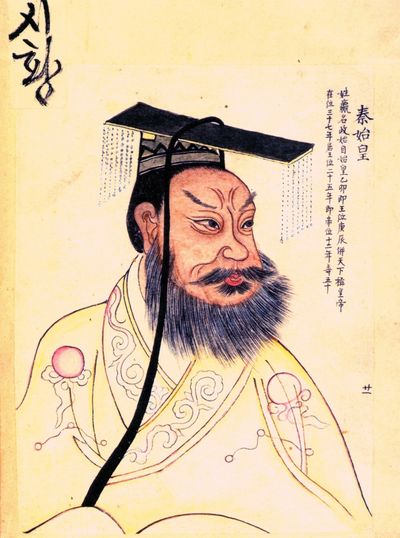
Qin Shi Huang
Emperor · Ancient
83.5Total
Basic Information
Born
1898
-259
Died
1990
-210
Era
Modern
Ancient
Nationality
Brazil
China
Occupation
Revolutionary
Emperor
Civilization
Western
Eastern
Score Comparison
Military (10%)
21.7
80.0
Political (20%)
62.2
88.0
Influence (20%)
69.3
82.0
Legacy (20%)
57.1
85.0
Leadership (15%)
76.1
88.0
Strategy (15%)
62.9
75.0
TOTAL
60.7
83.5
Rankings
🥇
Qin Shi HuangLeader
Mil: 80.0Pol: 88.0Inf: 82.0
83.5
🥈
Luis Carlos Prestes
Mil: 21.7Pol: 62.2Inf: 69.3
60.7
+22.8 behind
How This Comparison Works
Algorithm
Each figure is scored on 6 dimensions (0—100 scale) based on structured historical data: Military (10%), Political (20%), Influence (20%), Legacy (20%), Leadership (15%), Strategy (15%). The weighted total produces the final ranking.
Data Sources
Scores are computed from structured sub-indicators in the database. Scale factors adjust for era (Ancient ×0.85, Modern ×1.0) and civilization size (Eastern ×1.05, Other ×0.80) to account for differences in population and military scale.
Maximum 3 Figures
Comparisons are limited to 2—3 figures to ensure readability and statistical meaningfulness.
Error Margins
±5 points per dimension — Sub-scores are derived from historical records with inherent uncertainty. Two figures within 5 points on a dimension should be considered roughly equivalent in that area.
Total Score Accuracy
±3 points overall — The weighted combination of 6 dimensions produces a total score with approximately ±3 points of uncertainty. Differences of less than 3 points are not statistically significant— the figures are effectively tied.
Known Limitations
- Historical records are incomplete and uneven across civilizations
- Figures from oral-tradition societies may be underrepresented
- Occupation labels can misclassify multi-role figures
- Scores measure capability and impact, not moral character
- Quantitative scoring is a comparison tool, not absolute truth
Capability Radar
Military (10%) — Battles & Warfare
Battles
25
85
Win Rate
20
90
Expansion
10
90
Political (20%) — Governance & Reform
Reform
25
95
Diplomacy
20
75
Economy
15
90
Influence (20%) — Cultural & Global Reach
Cultural
40
95
Global
30
85
Legacy (20%) — Historical Impact
Historical
45
95
Longevity
35
95
Leadership (15%) — Power & Stability
Tenure
20
70
Stability
10
65
Strategy (15%) — Tactics & Innovation
Strategy
35
85
Tactics
30
80
Reform
15
95
Analysis will be generated on first visit.
Scores and timeline are available below. The page will refresh automatically when ready.
Luis Carlos Prestes — Complete Timeline
1925 AD
Led the Prestes Column (Coluna Prestes)War◆ Major
Prestes commanded a rebel column that marched over 25,000 km through Brazil's interior from 1925 to 1927, protesting the oligarchic republic. The column evaded government forces but failed to spark a popular uprising, becoming a symbol of resistance.
RebellionTenentismoResistance
Impact: national
1934 AD
Joined the Brazilian Communist Party (PCB)Political Action◆ Major
Prestes formally joined the PCB after years of exile in the Soviet Union. He became the party's leading figure, advocating for a Marxist-Leninist revolution in Brazil.
CommunismPCBIdeology
Impact: national
1935 AD
Led the 1935 Communist Uprising (Intentona Comunista)War◆ Major
Prestes directed an attempted communist uprising in Brazilian army barracks in Natal, Recife, and Rio de Janeiro. The revolt was quickly crushed by government forces, leading to Prestes' arrest and imprisonment for nine years.
Communist RevoltRepressionImprisonment
Impact: nationaldestructive
1936 AD
Imprisoned by the Vargas RegimePolitical Action◆ Major
After the failed 1935 uprising, Prestes was arrested and sentenced to 30 years in prison. He was held in solitary confinement for much of his sentence, becoming a symbol of communist martyrdom.
Political PrisonerRepressionVargas Era
Impact: nationaltragic
1945 AD
Released from Prison and Resumed Political ActivityPolitical Action◆ Major
Prestes was released under the amnesty of the democratization process at the end of the Vargas dictatorship. He returned to lead the PCB, which was briefly legalized, and was elected senator in 1945.
AmnestyDemocratizationPCB
Impact: nationalconstructive
1980 AD
Expelled from the PCB LeadershipPolitical Action
Prestes was expelled from the PCB for criticizing the party's moderate, Eurocommunist turn. He spent his final years in relative isolation, maintaining a hardline Stalinist stance.
Communist SplitIdeological ConflictIsolation
Impact: nationaltragic
Qin Shi Huang — Complete Timeline
246 BC
Construction of the Mausoleum and Terracotta ArmyOther◆ Major
Qin Shi Huang commissioned a vast mausoleum complex near Xi'an, guarded by thousands of life-sized terracotta soldiers, horses, and chariots. The project employed hundreds of thousands of workers and reflected his obsession with immortality and imperial power.
Impact: global
230 BC
Conquest of the Six Warring StatesWar
From 230 to 221 BCE, Ying Zheng led the Qin state in a series of campaigns that conquered the Han, Zhao, Wei, Chu, Yan, and Qi states. This unified China under a single ruler for the first time, ending the Warring States period.
Impact: global
221 BC
Standardization of Writing, Currency, and MeasurementsReform◆ Major
Qin Shi Huang ordered the standardization of Chinese script, currency, and weights and measures across the unified empire. This facilitated administration, trade, and cultural integration, laying a foundation for future dynasties.
Impact: globalconstructive
Proclamation of the Qin DynastyPolitical Action
After conquering the last independent state, Ying Zheng declared himself Shi Huangdi (First Emperor), founding the Qin Dynasty. He adopted a new title to signify his supreme authority and initiated centralized imperial rule.
Impact: global
214 BC
Initiation of the Great Wall ConstructionOther◆ Major
Qin Shi Huang ordered the connection and extension of existing northern fortifications to create a unified defensive wall against nomadic Xiongnu raids. This project involved massive conscripted labor and became the precursor to the later Great Wall.
Impact: regional
213 BC
Burning of Books and Burying of ScholarsPolitical Action◆ Major
On the advice of Li Si, Qin Shi Huang ordered the burning of historical records and philosophical texts not aligned with Legalist doctrine. He also had 460 Confucian scholars buried alive to suppress dissent and consolidate ideological control.
Impact: nationaldestructive
Similar Comparisons
Comments & Discussion
LordOfLegalistChains6/17/2026
Qin Shi Huang wasn't just a conqueror—he was history's first systems engineer. Standardizing weights, measures, and writing across a continent was more radical than any battle. Prestes led a column that *failed* to take a single city. The Prestes Column's 25,000 km retreat through Brazil's backlands was spectacular theater, but theater doesn't build empires. One man built the administrative skeleton of a civilization; the other built a beautiful legend that accomplished nothing structurally. Rom
青铜血统6/17/2026
拿秦始皇和普雷斯特斯比?开什么玩笑。始皇帝坑儒生、焚典籍,为的是思想大一统——虽然手段残酷,但逻辑清晰。普雷斯特斯呢?带着一群人满丛林乱窜,连个像样的战略目标都没有。他那个“长途行军”从1924到1927,打了三年连个省会都没拿下。这就是革命?这叫野营。秦始皇用七十年统一天下,用了铁血和权术;普雷斯特斯连巴西都统一不了,就别蹭千古一帝的边了。
ClassicsAndCode6/17/2026
The core difference isn't scale—it's ideology. Qin Shi Huang was a Legalist: he believed humans were fundamentally wicked and needed absolute control through standardized laws and punishments. His standardization of script, coinage, and axle lengths wasn't just practical—it was philosophical. Prestes, despite his Communist Party turn in 1934, was a romantic nationalist at heart. He believed the *people* could spontaneously transform. One man built systems because he trusted no one; the other mar
战痕深评6/17/2026
说他们都在“重塑世界”也太虚伪了。秦始皇重塑的是中央集权的国家机器,他成功了,代价是无数生命和自由。普雷斯特斯根本没成功过——他领导的反抗最终被镇压,他自己被监禁,最后加入共产党基本上是个象征性人物。他的“传奇”更多是失败者的自我安慰。真实的历史残酷:普雷斯特斯那个“hope of Brazil”的名号,实际就是个漂亮口号,连巴西社会的结构都没撼动。始皇帝的铜车马是实在的,普雷斯特斯的剑只是影子。
PrestesPaladin6/17/2026
You're all missing the point. Prestes didn't need to capture cities—his *failure* was his victory. The Prestes Column's 25,000 km journey across Brazil turned state violence into a national story. He *created* a legend that outlasted all the generals who fought him. Qin Shi Huang's empire collapsed within five years of his death—his standardization lasted, but his dynasty vanished. Prestes' idea of resistance against oligarchs lived for decades longer than the First Emperor