Loading...
Analysis will be generated on first visit.
Scores and timeline are available below. The page will refresh automatically when ready.
Ban Chao vs Qin Shi Huang
Qin Shi Huang leads by 9.2 pts · 2 figures compared
…

Ban Chao
General · Ancient
74.3Total
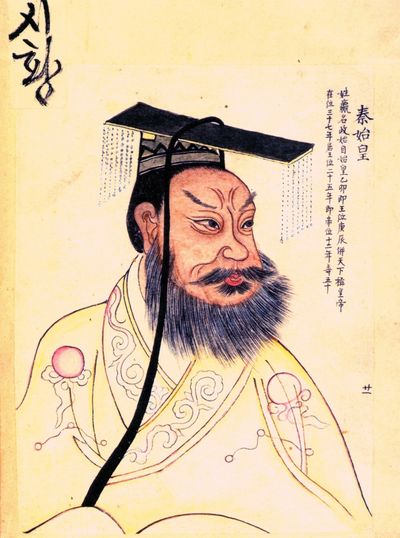
Qin Shi Huang
Emperor · Ancient
83.5Total
Basic Information
Born
32
-259
Died
102
-210
Era
Ancient
Ancient
Nationality
China
China
Occupation
General
Emperor
Civilization
Eastern
Eastern
Score Comparison
Military (10%)
79.8
80.0
Political (20%)
71.4
88.0
Influence (20%)
69.3
82.0
Legacy (20%)
71.6
85.0
Leadership (15%)
86.2
88.0
Strategy (15%)
72.7
75.0
TOTAL
74.3
83.5
Rankings
🥇
Qin Shi HuangLeader
Mil: 80.0Pol: 88.0Inf: 82.0
83.5
🥈
Ban Chao
Mil: 79.8Pol: 71.4Inf: 69.3
74.3
+9.2 behind
How This Comparison Works
Algorithm
Each figure is scored on 6 dimensions (0—100 scale) based on structured historical data: Military (10%), Political (20%), Influence (20%), Legacy (20%), Leadership (15%), Strategy (15%). The weighted total produces the final ranking.
Data Sources
Scores are computed from structured sub-indicators in the database. Scale factors adjust for era (Ancient ×0.85, Modern ×1.0) and civilization size (Eastern ×1.05, Other ×0.80) to account for differences in population and military scale.
Maximum 3 Figures
Comparisons are limited to 2—3 figures to ensure readability and statistical meaningfulness.
Error Margins
±5 points per dimension — Sub-scores are derived from historical records with inherent uncertainty. Two figures within 5 points on a dimension should be considered roughly equivalent in that area.
Total Score Accuracy
±3 points overall — The weighted combination of 6 dimensions produces a total score with approximately ±3 points of uncertainty. Differences of less than 3 points are not statistically significant— the figures are effectively tied.
Known Limitations
- Historical records are incomplete and uneven across civilizations
- Figures from oral-tradition societies may be underrepresented
- Occupation labels can misclassify multi-role figures
- Scores measure capability and impact, not moral character
- Quantitative scoring is a comparison tool, not absolute truth
Capability Radar
Military (10%) — Battles & Warfare
Battles
75
85
Win Rate
85
90
Expansion
80
90
Political (20%) — Governance & Reform
Reform
55
95
Diplomacy
85
75
Economy
70
90
Influence (20%) — Cultural & Global Reach
Cultural
65
95
Global
60
85
Legacy (20%) — Historical Impact
Historical
75
95
Longevity
70
95
Leadership (15%) — Power & Stability
Tenure
70
70
Stability
75
65
Strategy (15%) — Tactics & Innovation
Strategy
85
85
Tactics
80
80
Reform
60
95
Analysis will be generated on first visit.
Scores and timeline are available below. The page will refresh automatically when ready.
Ban Chao — Complete Timeline
73 AD
Conquered the Tarim BasinWar◆ Major
Ban Chao led a small force of Han troops and local allies to defeat the Xiongnu and their client states in the Tarim Basin. He reestablished Chinese control over the city-states of the Silk Road, securing trade routes and tribute from kingdoms like Kashgar and Khotan.
Western RegionsSilk RoadConquest
Impact: regional
90 AD
Defeated the Kushan EmpireWar◆ Major
The Kushan Empire (Yuezhi) invaded the Western Regions with a large army. Ban Chao, with limited forces, used a scorched-earth strategy and cut off the Kushan supply lines, forcing them to retreat and sue for peace. This victory secured Han dominance in Central Asia.
KushanCentral AsiaDefense
Impact: regional
91 AD
Appointed Protector General of the Western RegionsPolitical Action◆ Major
Emperor He of Han appointed Ban Chao as Protector General of the Western Regions, a position that gave him authority over all Han territories and allies in Central Asia. He held this post for over a decade, maintaining peace and Chinese influence from the Pamirs to the Gobi Desert.
AdministrationWestern RegionsProtectorate
Impact: regionalconstructive
97 AD
Sent Gan Ying to the Roman EmpireOther
Ban Chao dispatched his envoy Gan Ying to explore the Roman Empire (Da Qin). Gan Ying reached the Persian Gulf but was told by Parthian merchants that the sea voyage was too dangerous, turning back. This was the closest a Chinese envoy came to Rome in antiquity.
DiplomacyExplorationRoman Empire
Impact: global
Qin Shi Huang — Complete Timeline
246 BC
Construction of the Mausoleum and Terracotta ArmyOther◆ Major
Qin Shi Huang commissioned a vast mausoleum complex near Xi'an, guarded by thousands of life-sized terracotta soldiers, horses, and chariots. The project employed hundreds of thousands of workers and reflected his obsession with immortality and imperial power.
Impact: global
230 BC
Conquest of the Six Warring StatesWar
From 230 to 221 BCE, Ying Zheng led the Qin state in a series of campaigns that conquered the Han, Zhao, Wei, Chu, Yan, and Qi states. This unified China under a single ruler for the first time, ending the Warring States period.
Impact: global
221 BC
Standardization of Writing, Currency, and MeasurementsReform◆ Major
Qin Shi Huang ordered the standardization of Chinese script, currency, and weights and measures across the unified empire. This facilitated administration, trade, and cultural integration, laying a foundation for future dynasties.
Impact: globalconstructive
Proclamation of the Qin DynastyPolitical Action
After conquering the last independent state, Ying Zheng declared himself Shi Huangdi (First Emperor), founding the Qin Dynasty. He adopted a new title to signify his supreme authority and initiated centralized imperial rule.
Impact: global
214 BC
Initiation of the Great Wall ConstructionOther◆ Major
Qin Shi Huang ordered the connection and extension of existing northern fortifications to create a unified defensive wall against nomadic Xiongnu raids. This project involved massive conscripted labor and became the precursor to the later Great Wall.
Impact: regional
213 BC
Burning of Books and Burying of ScholarsPolitical Action◆ Major
On the advice of Li Si, Qin Shi Huang ordered the burning of historical records and philosophical texts not aligned with Legalist doctrine. He also had 460 Confucian scholars buried alive to suppress dissent and consolidate ideological control.
Impact: nationaldestructive
Similar Comparisons
Comments & Discussion
LegionBreaker6/17/2026
Qin Shi Huang was a conqueror; Ban Chao was a diplomat in armor. The First Emperor needed a million men and mountains of skulls to subdue China proper. Ban Chao took 36 cavalrymen into the Tarim Basin and brought 50 kingdoms to heel using local alliances and psychological warfare. That’s not just superior strategy—it’s a completely different philosophy of power. Qin built walls; Ban built networks. Walls crumble. Networks outlast empires.
史鉴毒舌6/17/2026
说秦始皇“统一天下”,实际是屠城机器。他坑杀40万赵卒,焚书坑儒搞思想阉割。班超在西域三十一年,三十六骑定西域,不屠城不虐民,靠的是以夷制夷的智慧。一个是暴力碾压,一个是权力柔术。拿铁锤砸核桃的能跟吃核桃的高手比吗?班超甩他十条街。