Loading...
Analysis will be generated on first visit.
Scores and timeline are available below. The page will refresh automatically when ready.
Charles X of France vs Napoleon Bonaparte
Napoleon Bonaparte leads by 23.2 pts · 2 figures compared
…

Charles X of France
Emperor · Modern
59.2Total
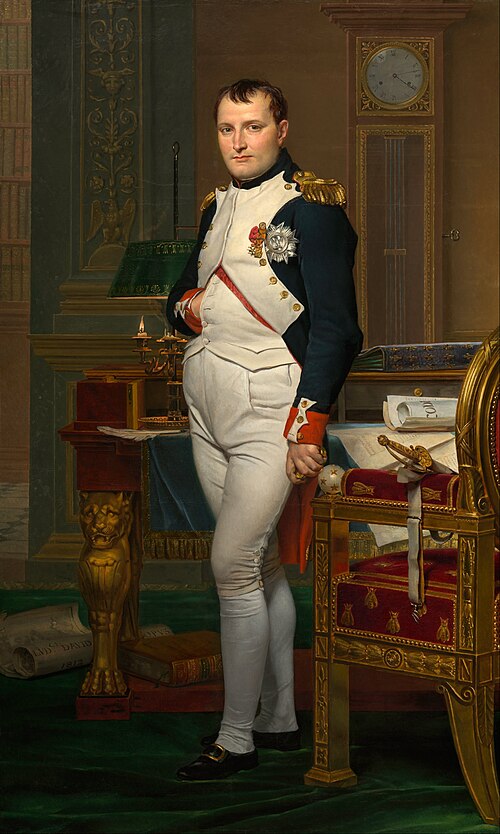
Napoleon Bonaparte
General · Modern
82.4Total
Basic Information
Born
1757
1769
Died
1836
1821
Era
Modern
Modern
Nationality
France
France
Occupation
Emperor
General
Civilization
Western
Western
Score Comparison
Military (10%)
45.0
94.0
Political (20%)
60.7
75.0
Influence (20%)
63.7
82.0
Legacy (20%)
48.9
78.0
Leadership (15%)
74.6
80.0
Strategy (15%)
58.9
93.0
TOTAL
59.2
82.4
Rankings
🥇
Napoleon BonaparteLeader
Mil: 94.0Pol: 75.0Inf: 82.0
82.4
🥈
Charles X of France
Mil: 45.0Pol: 60.7Inf: 63.7
59.2
+23.2 behind
How This Comparison Works
Algorithm
Each figure is scored on 6 dimensions (0—100 scale) based on structured historical data: Military (10%), Political (20%), Influence (20%), Legacy (20%), Leadership (15%), Strategy (15%). The weighted total produces the final ranking.
Data Sources
Scores are computed from structured sub-indicators in the database. Scale factors adjust for era (Ancient ×0.85, Modern ×1.0) and civilization size (Eastern ×1.05, Other ×0.80) to account for differences in population and military scale.
Maximum 3 Figures
Comparisons are limited to 2—3 figures to ensure readability and statistical meaningfulness.
Error Margins
±5 points per dimension — Sub-scores are derived from historical records with inherent uncertainty. Two figures within 5 points on a dimension should be considered roughly equivalent in that area.
Total Score Accuracy
±3 points overall — The weighted combination of 6 dimensions produces a total score with approximately ±3 points of uncertainty. Differences of less than 3 points are not statistically significant— the figures are effectively tied.
Known Limitations
- Historical records are incomplete and uneven across civilizations
- Figures from oral-tradition societies may be underrepresented
- Occupation labels can misclassify multi-role figures
- Scores measure capability and impact, not moral character
- Quantitative scoring is a comparison tool, not absolute truth
Capability Radar
Military (10%) — Battles & Warfare
Battles
38
95
Win Rate
37
90
Expansion
41
95
Political (20%) — Governance & Reform
Reform
5
95
Diplomacy
10
80
Economy
10
85
Influence (20%) — Cultural & Global Reach
Cultural
10
85
Global
5
90
Legacy (20%) — Historical Impact
Historical
15
95
Longevity
10
90
Leadership (15%) — Power & Stability
Tenure
10
85
Stability
5
70
Strategy (15%) — Tactics & Innovation
Strategy
47
95
Tactics
50
98
Reform
50
92
Analysis will be generated on first visit.
Scores and timeline are available below. The page will refresh automatically when ready.
Charles X of France — Complete Timeline
1825 AD
Coronation of Charles XCultural◆ Major
Charles X was crowned at Reims Cathedral in a lavish ceremony that revived medieval traditions, including the use of the Holy Ampulla. The coronation emphasized divine right and traditionalist Catholicism, signaling his rejection of the constitutional principles of the Charter of 1814.
CoronationDivine RightTraditionalism
Impact: national
1830 AD
Invasion of Algiers (1830)War◆ Major
Charles X ordered a military expedition to invade Algiers, aiming to boost his popularity and distract from domestic unrest. The French captured Algiers in July 1830, beginning the colonization of Algeria. The victory came too late to save his throne, as the July Revolution erupted simultaneously.
Colonial WarAlgeriaDistraction
Impact: global
July Revolution (1830)Political Action
Charles X issued the July Ordinances, dissolving the Chamber of Deputies, restricting press freedom, and altering the electoral system. This sparked three days of street fighting in Paris (July 27-29, 1830). The revolution forced Charles to abdicate and flee to England, ending the Bourbon Restoration.
RevolutionAbdicationBourbon
Impact: nationaldestructive
July Ordinances (Ordonnances de Juillet)Political Action
On July 25, 1830, Charles X signed four ordinances that suspended the press, dissolved the newly elected Chamber, changed the electoral system to favor the aristocracy, and called for new elections. These authoritarian decrees directly triggered the July Revolution and his overthrow.
AuthoritarianismPress CensorshipRevolution
Impact: nationaldestructive
Exile of Charles XPolitical Action◆ Major
After abdicating in favor of his grandson, the Duke of Bordeaux, Charles X fled to England and later to Scotland and Prague. He lived in exile until his death in 1836, never returning to France. His exile marked the definitive end of the senior Bourbon line's rule.
ExileAbdicationBourbon
Impact: nationaltragic
Similar Comparisons
Comments & Discussion
No comments yet. Be the first to share your thoughts!