Loading...
Analysis will be generated on first visit.
Scores and timeline are available below. The page will refresh automatically when ready.
Leonidas I vs Napoleon Bonaparte
Napoleon Bonaparte leads by 21.2 pts · 2 figures compared
…

Leonidas I
General · Ancient
61.2Total
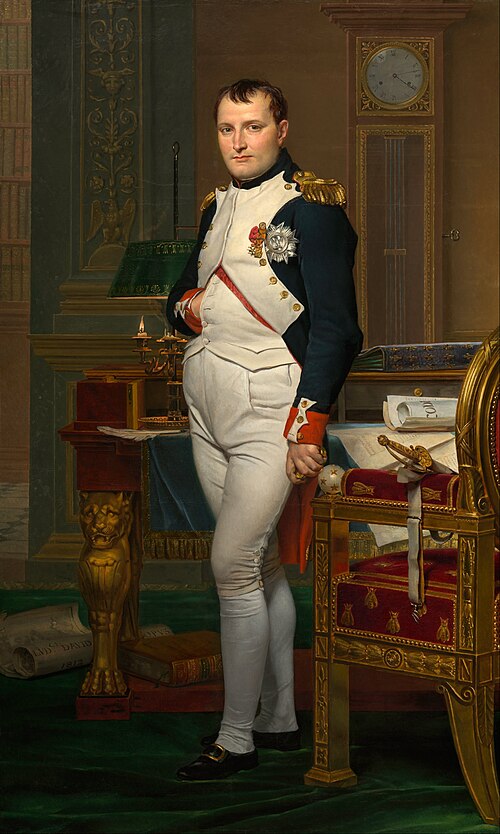
Napoleon Bonaparte
General · Modern
82.4Total
Basic Information
Born
-540
1769
Died
-480
1821
Era
Ancient
Modern
Nationality
Greece
France
Occupation
General
General
Civilization
Western
Western
Score Comparison
Military (10%)
30.7
94.0
Political (20%)
46.3
75.0
Influence (20%)
70.5
82.0
Legacy (20%)
73.3
78.0
Leadership (15%)
76.5
80.0
Strategy (15%)
57.3
93.0
TOTAL
61.2
82.4
Rankings
🥇
Napoleon BonaparteLeader
Mil: 94.0Pol: 75.0Inf: 82.0
82.4
🥈
Leonidas I
Mil: 30.7Pol: 46.3Inf: 70.5
61.2
+21.2 behind
How This Comparison Works
Algorithm
Each figure is scored on 6 dimensions (0—100 scale) based on structured historical data: Military (10%), Political (20%), Influence (20%), Legacy (20%), Leadership (15%), Strategy (15%). The weighted total produces the final ranking.
Data Sources
Scores are computed from structured sub-indicators in the database. Scale factors adjust for era (Ancient ×0.85, Modern ×1.0) and civilization size (Eastern ×1.05, Other ×0.80) to account for differences in population and military scale.
Maximum 3 Figures
Comparisons are limited to 2—3 figures to ensure readability and statistical meaningfulness.
Error Margins
±5 points per dimension — Sub-scores are derived from historical records with inherent uncertainty. Two figures within 5 points on a dimension should be considered roughly equivalent in that area.
Total Score Accuracy
±3 points overall — The weighted combination of 6 dimensions produces a total score with approximately ±3 points of uncertainty. Differences of less than 3 points are not statistically significant— the figures are effectively tied.
Known Limitations
- Historical records are incomplete and uneven across civilizations
- Figures from oral-tradition societies may be underrepresented
- Occupation labels can misclassify multi-role figures
- Scores measure capability and impact, not moral character
- Quantitative scoring is a comparison tool, not absolute truth
Capability Radar
Military (10%) — Battles & Warfare
Battles
30
95
Win Rate
20
90
Expansion
10
95
Political (20%) — Governance & Reform
Reform
20
95
Diplomacy
30
80
Economy
20
85
Influence (20%) — Cultural & Global Reach
Cultural
75
85
Global
70
90
Legacy (20%) — Historical Impact
Historical
80
95
Longevity
85
90
Leadership (15%) — Power & Stability
Tenure
40
85
Stability
35
70
Strategy (15%) — Tactics & Innovation
Strategy
55
95
Tactics
65
98
Reform
10
92
Analysis will be generated on first visit.
Scores and timeline are available below. The page will refresh automatically when ready.
Leonidas I — Complete Timeline
490 BC
Accession as King of SpartaPolitical Action◆ Major
Leonidas became one of the two kings of Sparta, likely succeeding his half-brother Cleomenes I. As a member of the Agiad dynasty, he assumed command of the Spartan army and played a key role in Spartan foreign policy during the Persian invasion.
SpartaKingshipSuccession
Impact: national
480 BC
Battle of ThermopylaeWar
Leonidas led a small Greek force, including 300 Spartans, against the invading Persian army under Xerxes I at the pass of Thermopylae. The Greeks held for three days before being outflanked. Leonidas and his contingent were killed, but the stand became a symbol of Greek resistance.
Greco-Persian WarsBattleSparta
Impact: regionaltragic
Command at the Battle of ThermopylaeWar◆ Major
Leonidas commanded the allied Greek forces at Thermopylae. He chose to remain with the rearguard after learning of the Persian flanking maneuver, leading to his death along with his 300 Spartans and other Greek volunteers. The sacrifice delayed the Persian advance.
Greco-Persian WarsBattleSparta
Impact: regionaltragic
Napoleon Bonaparte — Complete Timeline
1799 AD
Coup of 18 BrumaireOther◆ Major
Napoleon Bonaparte, with support from his brother Lucien and key political figures, overthrew the Directory in a bloodless coup. He established the Consulate with himself as First Consul, effectively becoming the ruler of France. This event ended the French Revolution's most unstable period.
French RevolutionCoupRise to Power
Impact: regional
1804 AD
Promulgation of the Napoleonic CodeOther◆ Major
Napoleon enacted the Civil Code of the French, known as the Napoleonic Code, a comprehensive set of laws that replaced the fragmented feudal legal systems. The code established legal equality, protected property rights, and secularized law. It became the basis for legal systems in many European and world countries.
Legal ReformNapoleonic CodeCivil Law
Impact: globalconstructive
1805 AD
Battle of AusterlitzWar◆ Major
Napoleon's Grande Arm
Napoleonic WarsBattleDecisive Victory
Impact: global
1812 AD
Invasion of RussiaWar◆ Major
Napoleon led the Grande Arm
Napoleonic WarsInvasionDisaster
Impact: globaldestructive
1815 AD
Battle of WaterlooWar◆ Major
Napoleon's French army was defeated by the combined forces of the Duke of Wellington's Anglo-Allied army and Gebhard Leberecht von Bl
Napoleonic WarsBattleFinal Defeat
Impact: globaldestructive
Similar Comparisons
Comments & Discussion
LastStandLaconia6/17/2026
Leonidas chose his ground knowing death was certain—that's not strategy, that's suicide as propaganda. Napoleon at Waterloo made tactical errors, sure, but he didn't march 300 men into a meat grinder for glory. The myth of Thermopylae is a two-millennia-old PR coup for a militaristic slave state that couldn't adapt. Give me a general who wins campaigns, not a king who lost the battle and the war.
赤脚数据控6/17/2026
数值上拿破仑碾压:指挥50万大军,60+场会战胜利,控制大半个欧洲。列奥尼达斯呢?一场防御战,300人全灭,连温泉关都没守住。这叫"不朽的象征"?不过是西方中心史观对古典时代的盲目崇拜。真要比较,拿破仑的军事体系革新——师级编制、快速机动、参谋制度——直接影响现代战争,列奥尼达斯的战术贡献几乎为零。
CataphractCritic6/17/2026
Both are overrated by their respective fan clubs. Leonidas wasn't some freedom-loving underdog—he led a coalition force that included helot conscripts who outnumbered his Spartans. Napoleon's "genius" relied on luck and crumbling coalitions. The real military lesson? Leonidas showed the power of defensive terrain and morale; Napoleon showed how logistics and artillery win wars. Neither was a flawless demigod, but both got lucky with their PR teams.
帝国解剖师6/17/2026
拿破仑的失败更深刻:他建立了一个现代官僚帝国,却死于孤立的战略眼光——大陆封锁政策树敌全欧,远征俄国是后勤灾难。列奥尼达斯之死没有后果,因为希波战争的本质是波斯帝国的内部矛盾大于希腊的抵抗。若论指挥实绩,拿破仑的奥斯特里茨战役完胜任何古代战役;但论作为符号的持久性,列奥尼达斯更占优势,因为悲壮比胜利更容易被神化。
PhalanxPundit6/17/2026
You can't compare a city-state king who commanded maybe 7,000 total troops to an emperor who mobilized millions. Apples and oranges. But if we're talking pure leadership under fire, Leonidas wins. He didn't retreat, didn't negotiate, didn't write self-serving memoirs from exile. Napoleon abandoned his army in Egypt and later at Waterloo left the field while his Guard got slaughtered. Give me the king who stood his ground over the emperor who saved his own skin.