Loading...
Analysis will be generated on first visit.
Scores and timeline are available below. The page will refresh automatically when ready.
Abbas the Great vs Qin Shi Huang
Qin Shi Huang leads by 6.0 pts · 2 figures compared
…
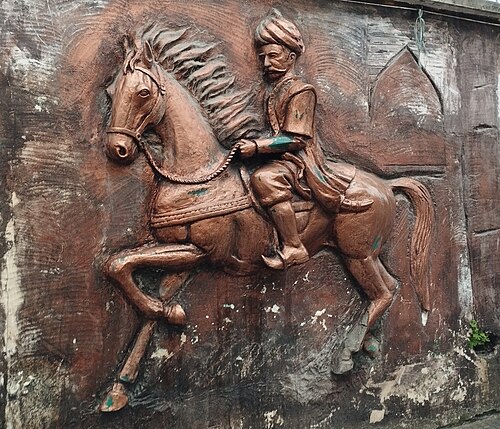
Abbas the Great
Emperor · Modern
77.5Total
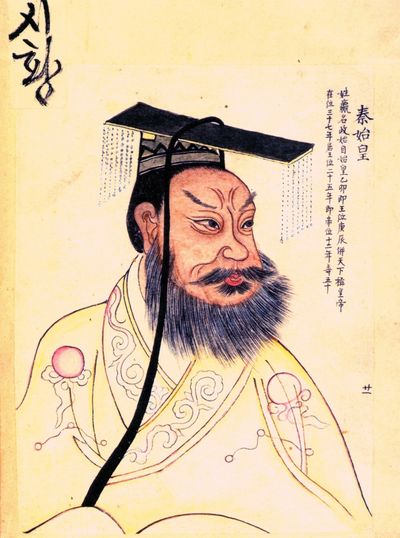
Qin Shi Huang
Emperor · Ancient
83.5Total
Basic Information
Born
1571
-259
Died
1629
-210
Era
Modern
Ancient
Nationality
Persia
China
Occupation
Emperor
Emperor
Civilization
Middle Eastern
Eastern
Score Comparison
Military (10%)
77.7
80.0
Political (20%)
84.1
88.0
Influence (20%)
72.0
82.0
Legacy (20%)
73.9
85.0
Leadership (15%)
82.9
88.0
Strategy (15%)
75.0
75.0
TOTAL
77.5
83.5
Rankings
🥇
Qin Shi HuangLeader
Mil: 80.0Pol: 88.0Inf: 82.0
83.5
🥈
Abbas the Great
Mil: 77.7Pol: 84.1Inf: 72.0
77.5
+6.0 behind
How This Comparison Works
Algorithm
Each figure is scored on 6 dimensions (0—100 scale) based on structured historical data: Military (10%), Political (20%), Influence (20%), Legacy (20%), Leadership (15%), Strategy (15%). The weighted total produces the final ranking.
Data Sources
Scores are computed from structured sub-indicators in the database. Scale factors adjust for era (Ancient ×0.85, Modern ×1.0) and civilization size (Eastern ×1.05, Other ×0.80) to account for differences in population and military scale.
Maximum 3 Figures
Comparisons are limited to 2—3 figures to ensure readability and statistical meaningfulness.
Error Margins
±5 points per dimension — Sub-scores are derived from historical records with inherent uncertainty. Two figures within 5 points on a dimension should be considered roughly equivalent in that area.
Total Score Accuracy
±3 points overall — The weighted combination of 6 dimensions produces a total score with approximately ±3 points of uncertainty. Differences of less than 3 points are not statistically significant— the figures are effectively tied.
Known Limitations
- Historical records are incomplete and uneven across civilizations
- Figures from oral-tradition societies may be underrepresented
- Occupation labels can misclassify multi-role figures
- Scores measure capability and impact, not moral character
- Quantitative scoring is a comparison tool, not absolute truth
Capability Radar
Military (10%) — Battles & Warfare
Battles
85
85
Win Rate
80
90
Expansion
85
90
Political (20%) — Governance & Reform
Reform
92
95
Diplomacy
88
75
Economy
90
90
Influence (20%) — Cultural & Global Reach
Cultural
88
95
Global
80
85
Legacy (20%) — Historical Impact
Historical
85
95
Longevity
75
95
Leadership (15%) — Power & Stability
Tenure
85
70
Stability
78
65
Strategy (15%) — Tactics & Innovation
Strategy
88
85
Tactics
82
80
Reform
90
95
Analysis will be generated on first visit.
Scores and timeline are available below. The page will refresh automatically when ready.
Abbas the Great — Complete Timeline
1598 AD
Construction of Isfahan as CapitalCultural
Abbas the Great moved the Safavid capital from Qazvin to Isfahan. He initiated a massive building program, constructing the Naqsh-e Jahan Square, the Shah Mosque, and the Ali Qapu palace. Isfahan was transformed into a grand city with parks, bridges, and bazaars, becoming a center of Persian culture and commerce.
Urban PlanningArchitectureIsfahan
Impact: globalconstructive
1600 AD
Reform of the Army (Ghulam System)Reform◆ Major
Abbas the Great established a new military corps of ghulams (slave soldiers) recruited from Christian subjects in the Caucasus. These troops were trained in modern firearms and artillery, reducing the Safavid reliance on the Qizilbash tribal forces. This reform created a loyal, professional army that strengthened the central government.
Military ReformGhulamsCentralization
Impact: nationalconstructive
1605 AD
Battle of SufiyanWar◆ Major
Abbas the Great led the Safavid army to victory against the Ottoman Empire at Sufiyan near Tabriz. This battle was part of the Ottoman-Safavid War of 1603-1618. The victory allowed Abbas to recapture Tabriz and other territories lost to the Ottomans in earlier wars.
BattleOttoman WarTabriz
Impact: regional
1622 AD
Expulsion of the Portuguese from HormuzWar◆ Major
Abbas the Great allied with the English East India Company to expel the Portuguese from the island of Hormuz in the Persian Gulf. A joint Persian-English force captured the Portuguese fort after a siege. This victory ended Portuguese dominance in the Persian Gulf and opened trade routes for Persian and English merchants.
SiegePortuguesePersian Gulf
Impact: regional
1623 AD
Recapture of BaghdadWar◆ Major
Abbas the Great led a campaign to recapture Baghdad from the Ottoman Empire. The Safavid army besieged the city and forced the Ottoman garrison to surrender. This victory restored Safavid control over Mesopotamia, a region lost since the Battle of Chaldiran in 1514.
SiegeMesopotamiaOttoman War
Impact: regional
Qin Shi Huang — Complete Timeline
246 BC
Construction of the Mausoleum and Terracotta ArmyOther◆ Major
Qin Shi Huang commissioned a vast mausoleum complex near Xi'an, guarded by thousands of life-sized terracotta soldiers, horses, and chariots. The project employed hundreds of thousands of workers and reflected his obsession with immortality and imperial power.
Impact: global
230 BC
Conquest of the Six Warring StatesWar
From 230 to 221 BCE, Ying Zheng led the Qin state in a series of campaigns that conquered the Han, Zhao, Wei, Chu, Yan, and Qi states. This unified China under a single ruler for the first time, ending the Warring States period.
Impact: global
221 BC
Standardization of Writing, Currency, and MeasurementsReform◆ Major
Qin Shi Huang ordered the standardization of Chinese script, currency, and weights and measures across the unified empire. This facilitated administration, trade, and cultural integration, laying a foundation for future dynasties.
Impact: globalconstructive
Proclamation of the Qin DynastyPolitical Action
After conquering the last independent state, Ying Zheng declared himself Shi Huangdi (First Emperor), founding the Qin Dynasty. He adopted a new title to signify his supreme authority and initiated centralized imperial rule.
Impact: global
214 BC
Initiation of the Great Wall ConstructionOther◆ Major
Qin Shi Huang ordered the connection and extension of existing northern fortifications to create a unified defensive wall against nomadic Xiongnu raids. This project involved massive conscripted labor and became the precursor to the later Great Wall.
Impact: regional
213 BC
Burning of Books and Burying of ScholarsPolitical Action◆ Major
On the advice of Li Si, Qin Shi Huang ordered the burning of historical records and philosophical texts not aligned with Legalist doctrine. He also had 460 Confucian scholars buried alive to suppress dissent and consolidate ideological control.
Impact: nationaldestructive
Similar Comparisons
Comments & Discussion
Spear of Serpents6/17/2026
Calling Abbas "great" next to Qin Shi Huang is like comparing a garden fountain to a tsunami. Qin didn't just build an empire—he reinvented civilization itself: standardizing script, weights, and axle lengths across a territory larger than Rome at its peak. Abbas inherited a dynasty and made it pretty. Different league entirely.
Stone Inscriber6/17/2026
秦始皇就是个暴君,焚书坑儒,烧掉所有历史记录。他疯了,寻求长生不老,每天吃水银药丸,五十岁就死了。阿拔斯大帝至少是明智的统治者,把伊斯法罕变成了文化天堂,还建立了外国定居社区。我更愿意生活在他的伊朗,而不是秦始皇的恐怖国家。
Logistics Rat6/17/2026
Everyone romanticizes these "unifiers," but let's talk nuts and bolts. Qin Shi Huang connected 5,000 km of defensive walls into the Great Wall, built a national road network, and standardized cart axle lengths so roads actually worked. Abbas built some nice palaces and a bridge. Infrastructure matters. Qin wins on civil engineering alone—his supply chains were revolutionary.
Silk Road Debater6/17/2026
等一下。阿拔斯大帝把波斯从混乱中拉出来,打了二十年的仗,确保了丝绸之路的安全,让贸易通往欧洲和印度。他夺取了霍尔木兹岛——这是当时的马六甲海峡——控制了全球贸易。秦始皇封闭了中国,修筑了长城以防止外来思想。我会投票给那个向世界开放的人,而不是建造监狱围墙的皇帝。