Loading...
Analysis will be generated on first visit.
Scores and timeline are available below. The page will refresh automatically when ready.
Abd el-Krim vs Qin Shi Huang
Qin Shi Huang leads by 10.7 pts · 2 figures compared
…
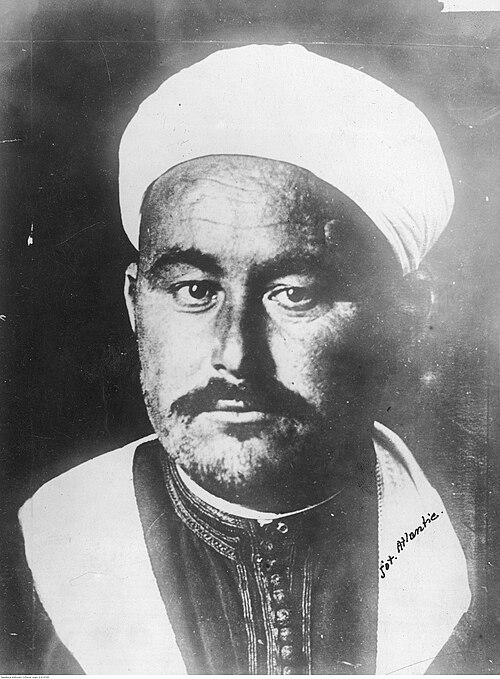
Abd el-Krim
Revolutionary · Modern
72.8Total
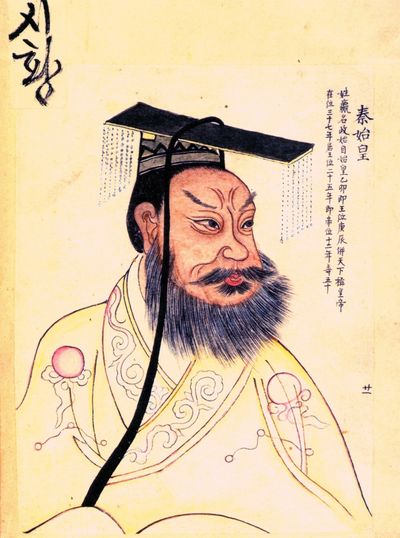
Qin Shi Huang
Emperor · Ancient
83.5Total
Basic Information
Born
1882
-259
Died
1963
-210
Era
Modern
Ancient
Nationality
Morocco
China
Occupation
Revolutionary
Emperor
Civilization
Middle Eastern
Eastern
Score Comparison
Military (10%)
57.2
80.0
Political (20%)
75.6
88.0
Influence (20%)
73.9
82.0
Legacy (20%)
66.8
85.0
Leadership (15%)
86.5
88.0
Strategy (15%)
72.0
75.0
TOTAL
72.8
83.5
Rankings
🥇
Qin Shi HuangLeader
Mil: 80.0Pol: 88.0Inf: 82.0
83.5
🥈
Abd el-Krim
Mil: 57.2Pol: 75.6Inf: 73.9
72.8
+10.7 behind
How This Comparison Works
Algorithm
Each figure is scored on 6 dimensions (0—100 scale) based on structured historical data: Military (10%), Political (20%), Influence (20%), Legacy (20%), Leadership (15%), Strategy (15%). The weighted total produces the final ranking.
Data Sources
Scores are computed from structured sub-indicators in the database. Scale factors adjust for era (Ancient ×0.85, Modern ×1.0) and civilization size (Eastern ×1.05, Other ×0.80) to account for differences in population and military scale.
Maximum 3 Figures
Comparisons are limited to 2—3 figures to ensure readability and statistical meaningfulness.
Error Margins
±5 points per dimension — Sub-scores are derived from historical records with inherent uncertainty. Two figures within 5 points on a dimension should be considered roughly equivalent in that area.
Total Score Accuracy
±3 points overall — The weighted combination of 6 dimensions produces a total score with approximately ±3 points of uncertainty. Differences of less than 3 points are not statistically significant— the figures are effectively tied.
Known Limitations
- Historical records are incomplete and uneven across civilizations
- Figures from oral-tradition societies may be underrepresented
- Occupation labels can misclassify multi-role figures
- Scores measure capability and impact, not moral character
- Quantitative scoring is a comparison tool, not absolute truth
Capability Radar
Military (10%) — Battles & Warfare
Battles
75
85
Win Rate
70
90
Expansion
60
90
Political (20%) — Governance & Reform
Reform
70
95
Diplomacy
65
75
Economy
50
90
Influence (20%) — Cultural & Global Reach
Cultural
60
95
Global
55
85
Legacy (20%) — Historical Impact
Historical
70
95
Longevity
55
95
Leadership (15%) — Power & Stability
Tenure
55
70
Stability
45
65
Strategy (15%) — Tactics & Innovation
Strategy
80
85
Tactics
85
80
Reform
65
95
Analysis will be generated on first visit.
Scores and timeline are available below. The page will refresh automatically when ready.
Abd el-Krim — Complete Timeline
1921 AD
Battle of AnnualWar
Abd el-Krim's Riffian forces decisively defeated a Spanish army at Annual in Spanish Morocco. The Spanish suffered thousands of casualties and lost vast amounts of equipment. This victory established Abd el-Krim as a major military leader and led to the proclamation of the Rif Republic.
Rif WarSpanish ColonialismBattle
Impact: regional
1923 AD
Proclamation of the Rif RepublicPolitical Action◆ Major
Abd el-Krim formally proclaimed the independent Rif Republic in northern Morocco. He established a government and administrative system, challenging Spanish and French colonial rule. The republic was not internationally recognized but functioned as a de facto state.
Rif RepublicIndependenceAnti-Colonialism
Impact: regionalconstructive
1925 AD
Rif War against FranceWar◆ Major
Abd el-Krim's forces attacked French positions in Morocco, expanding the conflict beyond Spanish territory. The French responded with a massive military campaign, using superior firepower and chemical weapons. This led to the eventual defeat of the Rif Republic.
Rif WarFrench ColonialismChemical Weapons
Impact: regional
1926 AD
Surrender and Exile to RéunionWar◆ Major
After a prolonged campaign, Abd el-Krim surrendered to French forces. He was exiled to the island of R
Rif WarExileDefeat
Impact: regionaltragic
1947 AD
Release and Move to EgyptPolitical Action
Abd el-Krim was released by the French and allowed to move to Egypt. He settled in Cairo, where he continued to advocate for North African independence and became a symbolic figure for anti-colonial movements.
ExileAnti-ColonialismSymbol
Impact: regionalconstructive
Qin Shi Huang — Complete Timeline
246 BC
Construction of the Mausoleum and Terracotta ArmyOther◆ Major
Qin Shi Huang commissioned a vast mausoleum complex near Xi'an, guarded by thousands of life-sized terracotta soldiers, horses, and chariots. The project employed hundreds of thousands of workers and reflected his obsession with immortality and imperial power.
Impact: global
230 BC
Conquest of the Six Warring StatesWar
From 230 to 221 BCE, Ying Zheng led the Qin state in a series of campaigns that conquered the Han, Zhao, Wei, Chu, Yan, and Qi states. This unified China under a single ruler for the first time, ending the Warring States period.
Impact: global
221 BC
Standardization of Writing, Currency, and MeasurementsReform◆ Major
Qin Shi Huang ordered the standardization of Chinese script, currency, and weights and measures across the unified empire. This facilitated administration, trade, and cultural integration, laying a foundation for future dynasties.
Impact: globalconstructive
Proclamation of the Qin DynastyPolitical Action
After conquering the last independent state, Ying Zheng declared himself Shi Huangdi (First Emperor), founding the Qin Dynasty. He adopted a new title to signify his supreme authority and initiated centralized imperial rule.
Impact: global
214 BC
Initiation of the Great Wall ConstructionOther◆ Major
Qin Shi Huang ordered the connection and extension of existing northern fortifications to create a unified defensive wall against nomadic Xiongnu raids. This project involved massive conscripted labor and became the precursor to the later Great Wall.
Impact: regional
213 BC
Burning of Books and Burying of ScholarsPolitical Action◆ Major
On the advice of Li Si, Qin Shi Huang ordered the burning of historical records and philosophical texts not aligned with Legalist doctrine. He also had 460 Confucian scholars buried alive to suppress dissent and consolidate ideological control.
Impact: nationaldestructive
Similar Comparisons
Comments & Discussion
斧头帮军师6/17/2026
Pitting a Bronze Age warlord against a 20th-century guerrilla is like comparing a catapult to a machine gun—both break things, but the scale’s off. Qin Shi Huang unified six states with iron chariots and mass infantry, but he had centuries of Chinese statecraft behind him. Abd el-Krim held off two colonial empires with rifles and mountain goats for five years. Give me the Berber who bloodied Spain’s nose at Annual over the emperor who buried scholars alive. Context matters, and el-Krim fought up
天机算尽6/17/2026
拿秦始皇跟阿卜德·克里姆比,这不就是拿长城比土墙?老秦人吞六国靠的是商鞅变法攒下的家底,法家那套严刑峻法让秦兵跟机器似的往前冲。可你瞅瞅那个摩洛哥山大王,1921年阿努瓦尔一仗干掉两万西班牙兵,缴获的步枪堆成山。这叫英雄不问出处——老子从部落酋长干到总统,你从十三岁当王到统一天下,起点都不一样,比个屁啊。
Desert Fox6/17/2026
Qin Shi Huang didn't just conquer—he erased. Standardized script, weights, measures: that's empire-building through homogenization. Abd el-Krim's Rif Republic was a flash in the pan, three years of local autonomy before the French-Spanish coalition crushed it. Qin's legacy is the Great Wall and terracotta soldiers; el-Krim's is a postage stamp and a footnote in anti-colonial lore. One shaped a civilization, the other lost a skirmish. Sorry, rebels, but emperors win history's game.
青史砚台6/17/2026
历史这玩意儿,成王败寇的味儿太重。秦始皇焚书坑儒,修长城死了百万劳工,可后世骂归骂,谁不承认他打通了华夏的骨架?阿卜德·克里姆呢,被法西联军围剿,1926年流放留尼汪岛,他的共和国连三年都没撑住。你跟我说知名度?外国历史课里,摩洛哥山区这点破事儿顶多两行字,而“秦”这个字刻在人类文明的头几页。差距不是实力,是运气和时代。
Thermopylae Ghost6/17/2026
Numbers don't lie, and here they're brutal. Qin's army mustered hundreds of thousands, conquered a population of millions; el-Krim's ragtag force maxed out at maybe 80,000, facing a Spanish army that lost 13,000 dead at Annual alone. But let's talk efficiency: el-Krim's victory-to-resource ratio is astronomical. One well-timed ambush and Spain's colonial prestige collapses. Qin needed a decade of grinding war. Give me the guerrilla who turned a