Loading...
Analysis will be generated on first visit.
Scores and timeline are available below. The page will refresh automatically when ready.
Bayinnaung vs Qin Shi Huang
Qin Shi Huang leads by 6.3 pts · 2 figures compared
…
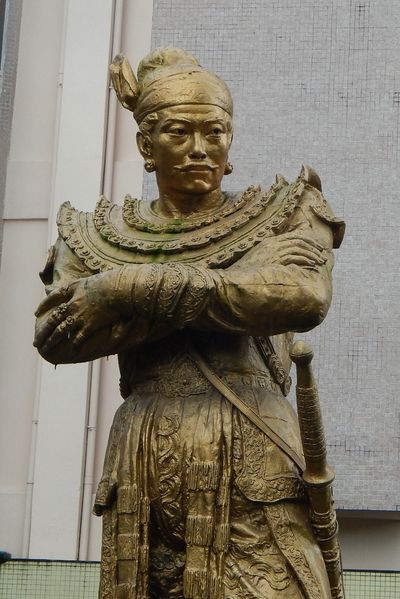
Bayinnaung
Emperor · Modern
77.2Total
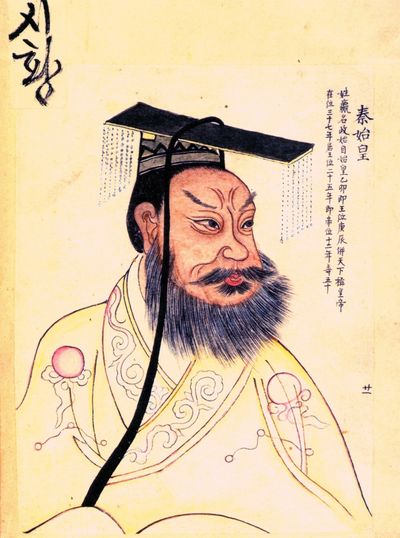
Qin Shi Huang
Emperor · Ancient
83.5Total
Basic Information
Born
1516
-259
Died
1581
-210
Era
Modern
Ancient
Nationality
Myanmar
China
Occupation
Emperor
Emperor
Civilization
Eastern
Eastern
Score Comparison
Military (10%)
79.8
80.0
Political (20%)
85.1
88.0
Influence (20%)
69.5
82.0
Legacy (20%)
73.0
85.0
Leadership (15%)
84.2
88.0
Strategy (15%)
73.6
75.0
TOTAL
77.2
83.5
Rankings
🥇
Qin Shi HuangLeader
Mil: 80.0Pol: 88.0Inf: 82.0
83.5
🥈
Bayinnaung
Mil: 79.8Pol: 85.1Inf: 69.5
77.2
+6.3 behind
How This Comparison Works
Algorithm
Each figure is scored on 6 dimensions (0—100 scale) based on structured historical data: Military (10%), Political (20%), Influence (20%), Legacy (20%), Leadership (15%), Strategy (15%). The weighted total produces the final ranking.
Data Sources
Scores are computed from structured sub-indicators in the database. Scale factors adjust for era (Ancient ×0.85, Modern ×1.0) and civilization size (Eastern ×1.05, Other ×0.80) to account for differences in population and military scale.
Maximum 3 Figures
Comparisons are limited to 2—3 figures to ensure readability and statistical meaningfulness.
Error Margins
±5 points per dimension — Sub-scores are derived from historical records with inherent uncertainty. Two figures within 5 points on a dimension should be considered roughly equivalent in that area.
Total Score Accuracy
±3 points overall — The weighted combination of 6 dimensions produces a total score with approximately ±3 points of uncertainty. Differences of less than 3 points are not statistically significant— the figures are effectively tied.
Known Limitations
- Historical records are incomplete and uneven across civilizations
- Figures from oral-tradition societies may be underrepresented
- Occupation labels can misclassify multi-role figures
- Scores measure capability and impact, not moral character
- Quantitative scoring is a comparison tool, not absolute truth
Capability Radar
Military (10%) — Battles & Warfare
Battles
85
85
Win Rate
90
90
Expansion
92
90
Political (20%) — Governance & Reform
Reform
70
95
Diplomacy
78
75
Economy
72
90
Influence (20%) — Cultural & Global Reach
Cultural
70
95
Global
55
85
Legacy (20%) — Historical Impact
Historical
75
95
Longevity
60
95
Leadership (15%) — Power & Stability
Tenure
85
70
Stability
65
65
Strategy (15%) — Tactics & Innovation
Strategy
88
85
Tactics
80
80
Reform
75
95
Analysis will be generated on first visit.
Scores and timeline are available below. The page will refresh automatically when ready.
Bayinnaung — Complete Timeline
1550 AD
Establishment of the Toungoo EmpirePolitical Action
King Bayinnaung ascended the throne and began a series of military campaigns that created the largest empire in Southeast Asian history. At its peak, the Toungoo empire covered modern Myanmar, Thailand, Laos, and parts of China and India.
Toungoo EmpireSoutheast AsiaImperial Expansion
Impact: regionalconstructive
1557 AD
Conquest of the Shan StatesWar◆ Major
King Bayinnaung conquered the Shan States, bringing them under Toungoo control. This expansion added significant territory and resources to the Burmese empire.
Shan StatesToungoo ExpansionBurmese Empire
Impact: regional
1569 AD
Capture of AyutthayaWar
King Bayinnaung's forces captured the Siamese capital of Ayutthaya after a long siege. He installed a vassal king and made Siam a tributary state of the Toungoo empire.
Burmese-Siamese WarAyutthayaToungoo Empire
Impact: regional
1570 AD
Administrative ReformsReform◆ Major
King Bayinnaung implemented administrative reforms to govern his vast empire, including the appointment of governors and the standardization of laws and taxes. These reforms helped maintain control over conquered territories.
GovernanceAdministrationToungoo Empire
Impact: regionalconstructive
1574 AD
Conquest of Lan XangWar◆ Major
King Bayinnaung conquered the Lao kingdom of Lan Xang (modern Laos), bringing it under Toungoo control. This further expanded the Burmese empire to its greatest territorial extent.
Lan XangToungoo ExpansionLaos
Impact: regional
Qin Shi Huang — Complete Timeline
246 BC
Construction of the Mausoleum and Terracotta ArmyOther◆ Major
Qin Shi Huang commissioned a vast mausoleum complex near Xi'an, guarded by thousands of life-sized terracotta soldiers, horses, and chariots. The project employed hundreds of thousands of workers and reflected his obsession with immortality and imperial power.
Impact: global
230 BC
Conquest of the Six Warring StatesWar
From 230 to 221 BCE, Ying Zheng led the Qin state in a series of campaigns that conquered the Han, Zhao, Wei, Chu, Yan, and Qi states. This unified China under a single ruler for the first time, ending the Warring States period.
Impact: global
221 BC
Standardization of Writing, Currency, and MeasurementsReform◆ Major
Qin Shi Huang ordered the standardization of Chinese script, currency, and weights and measures across the unified empire. This facilitated administration, trade, and cultural integration, laying a foundation for future dynasties.
Impact: globalconstructive
Proclamation of the Qin DynastyPolitical Action
After conquering the last independent state, Ying Zheng declared himself Shi Huangdi (First Emperor), founding the Qin Dynasty. He adopted a new title to signify his supreme authority and initiated centralized imperial rule.
Impact: global
214 BC
Initiation of the Great Wall ConstructionOther◆ Major
Qin Shi Huang ordered the connection and extension of existing northern fortifications to create a unified defensive wall against nomadic Xiongnu raids. This project involved massive conscripted labor and became the precursor to the later Great Wall.
Impact: regional
213 BC
Burning of Books and Burying of ScholarsPolitical Action◆ Major
On the advice of Li Si, Qin Shi Huang ordered the burning of historical records and philosophical texts not aligned with Legalist doctrine. He also had 460 Confucian scholars buried alive to suppress dissent and consolidate ideological control.
Impact: nationaldestructive
Similar Comparisons
Comments & Discussion
Dragon_Slayer6/17/2026
Comparing Bayinnaung to Qin Shi Huang is like comparing a bonfire to a supernova. Sure, Bayinnaung conquered Siam and Laos, but his "empire" dissolved within decades of his death. Qin Shi Huang standardized writing, currency, and measurements across a territory that still defines China today. Bayinnaung's legacy is a footnote; the First Emperor's is a civilization.+
长城守护者6/17/2026
拿莽瑞体(Bayinnaung)跟秦始皇比?这简直是拿萤火虫比皓月。秦始皇统一了度量衡、文字、货币,建立了一个延续两千多年的帝国框架;莽瑞体的"帝国"呢?他死后几十年就分崩离析了。军事上或许有亮点,但论历史影响力,十个莽瑞体也抵不上一个始皇帝。
Data_Skeptic6/17/2026
Can we talk about the scale difference here? Qin Shi Huang unified a population of roughly 20 million people across 1.5 million square miles. Bayinnaung's "empire" might have covered 400,000 square miles with 5 million people. And don't get me started on the Great Wall - that's 13,000 miles of defense, versus Bayinnaung's... what? A few city walls? The numbers don't lie.+
象王神话6/17/2026
那些吹捧莽瑞体的人,你们提过缅甸史料里有多少水分吗?"征服了19个白象"这种记载,明显是为了宗教宣传而夸张的。反观秦始皇,有《史记》这样的正经史实可以考证。莽瑞体的战绩与其说是历史,不如说是佛教寓言。两个人物根本不在同一个历史层面上。
Classics_Scholar6/17/2026
The comparison is fundamentally flawed. Qin Shi Huang's unification was a philosophical revolution - replacing feudalism with Legalist centralization. Bayinnaung's conquests were traditional expansion, same as every other Southeast Asian monarch. The First Emperor standardized writing; Bayinnaung just collected tribute. One created a new civilization, the other just played the old game on a bigger board.