Loading...
Analysis will be generated on first visit.
Scores and timeline are available below. The page will refresh automatically when ready.
Charles III of Spain vs Julius Caesar
Julius Caesar leads by 10.5 pts · 2 figures compared
…

Charles III of Spain
Emperor · Modern
72.8Total
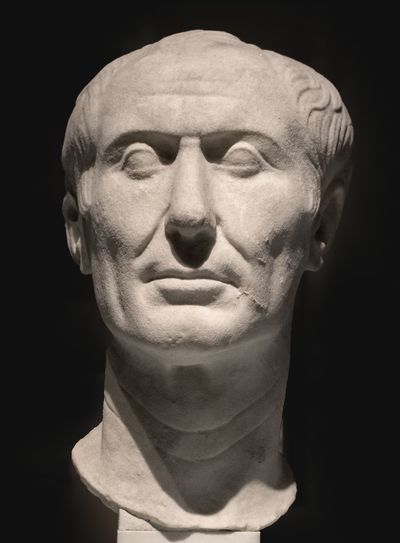
Julius Caesar
General · Ancient
83.3Total
Basic Information
Born
1716
-100
Died
1788
-44
Era
Modern
Ancient
Nationality
Spain
Roman Republic
Occupation
Emperor
General
Civilization
Western
Western
Score Comparison
Military (10%)
46.0
88.0
Political (20%)
83.8
78.0
Influence (20%)
72.0
85.0
Legacy (20%)
75.0
82.0
Leadership (15%)
82.0
82.0
Strategy (15%)
65.0
88.0
TOTAL
72.8
83.3
Rankings
🥇
Julius CaesarLeader
Mil: 88.0Pol: 78.0Inf: 85.0
83.3
🥈
Charles III of Spain
Mil: 46.0Pol: 83.8Inf: 72.0
72.8
+10.5 behind
How This Comparison Works
Algorithm
Each figure is scored on 6 dimensions (0—100 scale) based on structured historical data: Military (10%), Political (20%), Influence (20%), Legacy (20%), Leadership (15%), Strategy (15%). The weighted total produces the final ranking.
Data Sources
Scores are computed from structured sub-indicators in the database. Scale factors adjust for era (Ancient ×0.85, Modern ×1.0) and civilization size (Eastern ×1.05, Other ×0.80) to account for differences in population and military scale.
Maximum 3 Figures
Comparisons are limited to 2—3 figures to ensure readability and statistical meaningfulness.
Error Margins
±5 points per dimension — Sub-scores are derived from historical records with inherent uncertainty. Two figures within 5 points on a dimension should be considered roughly equivalent in that area.
Total Score Accuracy
±3 points overall — The weighted combination of 6 dimensions produces a total score with approximately ±3 points of uncertainty. Differences of less than 3 points are not statistically significant— the figures are effectively tied.
Known Limitations
- Historical records are incomplete and uneven across civilizations
- Figures from oral-tradition societies may be underrepresented
- Occupation labels can misclassify multi-role figures
- Scores measure capability and impact, not moral character
- Quantitative scoring is a comparison tool, not absolute truth
Capability Radar
Military (10%) — Battles & Warfare
Battles
20
95
Win Rate
25
92
Expansion
15
97
Political (20%) — Governance & Reform
Reform
90
90
Diplomacy
75
85
Economy
80
82
Influence (20%) — Cultural & Global Reach
Cultural
60
88
Global
65
94
Legacy (20%) — Historical Impact
Historical
70
95
Longevity
65
96
Leadership (15%) — Power & Stability
Tenure
85
75
Stability
70
60
Strategy (15%) — Tactics & Innovation
Strategy
40
94
Tactics
30
96
Reform
70
88
Analysis will be generated on first visit.
Scores and timeline are available below. The page will refresh automatically when ready.
Charles III of Spain — Complete Timeline
1752 AD
Established the Royal Academy of Fine Arts of San FernandoCultural
Charles III, while still king of Naples, founded the Royal Academy of Fine Arts of San Fernando in Madrid. The academy promoted neoclassical art and architecture, influencing Spanish cultural development.
ArtsAcademyNeoclassicism
Impact: nationalconstructive
1759 AD
Became King of SpainPolitical Action
Charles III succeeded his half-brother Ferdinand VI as king of Spain, having previously been king of Naples and Sicily. His reign marked the height of Bourbon reforms in Spain, implementing Enlightenment-inspired policies.
SuccessionEnlightenmentBourbon Reforms
Impact: globalconstructive
1760 AD
Modernized Madrid and Other CitiesCultural◆ Major
Charles III undertook major urban renewal projects in Madrid, including the construction of the Prado Museum, the Royal Botanical Garden, and the Alcal
Urban PlanningArchitectureEnlightenment
Impact: nationalconstructive
1767 AD
Expelled the Jesuits from Spain and Its ColoniesPolitical Action◆ Major
Charles III ordered the expulsion of the Society of Jesus (Jesuits) from all Spanish territories, confiscating their properties. This was part of a broader effort to reduce church power and assert royal control over education and missions.
Jesuit ExpulsionChurch-State RelationsEnlightenment
Impact: globaldestructive
1778 AD
Implemented Free Trade ReformsReform◆ Major
Charles III issued the Decree of Free Trade, opening Spanish American ports to trade with each other and with Spain. This reform dismantled the monopoly of C
Free TradeEconomic ReformColonial Policy
Impact: globalconstructive
1779 AD
Supported the American Revolution Against BritainWar◆ Major
Charles III entered the American Revolutionary War on the side of the American colonies and France, declaring war on Britain. Spanish forces recaptured Florida and Minorca, but the war strained Spain's finances.
American RevolutionWarDiplomacy
Impact: global
Similar Comparisons
Comments & Discussion
RubiconRumbler6/17/2026
Caesar gambled everything on a single river crossing, and we still mythologize that moment as genius. But let’s be real: his reforms in Gaul were brutal genocide dressed as civilization, and his "land reforms" bankrupted the treasury. Charles III actually built lasting institutions—roads, schools, bureaucracies—without crossing any Rubicon. Caesar was a glorious trainwreck; Charles was a boring success. I’d rather have a competent king than a flashy dictator.
历史碾过6/17/2026
拿凯撒跟查理三世比,真不公平。凯撒是造神的料——他写过《高卢战记》,那是第一本自吹自擂的战争博客;查理三世呢?他连个像样的个人传记都没留下。凯撒活了56年,打过无数仗,死前还在制定法律;查理三世活了72年,大部分时间在搞税收改革。改革当然重要,但谁记住税务官的名字?凯撒的名字就是权力本身,查理三世的名字需要谷歌一下才知道。历史偏爱血腥,不偏爱效率。
QuantCritic6/17/2026
The comparison frames Charles as a reformer and Caesar as a dictator, but glosses over Charles's own authoritarian streak. He expelled the Jesuits from Spain in 1767—that's not reform, that's religious cleansing. Caesar at least had the decency to keep his enemies close until he could turn them into allies. Charles's enlightenment was selective: free trade but no free press, modernization but no democracy. Both men consolidated power through force; Charles just had richer PR.
古典直谏6/17/2026
凯撒是个天才,但也是个疯子;查理三世是个庸才,但至少是个好国王。凯撒的改革,比如调整历法、发放公民权,全是为了个人野心;查理三世的改革,比如建立邮政系统、推动农业改良,的确为了国家。但问题是,凯撒改变了世界的规则,查理三世只是修理了西班牙的旧机器。你要是活在18世纪的马德里,查理三世很好;你要是活在历史里,凯撒才让人热血沸腾。平庸的稳定总是被忘记,激情的混乱才被记住。