Loading...
Analysis will be generated on first visit.
Scores and timeline are available below. The page will refresh automatically when ready.
Epaminondas vs Qin Shi Huang
Qin Shi Huang leads by 9.3 pts · 2 figures compared
…

Epaminondas
General · Ancient
74.2Total
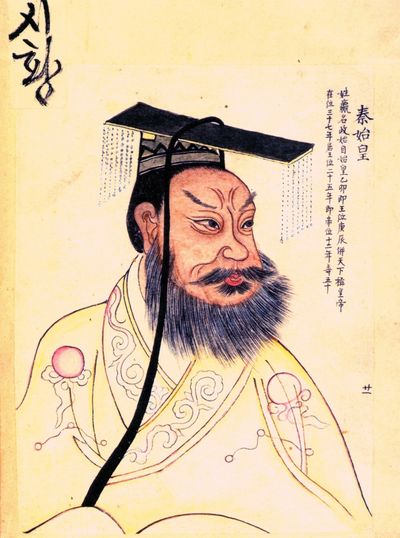
Qin Shi Huang
Emperor · Ancient
83.5Total
Basic Information
Born
-418
-259
Died
-362
-210
Era
Ancient
Ancient
Nationality
Greece
China
Occupation
General
Emperor
Civilization
Western
Eastern
Score Comparison
Military (10%)
79.5
80.0
Political (20%)
74.8
88.0
Influence (20%)
69.1
82.0
Legacy (20%)
68.8
85.0
Leadership (15%)
73.1
88.0
Strategy (15%)
84.7
75.0
TOTAL
74.2
83.5
Rankings
🥇
Qin Shi HuangLeader
Mil: 80.0Pol: 88.0Inf: 82.0
83.5
🥈
Epaminondas
Mil: 79.5Pol: 74.8Inf: 69.1
74.2
+9.3 behind
How This Comparison Works
Algorithm
Each figure is scored on 6 dimensions (0—100 scale) based on structured historical data: Military (10%), Political (20%), Influence (20%), Legacy (20%), Leadership (15%), Strategy (15%). The weighted total produces the final ranking.
Data Sources
Scores are computed from structured sub-indicators in the database. Scale factors adjust for era (Ancient ×0.85, Modern ×1.0) and civilization size (Eastern ×1.05, Other ×0.80) to account for differences in population and military scale.
Maximum 3 Figures
Comparisons are limited to 2—3 figures to ensure readability and statistical meaningfulness.
Error Margins
±5 points per dimension — Sub-scores are derived from historical records with inherent uncertainty. Two figures within 5 points on a dimension should be considered roughly equivalent in that area.
Total Score Accuracy
±3 points overall — The weighted combination of 6 dimensions produces a total score with approximately ±3 points of uncertainty. Differences of less than 3 points are not statistically significant— the figures are effectively tied.
Known Limitations
- Historical records are incomplete and uneven across civilizations
- Figures from oral-tradition societies may be underrepresented
- Occupation labels can misclassify multi-role figures
- Scores measure capability and impact, not moral character
- Quantitative scoring is a comparison tool, not absolute truth
Capability Radar
Military (10%) — Battles & Warfare
Battles
75
85
Win Rate
85
90
Expansion
60
90
Political (20%) — Governance & Reform
Reform
70
95
Diplomacy
75
75
Economy
50
90
Influence (20%) — Cultural & Global Reach
Cultural
65
95
Global
60
85
Legacy (20%) — Historical Impact
Historical
80
95
Longevity
70
95
Leadership (15%) — Power & Stability
Tenure
55
70
Stability
45
65
Strategy (15%) — Tactics & Innovation
Strategy
90
85
Tactics
95
80
Reform
85
95
Analysis will be generated on first visit.
Scores and timeline are available below. The page will refresh automatically when ready.
Epaminondas — Complete Timeline
371 BC
Battle of LeuctraWar
Epaminondas led the Theban army to defeat the Spartans at Leuctra using innovative tactics, including an echelon formation with a deep left flank. The victory shattered Spartan military dominance and ended their hegemony over Greece.
Greek WarfareSpartan HegemonyMilitary Innovation
Impact: regional
370 BC
First Invasion of the PeloponneseWar◆ Major
Epaminondas led a Theban army into the Peloponnese, invading Spartan territory for the first time in centuries. He liberated Messenia from Spartan control and founded the city of Messene, permanently weakening Sparta's economy and military.
SpartaMesseniaGreek Politics
Impact: regional
368 BC
Foundation of MegalopolisPolitical Action◆ Major
Epaminondas founded the city of Megalopolis as the capital of the Arcadian League. The city served as a political counterweight to Sparta and a center for anti-Spartan forces in the Peloponnese.
Urban FoundationArcadian LeagueAnti-Spartan
Impact: regionalconstructive
362 BC
Battle of MantineaWar
Epaminondas led the Theban army against a coalition of Sparta, Athens, and other Greek states at Mantinea. The Thebans won the battle, but Epaminondas was killed. His death ended Theban hegemony and left Greece in a power vacuum.
BattleDeathGreek Hegemony
Impact: regionaltragic
Qin Shi Huang — Complete Timeline
246 BC
Construction of the Mausoleum and Terracotta ArmyOther◆ Major
Qin Shi Huang commissioned a vast mausoleum complex near Xi'an, guarded by thousands of life-sized terracotta soldiers, horses, and chariots. The project employed hundreds of thousands of workers and reflected his obsession with immortality and imperial power.
Impact: global
230 BC
Conquest of the Six Warring StatesWar
From 230 to 221 BCE, Ying Zheng led the Qin state in a series of campaigns that conquered the Han, Zhao, Wei, Chu, Yan, and Qi states. This unified China under a single ruler for the first time, ending the Warring States period.
Impact: global
221 BC
Standardization of Writing, Currency, and MeasurementsReform◆ Major
Qin Shi Huang ordered the standardization of Chinese script, currency, and weights and measures across the unified empire. This facilitated administration, trade, and cultural integration, laying a foundation for future dynasties.
Impact: globalconstructive
Proclamation of the Qin DynastyPolitical Action
After conquering the last independent state, Ying Zheng declared himself Shi Huangdi (First Emperor), founding the Qin Dynasty. He adopted a new title to signify his supreme authority and initiated centralized imperial rule.
Impact: global
214 BC
Initiation of the Great Wall ConstructionOther◆ Major
Qin Shi Huang ordered the connection and extension of existing northern fortifications to create a unified defensive wall against nomadic Xiongnu raids. This project involved massive conscripted labor and became the precursor to the later Great Wall.
Impact: regional
213 BC
Burning of Books and Burying of ScholarsPolitical Action◆ Major
On the advice of Li Si, Qin Shi Huang ordered the burning of historical records and philosophical texts not aligned with Legalist doctrine. He also had 460 Confucian scholars buried alive to suppress dissent and consolidate ideological control.
Impact: nationaldestructive
Similar Comparisons
Comments & Discussion
LEUCTRA_BREAKER6/17/2026
Epaminondas did what Qin Shi Huang never could—he proved that a smaller, smarter force can topple a military giant. At Leuctra, he used the oblique phalanx with 50 ranks deep on the left flank, a tactical revolution that crushed Sparta's elite. Ying Zheng just threw mass armies and Legalist terror at his enemies. Which is braver: innovating against a myth or bullying weaker states with a war machine built by your ancestors? Give me the liberator any day.
TERRACOTTA_SKEPTIC6/17/2026
数据不会说谎:秦朝统一后仅15年就灭亡,人口暴降,而底比斯霸权至少撑了10年。秦始皇光修长城就征30万民夫,建始皇陵70万,这哪是统一,分明是人口清算。埃帕米农达斯解放麦西尼亚农奴,恢复独立城邦,用最小代价打破斯巴达神话。一个靠暴力收割,一个靠智慧解放。秦始皇皇帝称号很响亮,但治国能力连底比斯将军的零头都不够。数据不会骗人,暴政注定短命。
AEGEAN_PHALANX6/17/2026
The real kicker? Epaminondas was a philosopher-king, a Pythagorean devotee who believed in harmony and arithmetic, while Qin Shi Huang was a paranoid tyrant who burned books so nobody could question his rules. One led by example, the other by fear. At Mantineia (362 BC), Epaminondas died in his last victory, accepting mortality like a Greek hero. Qin drowned in mercury pills, terrified of the afterlife. Thebes fell apart but left a legacy of federalism; China stayed unified but at the cost of in
咸阳烽火6/17/2026
别吹希腊战术了。埃帕米农达斯再厉害,底比斯也就活在斯巴达衰落的真空期,十年霸权就散架。秦始皇统一度量衡、文字、车轨,这标准化工程保证了中华文明两块千年不碎。长城、灵渠、驰道,哪个不是划时代基建?底比斯人只会开会撕逼,没建过一条像样的路。liberator?你解放了谁?麦西尼亚农奴换了主人,秦朝的“黔首”至少享受了统一市场的红利。格局决定成败。
ALEXANDRIA_UNBURNT6/17/2026
最讽刺的是两人都输给了时间。埃帕米农达斯底比斯霸权死于马其顿崛起,秦始皇的帝国死于继承危机。但评价标准呢?西方史书把Theban General捧为“解放者”,却骂华夏祖龙为“暴君”。双标到可笑。勒夫克特拉战役只解放了一个地区,而秦制奠定了2000年