Loading...
Ernest II of Saxe-Gotha vs Napoleon Bonaparte
Napoleon Bonaparte leads by 14.9 pts · 2 figures compared
…
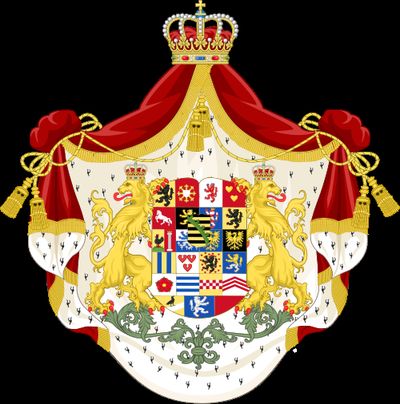
Ernest II of Saxe-Gotha
Emperor · Modern
67.5Total
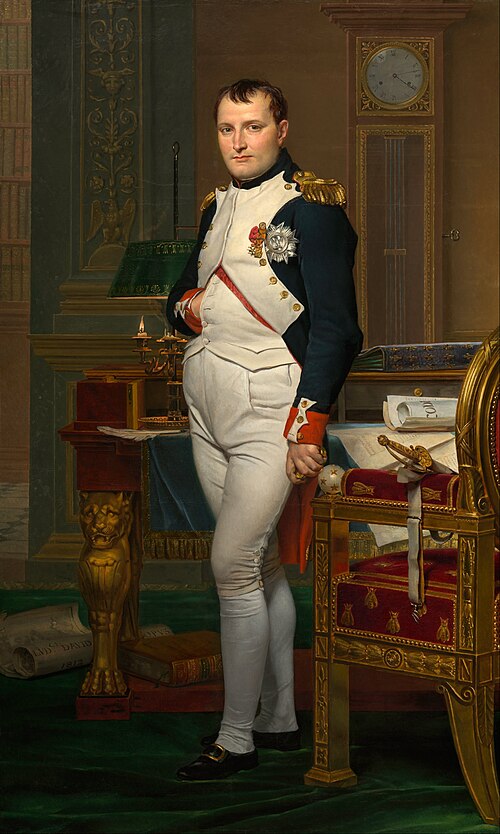
Napoleon Bonaparte
General · Modern
82.4Total
Basic Information
Born
1745
1769
Died
1804
1821
Era
Modern
Modern
Nationality
Saxe-Gotha
France
Occupation
Emperor
General
Civilization
Western
Western
Score Comparison
Military (10%)
45.0
94.0
Political (20%)
85.0
75.0
Influence (20%)
73.7
82.0
Legacy (20%)
58.3
78.0
Leadership (15%)
71.5
80.0
Strategy (15%)
58.9
93.0
TOTAL
67.5
82.4
Rankings
🥇
Napoleon BonaparteLeader
Mil: 94.0Pol: 75.0Inf: 82.0
82.4
🥈
Ernest II of Saxe-Gotha
Mil: 45.0Pol: 85.0Inf: 73.7
67.5
+14.9 behind
How This Comparison Works
Algorithm
Each figure is scored on 6 dimensions (0—100 scale) based on structured historical data: Military (10%), Political (20%), Influence (20%), Legacy (20%), Leadership (15%), Strategy (15%). The weighted total produces the final ranking.
Data Sources
Scores are computed from structured sub-indicators in the database. Scale factors adjust for era (Ancient ×0.85, Modern ×1.0) and civilization size (Eastern ×1.05, Other ×0.80) to account for differences in population and military scale.
Maximum 3 Figures
Comparisons are limited to 2—3 figures to ensure readability and statistical meaningfulness.
Error Margins
±5 points per dimension — Sub-scores are derived from historical records with inherent uncertainty. Two figures within 5 points on a dimension should be considered roughly equivalent in that area.
Total Score Accuracy
±3 points overall — The weighted combination of 6 dimensions produces a total score with approximately ±3 points of uncertainty. Differences of less than 3 points are not statistically significant— the figures are effectively tied.
Known Limitations
- Historical records are incomplete and uneven across civilizations
- Figures from oral-tradition societies may be underrepresented
- Occupation labels can misclassify multi-role figures
- Scores measure capability and impact, not moral character
- Quantitative scoring is a comparison tool, not absolute truth
Capability Radar
Military (10%) — Battles & Warfare
Battles
34
95
Win Rate
40
90
Expansion
44
95
Political (20%) — Governance & Reform
Reform
60
95
Diplomacy
50
80
Economy
55
85
Influence (20%) — Cultural & Global Reach
Cultural
40
85
Global
20
90
Legacy (20%) — Historical Impact
Historical
35
95
Longevity
30
90
Leadership (15%) — Power & Stability
Tenure
55
85
Stability
60
70
Strategy (15%) — Tactics & Innovation
Strategy
47
95
Tactics
48
98
Reform
49
92
Expert Analysis
# Deux visages du pouvoir : Ernest II de Saxe-Gotha et Napoléon Bonaparte
Imaginez un soir d'été 1804. Dans un petit observatoire perché sur une colline de Thuringe, un homme en habit de velours observe Saturne à travers une lunette astronomique. À des centaines de kilomètres de là, au même moment, un autre homme, coiffé du bicorne légendaire, dicte des ordres de bataille qui feront trembler l'Europe. Comment ces deux contemporains, nés à vingt-quatre ans d'intervalle, ont-ils pu incarner des visions si radicalement différentes du pouvoir ? L'un régnait sur un duché grand comme une province, l'autre sur un empire. Pourtant, leurs histoires croisées révèlent les deux faces d'une même médaille : celle des Lumières européennes.
Origines
Ernest II de Saxe-Gotha naît en 1745 dans une Allemagne morcelée, où les petits princes tentent de survivre entre les grandes puissances. Son héritage est celui des despotes éclairés : un territoire modeste, une tradition de mécénat, et l'ambition de faire de sa cour un phare intellectuel. Il reçoit une éducation soignée, imprégnée des idées de Voltaire et de Rousseau, mais aussi des sciences exactes. Rien ne le destine à la guerre.
Napoléon Bonaparte, né en 1769 en Corse, vient d'une île fraîchement française, d'une famille de petite noblesse. Son ascension sera celle d'un homme qui doit tout conquérir. L'école militaire de Brienne, puis l'artillerie : il apprend très tôt que le monde appartient à ceux qui savent calculer la trajectoire des boulets et des ambitions. La Révolution française, en brisant les hiérarchies anciennes, lui offre un champ de bataille à sa mesure.
Ascension
Le chemin d'Ernest II est celui de l'héritage et de la réforme tranquille. En 1774, il devient franc-maçon, rejoignant une confrérie où les princes côtoient les savants. Cette appartenance n'est pas anodine : elle scelle son adhésion aux idéaux de progrès et de tolérance. L'année suivante, il entreprend des réformes agricoles, éducatives et administratives dans son duché. Pas de coup d'éclat, pas de conquête : une transformation patiente.
Napoléon, lui, gravit les échelons par la poudre et le sang. Toulon en 1793, la campagne d'Italie en 1796, le coup d'État de Brumaire en 1799 : chaque étape est une rupture. Là où Ernest II reçoit un trône, Napoléon le prend. Là où le premier administre, le second conquiert. Leurs scores militaires respectifs — 45 contre 94 — ne sont pas seulement des chiffres : ils racontent deux conceptions du pouvoir, l'une fondée sur la négociation, l'autre sur la domination.
Gouvernance
Ernest II gouverne comme il observe les étoiles : avec méthode et patience. En 1787, il fonde l'Observatoire de Gotha sur la colline de Seeberg, doté des meilleurs instruments de l'époque. Il y publie lui-même des observations astronomiques, dialoguant d'égal à égal avec les savants européens. Son score politique de 85 reflète cette capacité à gouverner par la persuasion et l'exemple. Il réforme son duché sans briser ses sujets, comme un père éclairé plutôt qu'un conquérant.
Napoléon, avec son score politique de 75, gouverne autrement. Il impose le Code civil, réorganise l'administration, mais toujours par la volonté impérieuse d'un homme seul. Son génie stratégique (93) et son leadership (80) en font un maître de la guerre, mais aussi un bâtisseur d'institutions. Là où Ernest II construit un observatoire, Napoléon édifie un empire. L'un éclaire, l'autre éblouit.
Triomphe et tragédie
Le triomphe d'Ernest II est discret mais durable : son observatoire devient un centre scientifique reconnu dans toute l'Europe. Ses réformes, bien que modestes, transforment durablement la vie de ses sujets. Sa tragédie est celle de l'échelle : il meurt en 1804, la même année où Napoléon se fait sacrer empereur, sans avoir jamais dépassé les frontières de son petit duché.
Napoléon, lui, connaît des triomphes éclatants : Austerlitz, Iéna, Wagram. Il domine l'Europe de Madrid à Moscou. Mais sa tragédie est à la mesure de ses succès : la campagne de Russie, Waterloo, Sainte-Hélène. Son héritage (78) est immense mais ambivalent, alors que celui d'Ernest II (58) est modeste mais sans tache.
Caractère et destin
Ernest II est un homme de cabinet et d'observation. Sa personnalité, façonnée par la franc-maçonnerie et les Lumières, le porte vers le compromis et le progrès mesuré. Il ne cherche pas la gloire mais l'efficacité. Son destin est celui d'un prince qui a choisi d'être utile plutôt que célèbre.
Napoléon est un homme d'action et de volonté. Sa personnalité, forgée par la Révolution et la guerre, le pousse à toujours vouloir plus. « L'impossible, dit-il, n'est pas français. » Son destin est celui d'un homme qui a voulu plier le monde à sa volonté, et qui s'y est brisé.
Héritage
Ernest II laisse un observatoire, des réformes, une tradition de mécénat. Son nom est connu des historiens des sciences, mais ignoré du grand public. Napoléon laisse un code civil, des institutions, une légende. Son nom est dans tous les manuels d'histoire.
Mais au-delà des apparences, ces deux hommes posent la même question : que signifie gouverner ? L'un répond par la lumière, l'autre par l'éclat. L'un par la science, l'autre par la gloire.
Conclusion
En 1804, lorsque Ernest II meurt dans son lit à Gotha, Napoléon ceint la couronne impériale à Notre-Dame. Deux mondes se séparent ce jour-là : celui des Lumières paisibles et celui des conquêtes fulgurantes. L'histoire a retenu le vainqueur, mais peut-être a-t-elle oublié le sage. Car si Napoléon a changé la carte de l'Europe, Ernest II a changé la manière de regarder le ciel. Et dans le silence des étoiles, ses observations continuent de porter leur lumière, bien après que les canons se sont tus.
Frequently Asked Questions
Who ranks highest among Ernest II of Saxe-Gotha, Napoleon Bonaparte?
Based on our six-dimension data-driven analysis, the ranking is determined by comparing Military, Political, Influence, Legacy, Leadership, and Strategy scores derived from quantifiable historical metrics. See the full analysis for the detailed comparison.
How accurate is this comparison?
The scoring system has a ±3 point error margin per dimension and ±3 points overall. Figures within 3 points are considered statistically tied. The analysis uses structured historical data but cannot capture every nuance of historical context.
Ernest II of Saxe-Gotha — Complete Timeline
1774 AD
Joined the FreemasonsCultural
Ernest II became a Freemason and later served as Grand Master of the Grand Lodge of Hamburg. His involvement promoted Enlightenment ideals of reason, tolerance, and philanthropy within his duchy and beyond.
FreemasonryEnlightenmentSecret Societies
Impact: regionalprogressive
1775 AD
Implemented Enlightened Reforms in Saxe-GothaReform◆ Major
Ernest II introduced reforms in agriculture, education, and administration based on Enlightenment principles. He abolished torture, promoted religious tolerance, and improved the legal system, earning a reputation as an enlightened despot.
Enlightened DespotismReformTolerance
Impact: nationalprogressive
1787 AD
Founded the Gotha ObservatoryInvention◆ Major
Ernest II established an astronomical observatory at Seeberg near Gotha, equipped with modern instruments. He personally conducted observations and calculations, contributing to the field of astronomy and making Gotha a center for scientific research.
AstronomyObservatoryScience
Impact: globalconstructive
1790 AD
Published Astronomical ObservationsInvention
Ernest II published his astronomical observations and calculations in scientific journals. His work on star positions and planetary orbits was recognized by contemporary astronomers, contributing to the advancement of celestial mechanics.
AstronomyScientific PublicationObservations
Impact: globalconstructive
Similar Comparisons
Comments & Discussion
数据戟士6/18/2026
拿一个小邦改革者碰瓷拿破仑?这种对比本身就荒谬。拿破仑的行政法典影响了整个欧洲法律体系,而Ernst II连萨克森-哥达都没出过。拿制度遗产打分,拿破仑的《拿破仑法典》至今仍是核心,Ernst搞的什么农会改革?根本不在一个数量级。
SceptredWeasel6/18/2026
The problem isn’t the comparison—it’s the premise of a single “score.” Napoleon’s legacy is a tidal wave of glory and destruction; Ernst’s is a well-managed pond. Weighting “influence” is fine, but then Ernst’s 3—Napoleon’s 10. Calling it a debate is generous when the Duke’s biggest claim is a minor fiscal innovation.
烽火断章6/18/2026
数据评分是皇帝的新衣。拿破仑的军事才能被量化成了数字,但难道忘记莱比锡战役怎么输的?Ernst II至少在他领地上避免了七年战争的浩劫。你让评分员去雅尔塔会议打分试试?历史不是Excel表格,别拿像素化思维玷污铁血事实。