Loading...
Analysis will be generated on first visit.
Scores and timeline are available below. The page will refresh automatically when ready.
Heshen vs Julius Caesar
Julius Caesar leads by 25.4 pts · 2 figures compared
…

Heshen
Politician · Modern
57.9Total
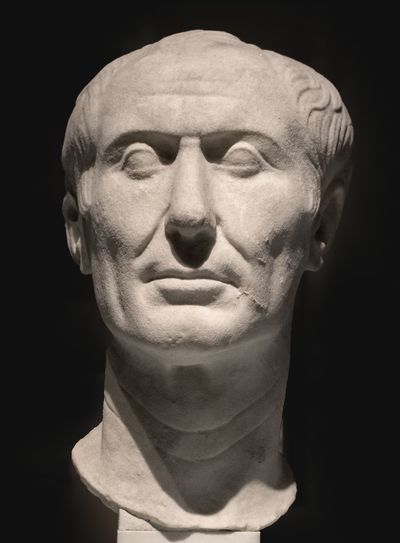
Julius Caesar
General · Ancient
83.3Total
Basic Information
Born
1750
-100
Died
1799
-44
Era
Modern
Ancient
Nationality
China
Roman Republic
Occupation
Politician
General
Civilization
Eastern
Western
Score Comparison
Military (10%)
22.8
88.0
Political (20%)
47.4
78.0
Influence (20%)
68.6
85.0
Legacy (20%)
63.2
82.0
Leadership (15%)
72.0
82.0
Strategy (15%)
59.6
88.0
TOTAL
57.9
83.3
Rankings
🥇
Julius CaesarLeader
Mil: 88.0Pol: 78.0Inf: 85.0
83.3
🥈
Heshen
Mil: 22.8Pol: 47.4Inf: 68.6
57.9
+25.4 behind
How This Comparison Works
Algorithm
Each figure is scored on 6 dimensions (0—100 scale) based on structured historical data: Military (10%), Political (20%), Influence (20%), Legacy (20%), Leadership (15%), Strategy (15%). The weighted total produces the final ranking.
Data Sources
Scores are computed from structured sub-indicators in the database. Scale factors adjust for era (Ancient ×0.85, Modern ×1.0) and civilization size (Eastern ×1.05, Other ×0.80) to account for differences in population and military scale.
Maximum 3 Figures
Comparisons are limited to 2—3 figures to ensure readability and statistical meaningfulness.
Error Margins
±5 points per dimension — Sub-scores are derived from historical records with inherent uncertainty. Two figures within 5 points on a dimension should be considered roughly equivalent in that area.
Total Score Accuracy
±3 points overall — The weighted combination of 6 dimensions produces a total score with approximately ±3 points of uncertainty. Differences of less than 3 points are not statistically significant— the figures are effectively tied.
Known Limitations
- Historical records are incomplete and uneven across civilizations
- Figures from oral-tradition societies may be underrepresented
- Occupation labels can misclassify multi-role figures
- Scores measure capability and impact, not moral character
- Quantitative scoring is a comparison tool, not absolute truth
Capability Radar
Military (10%) — Battles & Warfare
Battles
12
95
Win Rate
20
92
Expansion
20
97
Political (20%) — Governance & Reform
Reform
5
90
Diplomacy
20
85
Economy
10
82
Influence (20%) — Cultural & Global Reach
Cultural
10
88
Global
20
94
Legacy (20%) — Historical Impact
Historical
40
95
Longevity
30
96
Leadership (15%) — Power & Stability
Tenure
70
75
Stability
15
60
Strategy (15%) — Tactics & Innovation
Strategy
20
94
Tactics
25
96
Reform
31
88
Analysis will be generated on first visit.
Scores and timeline are available below. The page will refresh automatically when ready.
Heshen — Complete Timeline
1776 AD
Rose to power as Qianlong's favorite ministerPolitical Action◆ Major
Heshen gained the favor of the Qianlong Emperor through flattery and administrative skill, rapidly ascending to high office. He became Grand Secretary and controlled key government appointments and finances.
FavoritismRise to PowerQing Court
Impact: national
1790 AD
Amassed vast personal fortune through corruptionPolitical Action◆ Major
Heshen systematically embezzled state funds, accepted bribes, and extorted officials, accumulating a fortune estimated at over 1 billion taels of silver. His corruption drained the Qing treasury and weakened the state.
CorruptionEmbezzlementQing Decline
Impact: nationaldestructive
1799 AD
Arrested and forced to commit suicide after Qianlong's deathPolitical Action
Upon the death of the Qianlong Emperor, the Jiaqing Emperor ordered Heshen's arrest on charges of corruption and abuse of power. Heshen was forced to commit suicide, and his vast wealth was confiscated by the state.
ArrestExecutionAnti-Corruption
Impact: nationaltragic
Similar Comparisons
Comments & Discussion
Gallivanting Gladius6/17/2026
Caesar conquered Gaul and reshaped Rome's destiny; Heshen just mastered the bribe ledger. One was a military titan who rewrote history on battlefields—crossing the Rubicon, defeating Pompey—the other carefully lined his pockets in the Forbidden City's shadows. Caesar's ambition built empires; Heshen's greed only built a gilded cage. No contest here: one's legacy is civilization-wide, the other's a cautionary footnote. Lucky for Heshen, his loyalties were only to silver, not to fate.
大秤分金6/17/2026
一个靠战功改写了文明版图,一个靠贪腐养肥了自家账本。恺撒纵横高卢,跨过卢比孔河,硬生生把共和国打成了帝国;和珅呢?最擅长的不过是在乾隆耳边吹风、在奏折里塞银子。这俩人放在一起比,简直是把铁血元帅和账房管家拉到一个台面上,太离谱了。
Corruptible Conqueror6/17/2026
Let's be real — comparing Heshen to Caesar is like comparing a master calligrapher to a swordsman. Caesar forged a legacy through military might, Cleopatra, and even his own assassination. Heshen? He got rich by cozying up to an aging emperor. His "power" evaporated the moment Qianlong died. Caesar's death sparked civil wars; Heshen's just sparked estate sales. One shaped the West's foundation; the other filled a few palace vaults. Come on.
白银御史6/17/2026
别被数值迷惑——和珅的财产确实惊人,但他那点权力,跟恺撒比简直小儿科。恺撒亲手重建了罗马的秩序,改变了西方历史的走向;和珅呢?不过是乾隆晚年的一只金丝雀,皇帝一咽气,他就被新君一杯毒酒送上西天。要我说,和珅顶多算个高级管账太监,恺撒才是真的王者。
Rhetorical Realist6/17/2026
From a rhetorical standpoint, both were masters of narrative — but Caesar wrote his in blood, Heshen in ink. Caesar's *Commentaries* shaped how we remember Gaul; Heshen's wealth reports shaped how Beijing remembers corruption. The former used words to justify conquest; the latter used words to hide theft. Neither was saintly, but one changed the course of empires. The other changed the price of antiques. Let's not pretend these are parallel paths.
街巷史家6/17/2026
要我看,这俩人根本不是一个物种。恺撒是踩着剑尖往上爬的,和珅是扶着龙椅边儿溜上去的。前者在战场上用命换名声,后者在皇宫里用笑脸换金山。恺撒被杀后,罗马人争着抢他的位子;和