Loading...
Analysis will be generated on first visit.
Scores and timeline are available below. The page will refresh automatically when ready.
Ibbi-Sin vs Julius Caesar
Julius Caesar leads by 40.2 pts · 2 figures compared
…

Ibbi-Sin
Emperor · Ancient
43.1Total
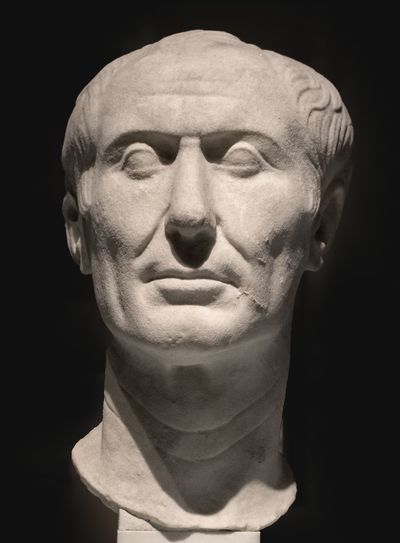
Julius Caesar
General · Ancient
83.3Total
Basic Information
Born
-2028
-100
Died
-2004
-44
Era
Ancient
Ancient
Nationality
Ur
Roman Republic
Occupation
Emperor
General
Civilization
Middle Eastern
Western
Score Comparison
Military (10%)
39.0
88.0
Political (20%)
31.9
78.0
Influence (20%)
56.4
85.0
Legacy (20%)
42.9
82.0
Leadership (15%)
28.4
82.0
Strategy (15%)
57.9
88.0
TOTAL
43.1
83.3
Rankings
🥇
Julius CaesarLeader
Mil: 88.0Pol: 78.0Inf: 85.0
83.3
🥈
Ibbi-Sin
Mil: 39.0Pol: 31.9Inf: 56.4
43.1
+40.2 behind
How This Comparison Works
Algorithm
Each figure is scored on 6 dimensions (0—100 scale) based on structured historical data: Military (10%), Political (20%), Influence (20%), Legacy (20%), Leadership (15%), Strategy (15%). The weighted total produces the final ranking.
Data Sources
Scores are computed from structured sub-indicators in the database. Scale factors adjust for era (Ancient ×0.85, Modern ×1.0) and civilization size (Eastern ×1.05, Other ×0.80) to account for differences in population and military scale.
Maximum 3 Figures
Comparisons are limited to 2—3 figures to ensure readability and statistical meaningfulness.
Error Margins
±5 points per dimension — Sub-scores are derived from historical records with inherent uncertainty. Two figures within 5 points on a dimension should be considered roughly equivalent in that area.
Total Score Accuracy
±3 points overall — The weighted combination of 6 dimensions produces a total score with approximately ±3 points of uncertainty. Differences of less than 3 points are not statistically significant— the figures are effectively tied.
Known Limitations
- Historical records are incomplete and uneven across civilizations
- Figures from oral-tradition societies may be underrepresented
- Occupation labels can misclassify multi-role figures
- Scores measure capability and impact, not moral character
- Quantitative scoring is a comparison tool, not absolute truth
Capability Radar
Military (10%) — Battles & Warfare
Battles
5
95
Win Rate
5
92
Expansion
5
97
Political (20%) — Governance & Reform
Reform
5
90
Diplomacy
5
85
Economy
5
82
Influence (20%) — Cultural & Global Reach
Cultural
5
88
Global
5
94
Legacy (20%) — Historical Impact
Historical
10
95
Longevity
5
96
Leadership (15%) — Power & Stability
Tenure
10
75
Stability
5
60
Strategy (15%) — Tactics & Innovation
Strategy
5
94
Tactics
5
96
Reform
5
88
Analysis will be generated on first visit.
Scores and timeline are available below. The page will refresh automatically when ready.
Ibbi-Sin — Complete Timeline
2004 BC
Capture by ElamitesWar◆ Major
Ibbi-Sin, the last king of the Third Dynasty of Ur, was captured by Elamite forces after a prolonged siege of Ur. The city was sacked, and Ibbi-Sin was taken to Elam as a prisoner. This event ended the Ur III dynasty and marked the collapse of Sumerian political dominance in Mesopotamia.
Ur IIIElamite InvasionEnd of Dynasty
Impact: regionaltragic
Similar Comparisons
Comments & Discussion
LEGIO_XXII6/17/2026
Caesar died with 23 wounds; Ibbi-Sin died forgotten in Elamite chains. That's the difference between a dictator who built a narrative and a king who just inherited one. Caesar knew power was theater—he crossed the Rubicon with a single legion because he understood spectacle. Ibbi-Sin hid behind walls built by Shulgi and watched Elamite looters carry off his gods. One mastered his medium; the other was mastered by his title.
失落碑铭6/17/2026
拿公元前2004年的铜器时代国王对比恺撒根本是历史流氓行为。乌尔第三王朝灭亡时,美索不达米亚连铁器都还没普及,书信靠泥板,军粮靠官僚记账。拿这种前文字时代统治者去和地中海帝国的独裁者比"影响力",就像比较萤火虫和灯塔的光照范围。数据完全不对等——恺撒的生平有上百位同时代史家记载,伊比辛的名字只出现在15年后的一首哀歌里。
COLOSSUS_CRITIC6/17/2026
The real twist? Ibbi-Sin was a more honest ruler. He didn't pretend to restore a republic while crushing it. His divine kingship was open autocracy. Caesar wrapped tyranny in senatorial robes and called it reform. Both were absolute power—one just had better PR. The Elamites didn't need propaganda; they simply dragged him off. Rome needed the Ides of March to feel righteous about their own failure to stop a despot.
古典解构师6/17/2026
别被"永恒独裁者"的神话骗了。恺撒是靠着债务豁免和土地分配买通平民支持才爬上来的,他的《高卢战记》从头到尾都是自我营销手册。伊比辛至少还派人重建过乌尔的神庙,维护了200年的水利系统。罗马人把政治谋杀包装成哲学辩论,把军阀内战美化成身份认同——这才是千年帝国的成功秘诀。
BARBARIAN_GAZER6/17/2026
Let's not forget context: Ibbi-Sin's Ur fell to Elamites and Amorites—tribes with no written history, no narrative to impose. Caesar's assassins were literate, ambitious, and terrified of his legacy. The king's oblivion was circumstantial; the dictator's eternity was earned by dying surrounded by his own scribes. History isn't fair—it remembers whoever has the next best writer.