Loading...
Analysis will be generated on first visit.
Scores and timeline are available below. The page will refresh automatically when ready.
Julius Caesar vs Solon
Julius Caesar leads by 8.4 pts · 2 figures compared
…
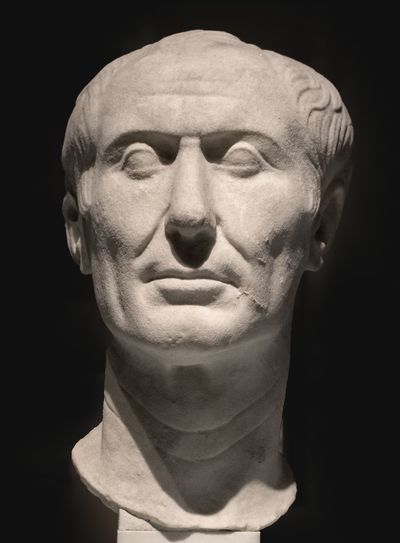
Julius Caesar
General · Ancient
83.3Total

Solon
Politician · Ancient
74.9Total
Basic Information
Born
-100
-638
Died
-44
-558
Era
Ancient
Ancient
Nationality
Roman Republic
Greece
Occupation
General
Politician
Civilization
Western
Western
Score Comparison
Military (10%)
88.0
64.5
Political (20%)
78.0
80.0
Influence (20%)
85.0
75.2
Legacy (20%)
82.0
79.0
Leadership (15%)
82.0
79.7
Strategy (15%)
88.0
64.3
TOTAL
83.3
74.9
Rankings
🥇
Julius CaesarLeader
Mil: 88.0Pol: 78.0Inf: 85.0
83.3
🥈
Solon
Mil: 64.5Pol: 80.0Inf: 75.2
74.9
+8.4 behind
How This Comparison Works
Algorithm
Each figure is scored on 6 dimensions (0—100 scale) based on structured historical data: Military (10%), Political (20%), Influence (20%), Legacy (20%), Leadership (15%), Strategy (15%). The weighted total produces the final ranking.
Data Sources
Scores are computed from structured sub-indicators in the database. Scale factors adjust for era (Ancient ×0.85, Modern ×1.0) and civilization size (Eastern ×1.05, Other ×0.80) to account for differences in population and military scale.
Maximum 3 Figures
Comparisons are limited to 2—3 figures to ensure readability and statistical meaningfulness.
Error Margins
±5 points per dimension — Sub-scores are derived from historical records with inherent uncertainty. Two figures within 5 points on a dimension should be considered roughly equivalent in that area.
Total Score Accuracy
±3 points overall — The weighted combination of 6 dimensions produces a total score with approximately ±3 points of uncertainty. Differences of less than 3 points are not statistically significant— the figures are effectively tied.
Known Limitations
- Historical records are incomplete and uneven across civilizations
- Figures from oral-tradition societies may be underrepresented
- Occupation labels can misclassify multi-role figures
- Scores measure capability and impact, not moral character
- Quantitative scoring is a comparison tool, not absolute truth
Capability Radar
Military (10%) — Battles & Warfare
Battles
95
58
Win Rate
92
58
Expansion
97
63
Political (20%) — Governance & Reform
Reform
90
85
Diplomacy
85
70
Economy
82
80
Influence (20%) — Cultural & Global Reach
Cultural
88
75
Global
94
70
Legacy (20%) — Historical Impact
Historical
95
85
Longevity
96
80
Leadership (15%) — Power & Stability
Tenure
75
40
Stability
60
65
Strategy (15%) — Tactics & Innovation
Strategy
94
62
Tactics
96
69
Reform
88
72
Analysis will be generated on first visit.
Scores and timeline are available below. The page will refresh automatically when ready.
Solon — Complete Timeline
594 BC
Seisachtheia (Shaking Off of Burdens)Reform
Solon canceled all outstanding debts and freed Athenians enslaved for debt. He abolished debt bondage and prohibited using personal freedom as collateral for loans, addressing the severe economic crisis and social unrest caused by the exploitation of the poor by the wealthy.
Debt ReformSocial JusticeAthens
Impact: nationalprogressive
Constitutional Reforms of SolonReform◆ Major
Solon divided Athenian citizens into four property classes (pentakosiomedimnoi, hippeis, zeugitai, thetes) determining political rights. He created the Council of 400 and the popular courts (Heliaia), opening political participation to a broader segment of the population while retaining aristocratic elements.
Constitutional ReformAthenian DemocracyClass System
Impact: globalprogressive
Economic Reforms of SolonReform◆ Major
Solon reformed Athenian coinage and weights and measures, standardizing them to facilitate trade. He encouraged the cultivation of olives and the export of olive oil, while banning the export of grain to ensure local food supply, stimulating the Athenian economy.
Economic ReformTradeAgriculture
Impact: nationalconstructive
Solon's Laws on Family and InheritanceReform
Solon introduced laws regulating marriage, inheritance, and family property. He allowed childless men to adopt heirs and restricted the dowry system, aiming to protect family estates and prevent the concentration of wealth in a few hands.
Family LawInheritanceSocial Reform
Impact: nationalconstructive
Similar Comparisons
Comments & Discussion
No comments yet. Be the first to share your thoughts!