Loading...
Analysis will be generated on first visit.
Scores and timeline are available below. The page will refresh automatically when ready.
Lech Walesa vs Qin Shi Huang
Qin Shi Huang leads by 18.5 pts · 2 figures compared
…
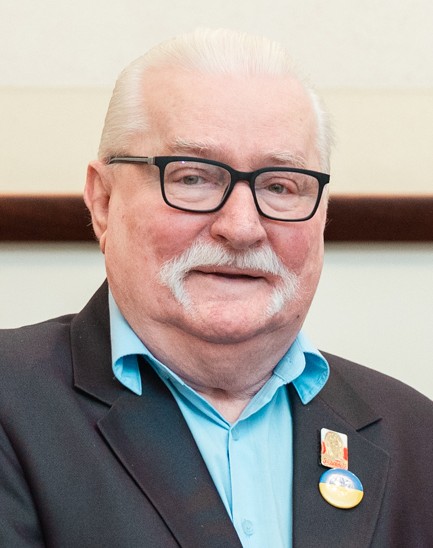
Lech Walesa
Revolutionary · Modern
65.0Total
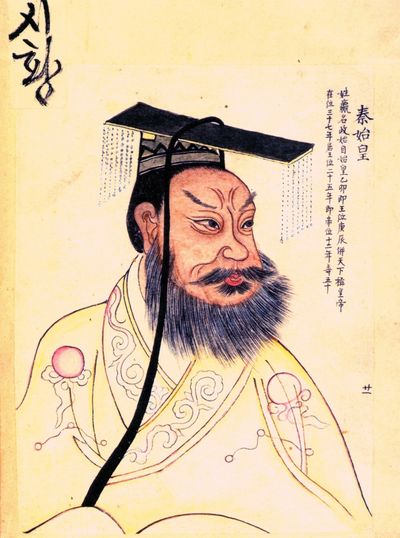
Qin Shi Huang
Emperor · Ancient
83.5Total
Basic Information
Born
1943
-259
Died
—
-210
Era
Modern
Ancient
Nationality
Poland
China
Occupation
Revolutionary
Emperor
Civilization
Western
Eastern
Score Comparison
Military (10%)
19.2
80.0
Political (20%)
72.0
88.0
Influence (20%)
76.2
82.0
Legacy (20%)
66.4
85.0
Leadership (15%)
72.0
88.0
Strategy (15%)
62.3
75.0
TOTAL
65.0
83.5
Rankings
🥇
Qin Shi HuangLeader
Mil: 80.0Pol: 88.0Inf: 82.0
83.5
🥈
Lech Walesa
Mil: 19.2Pol: 72.0Inf: 76.2
65.0
+18.5 behind
How This Comparison Works
Algorithm
Each figure is scored on 6 dimensions (0—100 scale) based on structured historical data: Military (10%), Political (20%), Influence (20%), Legacy (20%), Leadership (15%), Strategy (15%). The weighted total produces the final ranking.
Data Sources
Scores are computed from structured sub-indicators in the database. Scale factors adjust for era (Ancient ×0.85, Modern ×1.0) and civilization size (Eastern ×1.05, Other ×0.80) to account for differences in population and military scale.
Maximum 3 Figures
Comparisons are limited to 2—3 figures to ensure readability and statistical meaningfulness.
Error Margins
±5 points per dimension — Sub-scores are derived from historical records with inherent uncertainty. Two figures within 5 points on a dimension should be considered roughly equivalent in that area.
Total Score Accuracy
±3 points overall — The weighted combination of 6 dimensions produces a total score with approximately ±3 points of uncertainty. Differences of less than 3 points are not statistically significant— the figures are effectively tied.
Known Limitations
- Historical records are incomplete and uneven across civilizations
- Figures from oral-tradition societies may be underrepresented
- Occupation labels can misclassify multi-role figures
- Scores measure capability and impact, not moral character
- Quantitative scoring is a comparison tool, not absolute truth
Capability Radar
Military (10%) — Battles & Warfare
Battles
9
85
Win Rate
14
90
Expansion
17
90
Political (20%) — Governance & Reform
Reform
85
95
Diplomacy
80
75
Economy
55
90
Influence (20%) — Cultural & Global Reach
Cultural
70
95
Global
70
85
Legacy (20%) — Historical Impact
Historical
75
95
Longevity
65
95
Leadership (15%) — Power & Stability
Tenure
65
70
Stability
60
65
Strategy (15%) — Tactics & Innovation
Strategy
21
85
Tactics
24
80
Reform
27
95
Analysis will be generated on first visit.
Scores and timeline are available below. The page will refresh automatically when ready.
Lech Walesa — Complete Timeline
1980 AD
Founding of SolidarityPolitical Action
Walesa co-founded the Solidarity trade union in August 1980 after leading the Gda
SolidarityLabor Movement
Impact: globalprogressive
1981 AD
Martial Law and ImprisonmentPolitical Action◆ Major
Walesa was arrested and interned on December 13, 1981, when General Jaruzelski imposed martial law in Poland. He was held for 11 months, while Solidarity was banned and its leaders suppressed.
Martial LawRepression
Impact: nationaltragic
1983 AD
Nobel Peace PrizeCultural◆ Major
Walesa was awarded the Nobel Peace Prize on December 10, 1983, for his nonviolent struggle for workers' rights and democracy. He was unable to collect it in person due to travel restrictions.
Nobel PrizePeace
Impact: globalconstructive
1989 AD
Round Table TalksPolitical Action
Walesa led Solidarity in the Round Table Talks with the communist government from February to April 1989. The agreements led to partially free elections, which Solidarity won, ending communist rule in Poland.
TransitionDemocracy
Impact: globalconstructive
1990 AD
President of PolandPolitical Action◆ Major
Walesa was elected President of Poland on December 22, 1990, in the first direct presidential election. His presidency focused on economic reform and NATO integration, but was marked by political conflicts and declining popularity.
PresidencyDemocracy
Impact: national
Qin Shi Huang — Complete Timeline
246 BC
Construction of the Mausoleum and Terracotta ArmyOther◆ Major
Qin Shi Huang commissioned a vast mausoleum complex near Xi'an, guarded by thousands of life-sized terracotta soldiers, horses, and chariots. The project employed hundreds of thousands of workers and reflected his obsession with immortality and imperial power.
Impact: global
230 BC
Conquest of the Six Warring StatesWar
From 230 to 221 BCE, Ying Zheng led the Qin state in a series of campaigns that conquered the Han, Zhao, Wei, Chu, Yan, and Qi states. This unified China under a single ruler for the first time, ending the Warring States period.
Impact: global
221 BC
Standardization of Writing, Currency, and MeasurementsReform◆ Major
Qin Shi Huang ordered the standardization of Chinese script, currency, and weights and measures across the unified empire. This facilitated administration, trade, and cultural integration, laying a foundation for future dynasties.
Impact: globalconstructive
Proclamation of the Qin DynastyPolitical Action
After conquering the last independent state, Ying Zheng declared himself Shi Huangdi (First Emperor), founding the Qin Dynasty. He adopted a new title to signify his supreme authority and initiated centralized imperial rule.
Impact: global
214 BC
Initiation of the Great Wall ConstructionOther◆ Major
Qin Shi Huang ordered the connection and extension of existing northern fortifications to create a unified defensive wall against nomadic Xiongnu raids. This project involved massive conscripted labor and became the precursor to the later Great Wall.
Impact: regional
213 BC
Burning of Books and Burying of ScholarsPolitical Action◆ Major
On the advice of Li Si, Qin Shi Huang ordered the burning of historical records and philosophical texts not aligned with Legalist doctrine. He also had 460 Confucian scholars buried alive to suppress dissent and consolidate ideological control.
Impact: nationaldestructive
Similar Comparisons
Comments & Discussion
汉武好古6/17/2026
Qin Shi Huang wasn't just a conqueror—he standardized writing, currency, and axle lengths across China. Wałęsa signed the Gdańsk Agreement, but Solidarity never unified a continent. The First Emperor built a framework that outlasted his dynasty; the electrician's triumph faded into petty bureaucracy. One created order from chaos; the other just loosened the screws. That's why China remembers Qin, while Wałęsa's a footnote in Europe's pivot to capitalism.
拼图匠人6/17/2026
拿秦始皇和瓦文萨比,就像拿火车头和自行车比。始皇帝一统六国,书同文车同轨,修长城造灵渠,哪个不是千年功业?瓦文萨不过是个工会头头,靠美国撑腰搞垮了波兰政府,最后自己当总统也没干出啥名堂。数据不会骗人:秦朝十五年奠定了中国两千年的基础,波兰的团结工会十五年后就分崩离析了。
锈钉革命家6/17/2026
Wałęsa climbed a fence with a fifth-grade education and toppled a nuclear-armed empire. Qin Shi Huang inherited a war machine his ancestors built over 500 years and died paranoid, swallowing mercury pills. The electrician faced secret police with his bare hands; the emperor had an army of terracotta soldiers. Who truly changed history? The man who sparked a revolution with a smuggled radio, not one who buried scholars alive to control the narrative.
帝国碎片6/17/2026
别忘了秦朝的法律有多残暴:连坐、族诛、腐刑,百姓动辄被砍头。瓦文萨至少倡导非暴力,用罢工和谈判争取自由。始皇帝焚书坑儒,把思想禁锢得死死的;瓦文萨却让波兰人敢想敢说。权力来源也不同:一个是血缘继承的暴君,一个是民选出来的领袖。你要我选,我站电焊工那边——他手里的电火花,比皇帝的玉玺值钱多了。
功利主义刀笔吏6/17/2026
Objectively, Wałęsa's legacy is fragile: Poland's post-communist boom owed more to shock therapy from Balcerowicz than union militancy. Qin's Legalist system, for all its brutality, produced the first centralized meritocracy in history—appointing officials by examination, not birth. Wałęsa gave speeches; Qin gave standardized weights. One inspired hope; the other built infrastructure. The electrician's revolution was reactive; the emperor's was constructive. I know which side I'd bet on for long