Loading...
Analysis will be generated on first visit.
Scores and timeline are available below. The page will refresh automatically when ready.
Li Jing vs Qin Shi Huang
Qin Shi Huang leads by 6.1 pts · 2 figures compared
…

Li Jing
General · Medieval
77.4Total
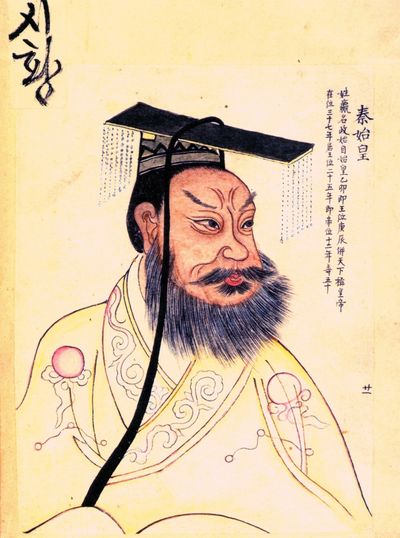
Qin Shi Huang
Emperor · Ancient
83.5Total
Basic Information
Born
571
-259
Died
649
-210
Era
Medieval
Ancient
Nationality
China
China
Occupation
General
Emperor
Civilization
Eastern
Eastern
Score Comparison
Military (10%)
85.0
80.0
Political (20%)
76.3
88.0
Influence (20%)
76.0
82.0
Legacy (20%)
67.1
85.0
Leadership (15%)
81.0
88.0
Strategy (15%)
85.9
75.0
TOTAL
77.4
83.5
Rankings
🥇
Qin Shi HuangLeader
Mil: 80.0Pol: 88.0Inf: 82.0
83.5
🥈
Li Jing
Mil: 85.0Pol: 76.3Inf: 76.0
77.4
+6.1 behind
How This Comparison Works
Algorithm
Each figure is scored on 6 dimensions (0—100 scale) based on structured historical data: Military (10%), Political (20%), Influence (20%), Legacy (20%), Leadership (15%), Strategy (15%). The weighted total produces the final ranking.
Data Sources
Scores are computed from structured sub-indicators in the database. Scale factors adjust for era (Ancient ×0.85, Modern ×1.0) and civilization size (Eastern ×1.05, Other ×0.80) to account for differences in population and military scale.
Maximum 3 Figures
Comparisons are limited to 2—3 figures to ensure readability and statistical meaningfulness.
Error Margins
±5 points per dimension — Sub-scores are derived from historical records with inherent uncertainty. Two figures within 5 points on a dimension should be considered roughly equivalent in that area.
Total Score Accuracy
±3 points overall — The weighted combination of 6 dimensions produces a total score with approximately ±3 points of uncertainty. Differences of less than 3 points are not statistically significant— the figures are effectively tied.
Known Limitations
- Historical records are incomplete and uneven across civilizations
- Figures from oral-tradition societies may be underrepresented
- Occupation labels can misclassify multi-role figures
- Scores measure capability and impact, not moral character
- Quantitative scoring is a comparison tool, not absolute truth
Capability Radar
Military (10%) — Battles & Warfare
Battles
85
85
Win Rate
88
90
Expansion
85
90
Political (20%) — Governance & Reform
Reform
65
95
Diplomacy
75
75
Economy
60
90
Influence (20%) — Cultural & Global Reach
Cultural
75
95
Global
70
85
Legacy (20%) — Historical Impact
Historical
80
95
Longevity
85
95
Leadership (15%) — Power & Stability
Tenure
70
70
Stability
70
65
Strategy (15%) — Tactics & Innovation
Strategy
92
85
Tactics
90
80
Reform
80
95
Analysis will be generated on first visit.
Scores and timeline are available below. The page will refresh automatically when ready.
Li Jing — Complete Timeline
630 AD
Defeated the Eastern Tujue (Göktürks)War
Li Jing led a Tang army of 100,000 men in a surprise attack against the Eastern Tujue Khaganate. He captured the khagan, Jiali Khan, near the Yin Mountains. This decisive victory destroyed the Eastern Tujue state and brought its territories under Tang control.
Tujue CampaignTang ExpansionJiali Khan
Impact: regional
635 AD
Conquered the Tuyuhun KingdomWar◆ Major
Li Jing commanded a Tang expedition against the Tuyuhun kingdom in the Qilian Mountains. He employed a strategy of rapid pursuit across difficult terrain, forcing the Tuyuhun ruler to flee. The campaign resulted in the submission of Tuyuhun to Tang suzerainty.
Tuyuhun CampaignTang ExpansionMilitary Strategy
Impact: regional
637 AD
Appointed Grand Chancellor and Duke of WeiPolitical Action◆ Major
Emperor Taizong appointed Li Jing as Grand Chancellor (Shangshu You Pushe) and granted him the title Duke of Wei. This recognition honored his military achievements and placed him among the highest officials of the Tang court. He served in this role until his retirement.
Grand ChancellorDuke of WeiTang Court
Impact: nationalconstructive
640 AD
Authored the 'Questions and Replies between Tang Taizong and Li Weigong'Cultural◆ Major
Li Jing is traditionally credited as the author of the military treatise 'Questions and Replies between Tang Taizong and Li Weigong' (Li Weigong Wendui). This work, presented as a dialogue with Emperor Taizong, discusses military strategy, tactics, and historical battles. It became a classic of Chinese military literature.
Military TreatiseTang TaizongClassic Literature
Impact: nationalconstructive
Qin Shi Huang — Complete Timeline
246 BC
Construction of the Mausoleum and Terracotta ArmyOther◆ Major
Qin Shi Huang commissioned a vast mausoleum complex near Xi'an, guarded by thousands of life-sized terracotta soldiers, horses, and chariots. The project employed hundreds of thousands of workers and reflected his obsession with immortality and imperial power.
Impact: global
230 BC
Conquest of the Six Warring StatesWar
From 230 to 221 BCE, Ying Zheng led the Qin state in a series of campaigns that conquered the Han, Zhao, Wei, Chu, Yan, and Qi states. This unified China under a single ruler for the first time, ending the Warring States period.
Impact: global
221 BC
Standardization of Writing, Currency, and MeasurementsReform◆ Major
Qin Shi Huang ordered the standardization of Chinese script, currency, and weights and measures across the unified empire. This facilitated administration, trade, and cultural integration, laying a foundation for future dynasties.
Impact: globalconstructive
Proclamation of the Qin DynastyPolitical Action
After conquering the last independent state, Ying Zheng declared himself Shi Huangdi (First Emperor), founding the Qin Dynasty. He adopted a new title to signify his supreme authority and initiated centralized imperial rule.
Impact: global
214 BC
Initiation of the Great Wall ConstructionOther◆ Major
Qin Shi Huang ordered the connection and extension of existing northern fortifications to create a unified defensive wall against nomadic Xiongnu raids. This project involved massive conscripted labor and became the precursor to the later Great Wall.
Impact: regional
213 BC
Burning of Books and Burying of ScholarsPolitical Action◆ Major
On the advice of Li Si, Qin Shi Huang ordered the burning of historical records and philosophical texts not aligned with Legalist doctrine. He also had 460 Confucian scholars buried alive to suppress dissent and consolidate ideological control.
Impact: nationaldestructive
Similar Comparisons
Comments & Discussion
青史折纸6/17/2026
秦粉别吹了!《史记》里写得多明白:秦始皇“刚毅戾深,乐以刑杀为威”—连商鞅都被他车裂,法家玩到绝路。李靖呢?他平萧铣时以仁服人,破辅公祏后收编降卒二十万,从不屠城。一个靠
Steppe Butcher6/17/2026
You revisionists always romanticize Qin Shi Huang, but he was a book-burning tyrant who forced 700,000 conscripts to build a wall that did nothing against the Xiongnu. Li Jing actually won—destroyed the Eastern Turkic Khaganate at the Battle of Yinshan in 630, captured Jiali Khan alive, and annexed 6 million hectares of steppe. One man built vanity projects; the other secured borders. Easy choice.
六韬传人6/17/2026
嘿,拿李靖跟祖龙比?你读过《武经总要》吗?李靖那套“奇正相生”玩得再花,手下不过十万人马。秦始皇为了统一岭南,调动五十万大军南下,修灵渠沟通湘漓—这工程难度和战略眼光,李靖一辈子都追不上。名将多如牛毛,开天辟地的皇帝几千年就一个。
Script Scribe6/17/2026
Objectively, the standardization of script under Qin Shi Huang was more impactful than any single battle. Before 221 BC, China had seven distinct writing systems—seal, bird-worm, bamboo-slip variations from Qi to Chu. Li Jing conquered a khagan, but the First Emperor unified 10,000 characters into one script, enabling 2,000 years of bureaucratic continuity. Without that, Li Jing’s campaigns wouldn’t even have logísticos to supply his army.
塞外孤狼6/17/2026
说得好听,什么“书同文车同轨”,那是拿白骨堆出来的。长城下塞了百万死人,吕不韦的门客全被流放,连他亲妈赵姬的姘头嫪毐都被车裂—手段狠辣到变态。反观李靖,灭了突厥后上书太宗请辞,回家写《李卫公问对》,武庙十哲里他占一席。残暴一时爽,智者万年香。
废墟考古家6/17/2026
You’re all missing the material legacy. The Terracotta Army is a global icon—8,000+ life-sized figures with unique facial features, discovered in 1974 near Xi’an. Li Jing? His tomb near Zhaoling is modest, stripped by grave robbers centuries ago. One man built immortality in clay; the other left only texts that 90% of people have never read. Popular culture votes: Emperor wins, hands down.