Loading...
Analysis will be generated on first visit.
Scores and timeline are available below. The page will refresh automatically when ready.
Luis Somoza Debayle vs Napoleon Bonaparte
Napoleon Bonaparte leads by 27.2 pts · 2 figures compared
…
Luis Somoza Debayle
Politician · Modern
55.2Total
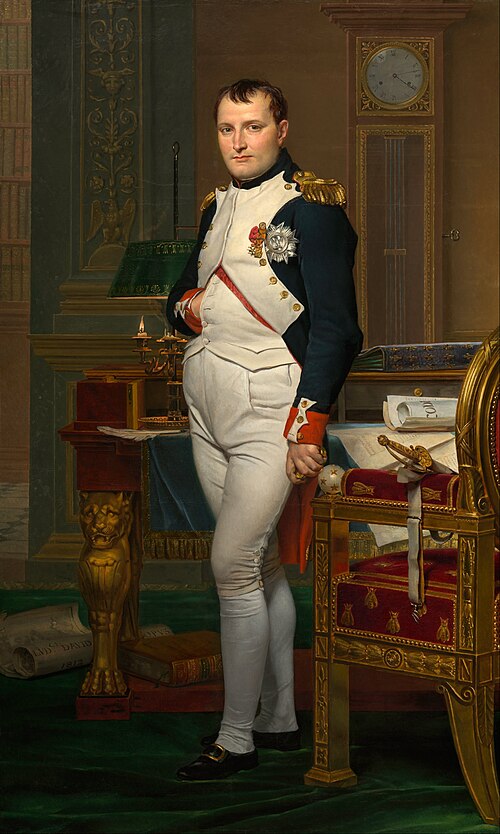
Napoleon Bonaparte
General · Modern
82.4Total
Basic Information
Born
1922
1769
Died
—
1821
Era
Modern
Modern
Nationality
Nicaragua
France
Occupation
Politician
General
Civilization
Western
Western
Score Comparison
Military (10%)
37.5
94.0
Political (20%)
59.5
75.0
Influence (20%)
64.8
82.0
Legacy (20%)
51.2
78.0
Leadership (15%)
73.9
80.0
Strategy (15%)
35.3
93.0
TOTAL
55.2
82.4
Rankings
🥇
Napoleon BonaparteLeader
Mil: 94.0Pol: 75.0Inf: 82.0
82.4
🥈
Luis Somoza Debayle
Mil: 37.5Pol: 59.5Inf: 64.8
55.2
+27.2 behind
How This Comparison Works
Algorithm
Each figure is scored on 6 dimensions (0—100 scale) based on structured historical data: Military (10%), Political (20%), Influence (20%), Legacy (20%), Leadership (15%), Strategy (15%). The weighted total produces the final ranking.
Data Sources
Scores are computed from structured sub-indicators in the database. Scale factors adjust for era (Ancient ×0.85, Modern ×1.0) and civilization size (Eastern ×1.05, Other ×0.80) to account for differences in population and military scale.
Maximum 3 Figures
Comparisons are limited to 2—3 figures to ensure readability and statistical meaningfulness.
Error Margins
±5 points per dimension — Sub-scores are derived from historical records with inherent uncertainty. Two figures within 5 points on a dimension should be considered roughly equivalent in that area.
Total Score Accuracy
±3 points overall — The weighted combination of 6 dimensions produces a total score with approximately ±3 points of uncertainty. Differences of less than 3 points are not statistically significant— the figures are effectively tied.
Known Limitations
- Historical records are incomplete and uneven across civilizations
- Figures from oral-tradition societies may be underrepresented
- Occupation labels can misclassify multi-role figures
- Scores measure capability and impact, not moral character
- Quantitative scoring is a comparison tool, not absolute truth
Capability Radar
Military (10%) — Battles & Warfare
Battles
28
95
Win Rate
31
90
Expansion
33
95
Political (20%) — Governance & Reform
Reform
30
95
Diplomacy
35
80
Economy
25
85
Influence (20%) — Cultural & Global Reach
Cultural
10
85
Global
10
90
Legacy (20%) — Historical Impact
Historical
15
95
Longevity
10
90
Leadership (15%) — Power & Stability
Tenure
40
85
Stability
20
70
Strategy (15%) — Tactics & Innovation
Strategy
35
95
Tactics
41
98
Reform
46
92
Analysis will be generated on first visit.
Scores and timeline are available below. The page will refresh automatically when ready.
Luis Somoza Debayle — Complete Timeline
1956 AD
Became President of Nicaragua After His Father's DeathPolitical Action◆ Major
Luis Somoza Debayle assumed the presidency of Nicaragua after the assassination of his father, Anastasio Somoza Garcia. He inherited a dictatorship controlled by the Somoza family and the National Guard.
SuccessionDictatorshipSomoza
Impact: national
1957 AD
Implemented Economic Modernization and Infrastructure ProjectsReform◆ Major
Luis Somoza's government invested in infrastructure, including roads, ports, and the expansion of the agricultural sector. He also promoted industrialization and attracted foreign investment, leading to economic growth but benefiting mainly the elite.
Economic GrowthInfrastructureModernization
Impact: nationalconstructive
1960 AD
Allowed Limited Political Freedoms and PressReform◆ Major
Compared to his father, Luis Somoza allowed a degree of political openness, including a more independent press and the formation of opposition parties. This relative liberalization earned him a reputation as a less brutal ruler, though the Somoza family still held ultimate power.
Political LiberalizationPress FreedomOpposition
Impact: nationalconstructive
Negotiated the Treaty of Central American Economic IntegrationPolitical Action
Luis Somoza signed the General Treaty of Central American Economic Integration, which established the Central American Common Market. This agreement aimed to promote regional trade and economic cooperation.
Economic IntegrationCentral AmericaTrade
Impact: regionalconstructive
1961 AD
Suppressed the Sandinista National Liberation Front (FSLN)War◆ Major
Luis Somoza's government cracked down on the newly formed Sandinista National Liberation Front (FSLN), arresting and killing its early members. This repression failed to eliminate the movement, which later overthrew the Somoza dynasty.
RepressionFSLNSandinistas
Impact: nationaldestructive
Similar Comparisons
Comments & Discussion
No comments yet. Be the first to share your thoughts!