Loading...
Analysis will be generated on first visit.
Scores and timeline are available below. The page will refresh automatically when ready.
Maurice de Saxe vs Qin Shi Huang
Qin Shi Huang leads by 6.2 pts · 2 figures compared
…

Maurice de Saxe
General · Modern
77.3Total
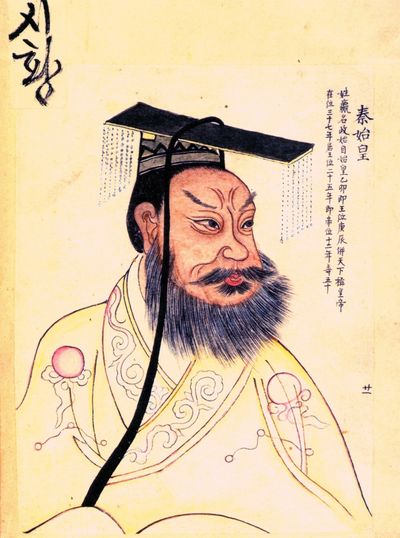
Qin Shi Huang
Emperor · Ancient
83.5Total
Basic Information
Born
1696
-259
Died
1750
-210
Era
Modern
Ancient
Nationality
France
China
Occupation
General
Emperor
Civilization
Western
Eastern
Score Comparison
Military (10%)
79.6
80.0
Political (20%)
74.8
88.0
Influence (20%)
78.0
82.0
Legacy (20%)
70.0
85.0
Leadership (15%)
83.3
88.0
Strategy (15%)
81.7
75.0
TOTAL
77.3
83.5
Rankings
🥇
Qin Shi HuangLeader
Mil: 80.0Pol: 88.0Inf: 82.0
83.5
🥈
Maurice de Saxe
Mil: 79.6Pol: 74.8Inf: 78.0
77.3
+6.2 behind
How This Comparison Works
Algorithm
Each figure is scored on 6 dimensions (0—100 scale) based on structured historical data: Military (10%), Political (20%), Influence (20%), Legacy (20%), Leadership (15%), Strategy (15%). The weighted total produces the final ranking.
Data Sources
Scores are computed from structured sub-indicators in the database. Scale factors adjust for era (Ancient ×0.85, Modern ×1.0) and civilization size (Eastern ×1.05, Other ×0.80) to account for differences in population and military scale.
Maximum 3 Figures
Comparisons are limited to 2—3 figures to ensure readability and statistical meaningfulness.
Error Margins
±5 points per dimension — Sub-scores are derived from historical records with inherent uncertainty. Two figures within 5 points on a dimension should be considered roughly equivalent in that area.
Total Score Accuracy
±3 points overall — The weighted combination of 6 dimensions produces a total score with approximately ±3 points of uncertainty. Differences of less than 3 points are not statistically significant— the figures are effectively tied.
Known Limitations
- Historical records are incomplete and uneven across civilizations
- Figures from oral-tradition societies may be underrepresented
- Occupation labels can misclassify multi-role figures
- Scores measure capability and impact, not moral character
- Quantitative scoring is a comparison tool, not absolute truth
Capability Radar
Military (10%) — Battles & Warfare
Battles
75
85
Win Rate
80
90
Expansion
70
90
Political (20%) — Governance & Reform
Reform
55
95
Diplomacy
65
75
Economy
50
90
Influence (20%) — Cultural & Global Reach
Cultural
70
95
Global
60
85
Legacy (20%) — Historical Impact
Historical
75
95
Longevity
65
95
Leadership (15%) — Power & Stability
Tenure
60
70
Stability
55
65
Strategy (15%) — Tactics & Innovation
Strategy
82
85
Tactics
88
80
Reform
85
95
Analysis will be generated on first visit.
Scores and timeline are available below. The page will refresh automatically when ready.
Maurice de Saxe — Complete Timeline
1745 AD
Battle of FontenoyWar
Maurice de Saxe commanded the French army to a decisive victory over the Pragmatic Army (British, Dutch, Austrian) at Fontenoy. The battle secured French control of the Austrian Netherlands.
War of Austrian SuccessionBattleFontenoy
Impact: regional
1747 AD
Appointment as Marshal General of FrancePolitical Action◆ Major
King Louis XV appointed Maurice de Saxe as Marshal General of France, the highest military rank. This honor recognized his victories in the War of the Austrian Succession.
FrancePromotionMarshal
Impact: national
1748 AD
Siege of MaastrichtWar◆ Major
Maurice de Saxe commanded the French army that besieged and captured Maastricht during the War of the Austrian Succession. The victory was a key French success, leading to the Treaty of Aix-la-Chapelle.
War of Austrian SuccessionSiegeVictory
Impact: regional
Qin Shi Huang — Complete Timeline
246 BC
Construction of the Mausoleum and Terracotta ArmyOther◆ Major
Qin Shi Huang commissioned a vast mausoleum complex near Xi'an, guarded by thousands of life-sized terracotta soldiers, horses, and chariots. The project employed hundreds of thousands of workers and reflected his obsession with immortality and imperial power.
Impact: global
230 BC
Conquest of the Six Warring StatesWar
From 230 to 221 BCE, Ying Zheng led the Qin state in a series of campaigns that conquered the Han, Zhao, Wei, Chu, Yan, and Qi states. This unified China under a single ruler for the first time, ending the Warring States period.
Impact: global
221 BC
Standardization of Writing, Currency, and MeasurementsReform◆ Major
Qin Shi Huang ordered the standardization of Chinese script, currency, and weights and measures across the unified empire. This facilitated administration, trade, and cultural integration, laying a foundation for future dynasties.
Impact: globalconstructive
Proclamation of the Qin DynastyPolitical Action
After conquering the last independent state, Ying Zheng declared himself Shi Huangdi (First Emperor), founding the Qin Dynasty. He adopted a new title to signify his supreme authority and initiated centralized imperial rule.
Impact: global
214 BC
Initiation of the Great Wall ConstructionOther◆ Major
Qin Shi Huang ordered the connection and extension of existing northern fortifications to create a unified defensive wall against nomadic Xiongnu raids. This project involved massive conscripted labor and became the precursor to the later Great Wall.
Impact: regional
213 BC
Burning of Books and Burying of ScholarsPolitical Action◆ Major
On the advice of Li Si, Qin Shi Huang ordered the burning of historical records and philosophical texts not aligned with Legalist doctrine. He also had 460 Confucian scholars buried alive to suppress dissent and consolidate ideological control.
Impact: nationaldestructive
Similar Comparisons
Comments & Discussion
MarshalUnchained6/17/2026
Saxe would have crushed Qin in a straight fight. His oblique order at Fontenoy was three centuries ahead of its time. Qin's terracotta army looks impressive, but those clay soldiers never faced Austrian grenadiers. Give me Saxe's tactical flexibility over massed spear formations any day.|en|Maurice de Saxe would outmaneuver Qin's conscript army in a straight fight—Fontenoy showed that. The terracotta army is just theater compared to real battlefield logistics. I'll take a marshal who actually fo
霸王别机6/17/2026
兵马俑再壮观也是静态艺术,萨克斯元帅的机动战术才是活的历史。长平之战坑杀四十万?战争是谋略不是屠杀。秦始皇统一文字是文化贡献,和军事天才两码事。给萨克斯同等资源,他能横扫六国更干净利落。|
LegionnaireGhost6/17/2026
Two thousand years of legacy doesn't lie. Qin built the bureaucratic state we still live under today. Saxe's innovations died with his pension book. The First Emperor connected China with roads, laws, weights—a system that outlasted his dynasty. Saxe's fame rests on one campaign season in 1745. That's not legacy, that's a footnote.|
竹简藏兵6/17/2026
萨克斯的《战争幻想》纯粹纸上谈兵,连拿破仑都批评他理论脱离实战。秦始皇的郡县制行政管到乡镇,萨克斯只是贵族雇佣兵,打仗为钱不为国。中国统一大业靠的是集权制度,不是个人英雄主义。把萨克斯放到战国时代,他连邯郸城墙都摸不着。