Loading...
Analysis will be generated on first visit.
Scores and timeline are available below. The page will refresh automatically when ready.
Antonio de Mendoza vs Julius Caesar
Julius Caesar leads by 16.5 pts · 2 figures compared
…

Antonio de Mendoza
Politician · Medieval
66.8Total
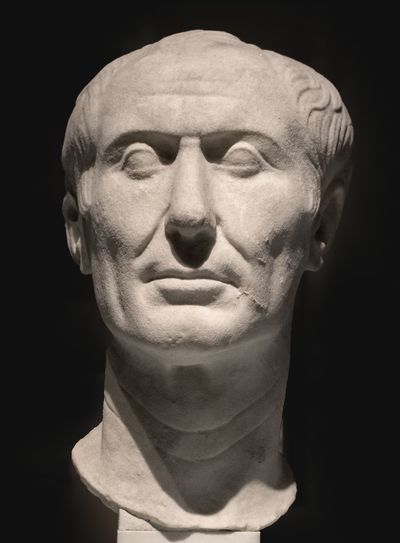
Julius Caesar
General · Ancient
83.3Total
Basic Information
Born
1495
-100
Died
1552
-44
Era
Medieval
Ancient
Nationality
Spain
Roman Republic
Occupation
Politician
General
Civilization
Western
Western
Score Comparison
Military (10%)
46.6
88.0
Political (20%)
84.7
78.0
Influence (20%)
74.4
85.0
Legacy (20%)
68.6
82.0
Leadership (15%)
80.6
82.0
Strategy (15%)
30.0
88.0
TOTAL
66.8
83.3
Rankings
🥇
Julius CaesarLeader
Mil: 88.0Pol: 78.0Inf: 85.0
83.3
🥈
Antonio de Mendoza
Mil: 46.6Pol: 84.7Inf: 74.4
66.8
+16.5 behind
How This Comparison Works
Algorithm
Each figure is scored on 6 dimensions (0—100 scale) based on structured historical data: Military (10%), Political (20%), Influence (20%), Legacy (20%), Leadership (15%), Strategy (15%). The weighted total produces the final ranking.
Data Sources
Scores are computed from structured sub-indicators in the database. Scale factors adjust for era (Ancient ×0.85, Modern ×1.0) and civilization size (Eastern ×1.05, Other ×0.80) to account for differences in population and military scale.
Maximum 3 Figures
Comparisons are limited to 2—3 figures to ensure readability and statistical meaningfulness.
Error Margins
±5 points per dimension — Sub-scores are derived from historical records with inherent uncertainty. Two figures within 5 points on a dimension should be considered roughly equivalent in that area.
Total Score Accuracy
±3 points overall — The weighted combination of 6 dimensions produces a total score with approximately ±3 points of uncertainty. Differences of less than 3 points are not statistically significant— the figures are effectively tied.
Known Limitations
- Historical records are incomplete and uneven across civilizations
- Figures from oral-tradition societies may be underrepresented
- Occupation labels can misclassify multi-role figures
- Scores measure capability and impact, not moral character
- Quantitative scoring is a comparison tool, not absolute truth
Capability Radar
Military (10%) — Battles & Warfare
Battles
10
95
Win Rate
10
92
Expansion
40
97
Political (20%) — Governance & Reform
Reform
70
90
Diplomacy
70
85
Economy
70
82
Influence (20%) — Cultural & Global Reach
Cultural
50
88
Global
60
94
Legacy (20%) — Historical Impact
Historical
60
95
Longevity
50
96
Leadership (15%) — Power & Stability
Tenure
70
75
Stability
60
60
Strategy (15%) — Tactics & Innovation
Strategy
20
94
Tactics
10
96
Reform
30
88
Analysis will be generated on first visit.
Scores and timeline are available below. The page will refresh automatically when ready.
Antonio de Mendoza — Complete Timeline
1535 AD
Appointed First Viceroy of New SpainPolitical Action◆ Major
Antonio de Mendoza was appointed by Emperor Charles V as the first viceroy of New Spain, governing the newly conquered territories in Mexico and Central America. He arrived in Mexico City in November 1535.
AppointmentColonial administration
Impact: regionalconstructive
1536 AD
Implemented the Encomienda ReformReform◆ Major
Mendoza introduced the New Laws of the Indies in New Spain, which aimed to regulate the encomienda system and protect indigenous rights. He enforced restrictions on forced labor and tribute collection, though implementation was resisted by colonists.
ReformIndigenous rights
Impact: regionalprogressive
1540 AD
Authorized the Coronado ExpeditionOther◆ Major
Mendoza authorized and financed the expedition of Francisco V
ExplorationCoronado
Impact: regional
1541 AD
Suppressed the Mixtón RebellionWar◆ Major
Mendoza led a military campaign to suppress the Mixt
RebellionSuppression
Impact: regionaldestructive
1550 AD
Appointed Viceroy of PeruPolitical Action◆ Major
After 15 years as viceroy of New Spain, Mendoza was appointed viceroy of Peru. He died in Lima in 1552 shortly after assuming the position, leaving a legacy of administrative reforms in both colonies.
AppointmentPeru
Impact: regional
1551 AD
Established the Royal and Pontifical University of MexicoCultural◆ Major
Mendoza oversaw the founding of the Royal and Pontifical University of Mexico (Real y Pontificia Universidad de M
EducationUniversity
Impact: regionalconstructive
Similar Comparisons
Comments & Discussion
No comments yet. Be the first to share your thoughts!