Loading...
Analysis will be generated on first visit.
Scores and timeline are available below. The page will refresh automatically when ready.
Cleisthenes of Athens vs Qin Shi Huang
Qin Shi Huang leads by 10.3 pts · 2 figures compared
…
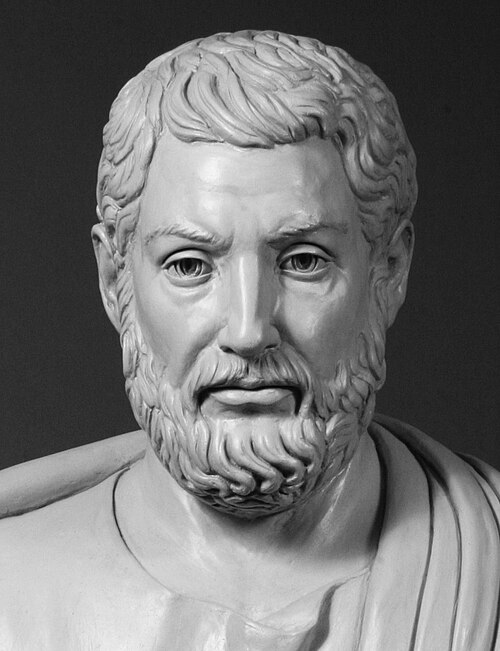
Cleisthenes of Athens
Politician · Ancient
73.2Total
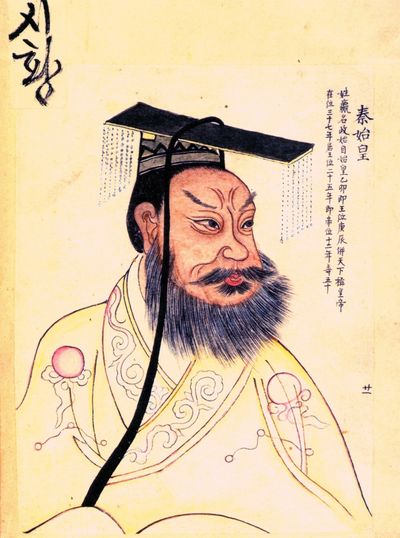
Qin Shi Huang
Emperor · Ancient
83.5Total
Basic Information
Born
-570
-259
Died
-508
-210
Era
Ancient
Ancient
Nationality
Athens
China
Occupation
Politician
Emperor
Civilization
Western
Eastern
Score Comparison
Military (10%)
31.7
80.0
Political (20%)
66.6
88.0
Influence (20%)
83.5
82.0
Legacy (20%)
89.9
85.0
Leadership (15%)
82.7
88.0
Strategy (15%)
64.3
75.0
TOTAL
73.2
83.5
Rankings
🥇
Qin Shi HuangLeader
Mil: 80.0Pol: 88.0Inf: 82.0
83.5
🥈
Cleisthenes of Athens
Mil: 31.7Pol: 66.6Inf: 83.5
73.2
+10.3 behind
How This Comparison Works
Algorithm
Each figure is scored on 6 dimensions (0—100 scale) based on structured historical data: Military (10%), Political (20%), Influence (20%), Legacy (20%), Leadership (15%), Strategy (15%). The weighted total produces the final ranking.
Data Sources
Scores are computed from structured sub-indicators in the database. Scale factors adjust for era (Ancient ×0.85, Modern ×1.0) and civilization size (Eastern ×1.05, Other ×0.80) to account for differences in population and military scale.
Maximum 3 Figures
Comparisons are limited to 2—3 figures to ensure readability and statistical meaningfulness.
Error Margins
±5 points per dimension — Sub-scores are derived from historical records with inherent uncertainty. Two figures within 5 points on a dimension should be considered roughly equivalent in that area.
Total Score Accuracy
±3 points overall — The weighted combination of 6 dimensions produces a total score with approximately ±3 points of uncertainty. Differences of less than 3 points are not statistically significant— the figures are effectively tied.
Known Limitations
- Historical records are incomplete and uneven across civilizations
- Figures from oral-tradition societies may be underrepresented
- Occupation labels can misclassify multi-role figures
- Scores measure capability and impact, not moral character
- Quantitative scoring is a comparison tool, not absolute truth
Capability Radar
Military (10%) — Battles & Warfare
Battles
22
85
Win Rate
27
90
Expansion
28
90
Political (20%) — Governance & Reform
Reform
95
95
Diplomacy
70
75
Economy
40
90
Influence (20%) — Cultural & Global Reach
Cultural
85
95
Global
80
85
Legacy (20%) — Historical Impact
Historical
90
95
Longevity
95
95
Leadership (15%) — Power & Stability
Tenure
30
70
Stability
60
65
Strategy (15%) — Tactics & Innovation
Strategy
35
85
Tactics
34
80
Reform
40
95
Analysis will be generated on first visit.
Scores and timeline are available below. The page will refresh automatically when ready.
Cleisthenes of Athens — Complete Timeline
508 BC
Reform of the Athenian Tribes (Cleisthenes' Reforms)Reform
Cleisthenes reorganized the Athenian citizen body into ten new tribes based on demes (local districts), replacing the old four Ionian tribes. This broke the power of aristocratic clans and created a new political structure that formed the basis of Athenian democracy.
DemocracyPolitical ReformAthens
Impact: globalprogressive
Introduction of OstracismReform◆ Major
Cleisthenes introduced the practice of ostracism, allowing citizens to vote annually to exile a prominent figure for ten years. This mechanism was designed to prevent tyranny and remove threats to democracy. The first ostracism occurred in 487 BC.
DemocracyPolitical ReformExile
Impact: globalprogressive
Creation of the Council of 500 (Boule)Reform◆ Major
Cleisthenes established the Boule, a council of 500 citizens (50 from each tribe) chosen by lot. This body prepared legislation for the Assembly and oversaw daily administration. It replaced the aristocratic Areopagus as the main governing body, expanding citizen participation.
DemocracyPolitical ReformGovernment
Impact: globalprogressive
Exile of Isagoras and Spartan InterventionPolitical Action◆ Major
Cleisthenes' rival Isagoras called on Spartan king Cleomenes I to intervene in Athens. The Spartans expelled Cleisthenes and attempted to dissolve the Boule, but the Athenian people revolted, besieging the Acropolis and forcing the Spartans to withdraw. Cleisthenes was recalled.
Spartan InterventionDemocracyAthens
Impact: nationalconstructive
Qin Shi Huang — Complete Timeline
246 BC
Construction of the Mausoleum and Terracotta ArmyOther◆ Major
Qin Shi Huang commissioned a vast mausoleum complex near Xi'an, guarded by thousands of life-sized terracotta soldiers, horses, and chariots. The project employed hundreds of thousands of workers and reflected his obsession with immortality and imperial power.
Impact: global
230 BC
Conquest of the Six Warring StatesWar
From 230 to 221 BCE, Ying Zheng led the Qin state in a series of campaigns that conquered the Han, Zhao, Wei, Chu, Yan, and Qi states. This unified China under a single ruler for the first time, ending the Warring States period.
Impact: global
221 BC
Standardization of Writing, Currency, and MeasurementsReform◆ Major
Qin Shi Huang ordered the standardization of Chinese script, currency, and weights and measures across the unified empire. This facilitated administration, trade, and cultural integration, laying a foundation for future dynasties.
Impact: globalconstructive
Proclamation of the Qin DynastyPolitical Action
After conquering the last independent state, Ying Zheng declared himself Shi Huangdi (First Emperor), founding the Qin Dynasty. He adopted a new title to signify his supreme authority and initiated centralized imperial rule.
Impact: global
214 BC
Initiation of the Great Wall ConstructionOther◆ Major
Qin Shi Huang ordered the connection and extension of existing northern fortifications to create a unified defensive wall against nomadic Xiongnu raids. This project involved massive conscripted labor and became the precursor to the later Great Wall.
Impact: regional
213 BC
Burning of Books and Burying of ScholarsPolitical Action◆ Major
On the advice of Li Si, Qin Shi Huang ordered the burning of historical records and philosophical texts not aligned with Legalist doctrine. He also had 460 Confucian scholars buried alive to suppress dissent and consolidate ideological control.
Impact: nationaldestructive
Similar Comparisons
Comments & Discussion
ARMCHAIR_TYRANT6/17/2026
Qin Shi Huang didn't just unify China — he invented the future. The standardized axle widths, writing system, and weights weren't bureaucratic trivia; they were the skeleton of a civilization that would last 2,000 years. Cleisthenes gave Athens a lottery box. Qin gave us the Great Wall, the Lingqu Canal, and a legal code that treated every soul equally — by crushing them under the same iron wheel. Democracy is nice for a city-state. Empires win history.
史书碎纸机6/17/2026
别拿秦始皇上香火的那套来骗人。焚书坑儒是事实,《史记》说"燔灭文章,以愚黔首",他把六国史书烧得只剩秦记,这不是统一,这是文化种族灭绝。克利斯提尼的改革虽然不完美,但至少让平民有了投票权。一个靠竹简投票,一个靠青铜剑治国——你要选哪个当邻居?
OSTRACISM_OR_BUST6/17/2026
Everyone gushes over Cleisthenes' democracy, but few remember why ostracism existed: Athens was a constant knife-fight between noble clans. Cleisthenes invented a mechanism to kick out the loser without civil war. That's not idealism, it's political jiu-jitsu. Qin didn't need a vote — he had tens of thousands of laborers building roads across China while Athenians were still arguing about trireme oarsmen. Different problems, different tools. Don't romanticize either.
长城下的理性6/17/2026
克利斯提尼的民主是奴隶主的民主,雅典公民只占总人口十分之一。而秦始皇的郡县制至少让每个人口都计入户籍,中央统治直达乡里。你说专制?公元前三世纪,能调动五十万军民修灵渠、配黑火药(误,实际是汉代才有)的,只有始皇。雅典的陶片放逐法放逐过功臣阿里斯提德,就因为他太正直——这就是你们的公平?
MERIT_OF_MUD6/17/2026
Let's be honest: both were aristocrats solving aristocratic problems. Cleisthenes was literally an Alcmaeonid — his family had been cursed for killing rebels in a temple. He empowered the demos because it crushed his rivals. Qin crushed the nobles with Legalist reforms because they threatened his throne. Athens got ostracism; China got the Terra-cotta Army. Neither was building utopia — they were building survival machines. The difference? One machine lasted 200 years, the other 2,000.