Loading...
Analysis will be generated on first visit.
Scores and timeline are available below. The page will refresh automatically when ready.
Gaitana vs Julius Caesar
Julius Caesar leads by 39.5 pts · 2 figures compared
…
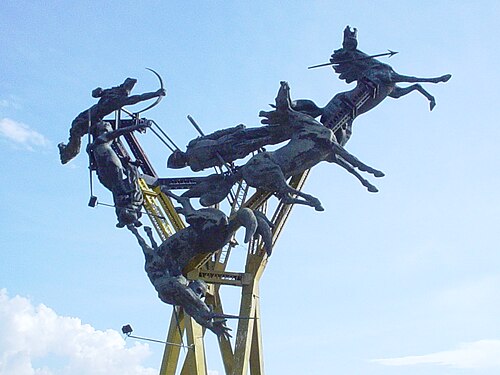
Gaitana
Revolutionary · Medieval
43.8Total
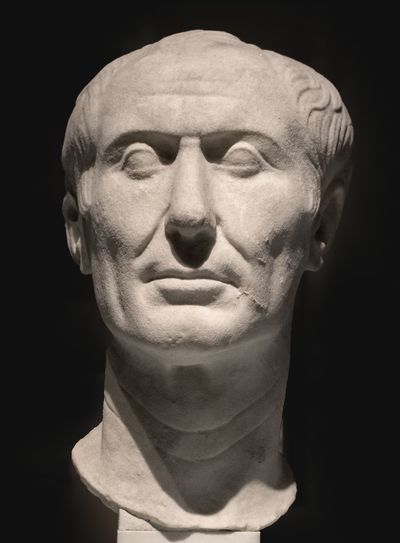
Julius Caesar
General · Ancient
83.3Total
Basic Information
Born
1500
-100
Died
1550
-44
Era
Medieval
Ancient
Nationality
Yalcon
Roman Republic
Occupation
Revolutionary
General
Civilization
Other
Western
Score Comparison
Military (10%)
29.8
88.0
Political (20%)
35.8
78.0
Influence (20%)
55.4
85.0
Legacy (20%)
44.9
82.0
Leadership (15%)
31.8
82.0
Strategy (15%)
58.8
88.0
TOTAL
43.8
83.3
Rankings
🥇
Julius CaesarLeader
Mil: 88.0Pol: 78.0Inf: 85.0
83.3
🥈
Gaitana
Mil: 29.8Pol: 35.8Inf: 55.4
43.8
+39.5 behind
How This Comparison Works
Algorithm
Each figure is scored on 6 dimensions (0—100 scale) based on structured historical data: Military (10%), Political (20%), Influence (20%), Legacy (20%), Leadership (15%), Strategy (15%). The weighted total produces the final ranking.
Data Sources
Scores are computed from structured sub-indicators in the database. Scale factors adjust for era (Ancient ×0.85, Modern ×1.0) and civilization size (Eastern ×1.05, Other ×0.80) to account for differences in population and military scale.
Maximum 3 Figures
Comparisons are limited to 2—3 figures to ensure readability and statistical meaningfulness.
Error Margins
±5 points per dimension — Sub-scores are derived from historical records with inherent uncertainty. Two figures within 5 points on a dimension should be considered roughly equivalent in that area.
Total Score Accuracy
±3 points overall — The weighted combination of 6 dimensions produces a total score with approximately ±3 points of uncertainty. Differences of less than 3 points are not statistically significant— the figures are effectively tied.
Known Limitations
- Historical records are incomplete and uneven across civilizations
- Figures from oral-tradition societies may be underrepresented
- Occupation labels can misclassify multi-role figures
- Scores measure capability and impact, not moral character
- Quantitative scoring is a comparison tool, not absolute truth
Capability Radar
Military (10%) — Battles & Warfare
Battles
15
95
Win Rate
10
92
Expansion
5
97
Political (20%) — Governance & Reform
Reform
5
90
Diplomacy
10
85
Economy
5
82
Influence (20%) — Cultural & Global Reach
Cultural
20
88
Global
10
94
Legacy (20%) — Historical Impact
Historical
25
95
Longevity
20
96
Leadership (15%) — Power & Stability
Tenure
10
75
Stability
5
60
Strategy (15%) — Tactics & Innovation
Strategy
15
94
Tactics
20
96
Reform
5
88
Analysis will be generated on first visit.
Scores and timeline are available below. The page will refresh automatically when ready.
Gaitana — Complete Timeline
1540 AD
Led the Yalcon Rebellion against Spanish colonizersWar◆ Major
Gaitana organized and led indigenous Yalcon forces in a rebellion against Spanish colonial rule in present-day Colombia. The rebellion targeted Spanish settlements and encomiendas, resisting forced labor and land seizure. The uprising was eventually suppressed by Spanish forces, but it became a symbol of indigenous resistance.
Indigenous RebellionColonial ResistanceYalcon
Impact: regional
Captured and executed Spanish encomendero Pedro de AñascoOther◆ Major
During the Yalcon rebellion, Gaitana's forces captured the Spanish encomendero Pedro de A
ExecutionColonial ConflictIndigenous Leadership
Impact: regional
1541 AD
Rebellion suppressed by Spanish forces under Sebastián de BelalcázarWar◆ Major
Spanish conquistador Sebasti
Military DefeatColonial SuppressionEnd of Rebellion
Impact: regionaldestructive
Julius Caesar — Complete Timeline
58 BC
Gallic WarsWar◆ Major
Caesar, as proconsul of Gaul, launched a series of campaigns that conquered all of Gaul (modern France, Belgium, and parts of Switzerland). He fought numerous battles, including against the Helvetii, the Belgae, and the Gallic chieftain Vercingetorix. The wars brought immense wealth and a loyal army to Caesar.
Gallic WarsConquestRoman Expansion
Impact: regional
49 BC
Crossing the RubiconPolitical Action◆ Major
Caesar led Legio XIII across the Rubicon River into Italy, defying the Roman Senate's order to disband his army. This act triggered a civil war against Pompey and the Optimates, ultimately leading to Caesar's dictatorship and the end of the Roman Republic.
Roman Civil WarEnd of RepublicPower Struggle
Impact: global
48 BC
Battle of PharsalusWar◆ Major
Caesar's outnumbered army defeated the larger forces of Pompey the Great at Pharsalus in Greece. Caesar's tactical use of a reserve line to counter Pompey's cavalry charge proved decisive. Pompey fled to Egypt, where he was assassinated, leaving Caesar as the undisputed master of the Roman world.
Roman Civil WarBattleDecisive Victory
Impact: regional
44 BC
Appointment as Dictator for LifePolitical Action◆ Major
The Roman Senate appointed Caesar dictator perpetuo (dictator for life), granting him unprecedented personal power. This move concentrated military, legislative, and judicial authority in one person, effectively ending the Roman Republic's traditional system of checks and balances and alarming many senators.
DictatorshipEnd of RepublicPower Consolidation
Impact: regionaldestructive
Assassination on the Ides of MarchPolitical Action◆ Major
A group of Roman senators, led by Marcus Junius Brutus and Gaius Cassius Longinus, stabbed Caesar to death at a meeting of the Senate in the Theatre of Pompey. The assassination was intended to restore the Republic, but instead triggered another civil war that led to the rise of the Roman Empire.
AssassinationRoman PoliticsEnd of Republic
Impact: globaldestructive
Similar Comparisons
Comments & Discussion
LegionnaireSkeptic6/17/2026
Comparing Caesar to a tribal leader with sticks is like comparing a Ferrari to a oxcart. Caesar conquered Gaul with professional legions, siege engines, and a supply chain that could cross the Alps in winter. Gaitana rallied villagers with stones and wooden spears. The only thing they share is that both faced overwhelming odds—Caesar against a million Gauls, Gaitana against Spanish steel. She lost. He won. That’s not a comparison, that’s a tragedy dressed as a metaphor.
数据老兵6/17/2026
你们忽略了一个核心差异:资源密度。凯撒控制的是地中海最集中的军事工业复合体,而盖塔纳的起义连个像样的铁匠铺都没有。这不是勇气或战略的问题,是后勤碾压。历史书爱讲英雄领导起义,但要我说,把一帮用木棍的农民对抗火绳枪和板甲叫“起义”,不如叫集体送死。
AlexandriaScribe6/17/2026
The symmetry is poetic but flawed. Caesar’s ambition was for power, glory, and the state—he wrote his own story in Commentarii de Bello Gallico, controlling the narrative. Gaitana’s story is oral, fragmented, passed down through indigenous memory and Spanish colonial records that treat her as a footnote. Caesar dies as a tyrant in marble and bronze; Gaitana lives as a legend in smoke and grief. One shapes history with quills, the other with scars.
史学拆台王6/17/2026
你们是不是忘了凯撒被杀这事儿?他掌握了罗马军队,跨过卢比孔河,把元老院踩在脚下,最后被自己提拔的人捅死在广场上。盖塔纳呢?她儿子被烧死,她愤怒起义,最后西班牙人赢了。这两个故事的核心教训完全相反:凯撒证明了权力巅峰的脆弱,盖塔纳证明了愤怒的极限。非要类比的话,一个是《权力的游戏》前传,一个是被删除的悲剧配角。