Loading...
Analysis will be generated on first visit.
Scores and timeline are available below. The page will refresh automatically when ready.
Gulbuddin Hekmatyar vs Napoleon Bonaparte
Napoleon Bonaparte leads by 30.8 pts · 2 figures compared
…
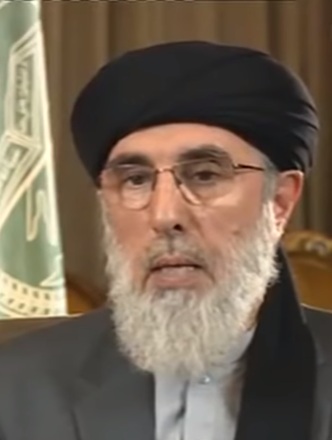
Gulbuddin Hekmatyar
Revolutionary · Modern
51.6Total
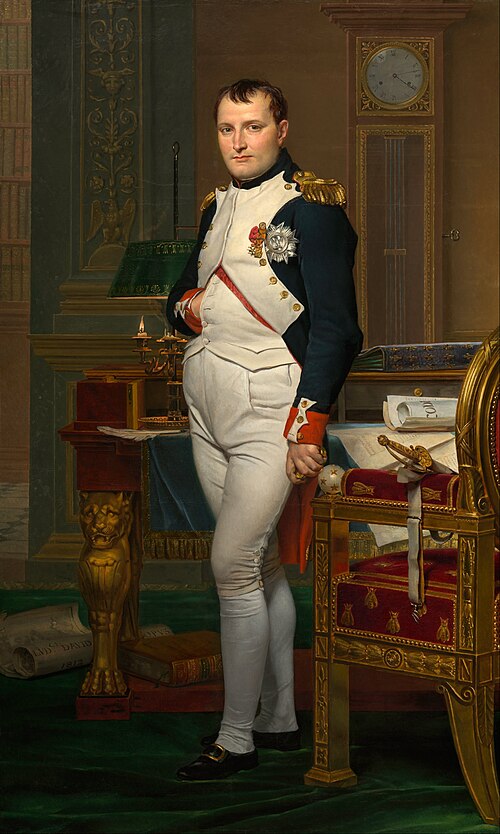
Napoleon Bonaparte
General · Modern
82.4Total
Basic Information
Born
1947
1769
Died
—
1821
Era
Modern
Modern
Nationality
Afghanistan
France
Occupation
Revolutionary
General
Civilization
Middle Eastern
Western
Score Comparison
Military (10%)
46.8
94.0
Political (20%)
45.9
75.0
Influence (20%)
61.9
82.0
Legacy (20%)
47.8
78.0
Leadership (15%)
41.3
80.0
Strategy (15%)
63.7
93.0
TOTAL
51.6
82.4
Rankings
🥇
Napoleon BonaparteLeader
Mil: 94.0Pol: 75.0Inf: 82.0
82.4
🥈
Gulbuddin Hekmatyar
Mil: 46.8Pol: 45.9Inf: 61.9
51.6
+30.8 behind
How This Comparison Works
Algorithm
Each figure is scored on 6 dimensions (0—100 scale) based on structured historical data: Military (10%), Political (20%), Influence (20%), Legacy (20%), Leadership (15%), Strategy (15%). The weighted total produces the final ranking.
Data Sources
Scores are computed from structured sub-indicators in the database. Scale factors adjust for era (Ancient ×0.85, Modern ×1.0) and civilization size (Eastern ×1.05, Other ×0.80) to account for differences in population and military scale.
Maximum 3 Figures
Comparisons are limited to 2—3 figures to ensure readability and statistical meaningfulness.
Error Margins
±5 points per dimension — Sub-scores are derived from historical records with inherent uncertainty. Two figures within 5 points on a dimension should be considered roughly equivalent in that area.
Total Score Accuracy
±3 points overall — The weighted combination of 6 dimensions produces a total score with approximately ±3 points of uncertainty. Differences of less than 3 points are not statistically significant— the figures are effectively tied.
Known Limitations
- Historical records are incomplete and uneven across civilizations
- Figures from oral-tradition societies may be underrepresented
- Occupation labels can misclassify multi-role figures
- Scores measure capability and impact, not moral character
- Quantitative scoring is a comparison tool, not absolute truth
Capability Radar
Military (10%) — Battles & Warfare
Battles
45
95
Win Rate
30
90
Expansion
25
95
Political (20%) — Governance & Reform
Reform
15
95
Diplomacy
20
80
Economy
10
85
Influence (20%) — Cultural & Global Reach
Cultural
25
85
Global
25
90
Legacy (20%) — Historical Impact
Historical
30
95
Longevity
20
90
Leadership (15%) — Power & Stability
Tenure
30
85
Stability
5
70
Strategy (15%) — Tactics & Innovation
Strategy
35
95
Tactics
40
98
Reform
20
92
Analysis will be generated on first visit.
Scores and timeline are available below. The page will refresh automatically when ready.
Gulbuddin Hekmatyar — Complete Timeline
1975 AD
Founding of Hezb-e Islami (1975)Political Action◆ Major
Gulbuddin Hekmatyar founded the Hezb-e Islami political party, an Islamist faction that became one of the most powerful mujahideen groups during the Soviet-Afghan War. The party received significant support from Pakistan's ISI and foreign Islamist donors.
MujahideenIslamist PartyCold War
Impact: national
1993 AD
Prime Minister during Civil War (1993-1994)Political Action◆ Major
Hekmatyar served as Prime Minister of Afghanistan from 1993 to 1994 under President Burhanuddin Rabbani. His tenure was marked by intense factional fighting, including rocket attacks on Kabul that caused thousands of civilian casualties, contributing to the devastation of the city.
Civil WarKabulRocket Attacks
Impact: nationaldestructive
1996 AD
Alliance with Taliban (1996-2001)Political Action
After the Taliban captured Kabul in 1996, Hekmatyar initially fled to Iran. He later aligned with the Taliban regime, though his influence waned. He remained in Afghanistan until the US-led invasion in 2001, after which he fled to Pakistan.
TalibanExileAlliance
Impact: national
2016 AD
Peace Agreement with Afghan Government (2016)Political Action◆ Major
Hekmatyar signed a peace agreement with the Afghan government of President Ashraf Ghani in 2016. The deal allowed him to return to Afghanistan from exile, with his party recognized as a political entity and his fighters integrated into state security forces.
Peace DealReconciliationGhani
Impact: nationalconstructive
Napoleon Bonaparte — Complete Timeline
1799 AD
Coup of 18 BrumaireOther◆ Major
Napoleon Bonaparte, with support from his brother Lucien and key political figures, overthrew the Directory in a bloodless coup. He established the Consulate with himself as First Consul, effectively becoming the ruler of France. This event ended the French Revolution's most unstable period.
French RevolutionCoupRise to Power
Impact: regional
1804 AD
Promulgation of the Napoleonic CodeOther◆ Major
Napoleon enacted the Civil Code of the French, known as the Napoleonic Code, a comprehensive set of laws that replaced the fragmented feudal legal systems. The code established legal equality, protected property rights, and secularized law. It became the basis for legal systems in many European and world countries.
Legal ReformNapoleonic CodeCivil Law
Impact: globalconstructive
1805 AD
Battle of AusterlitzWar◆ Major
Napoleon's Grande Arm
Napoleonic WarsBattleDecisive Victory
Impact: global
1812 AD
Invasion of RussiaWar◆ Major
Napoleon led the Grande Arm
Napoleonic WarsInvasionDisaster
Impact: globaldestructive
1815 AD
Battle of WaterlooWar◆ Major
Napoleon's French army was defeated by the combined forces of the Duke of Wellington's Anglo-Allied army and Gebhard Leberecht von Bl
Napoleonic WarsBattleFinal Defeat
Impact: globaldestructive
Similar Comparisons
Comments & Discussion
火药桶拿破仑6/17/2026
Comparing Hekmatyar to Napoleon is like comparing a firecracker to a nuclear bomb. Napoleon rewrote the legal code of Europe with the Napoleonic Code in 1804—still influencing laws today. Hekmatyar? He spent the 1990s burning Kabul to the ground, literally shelling the capital for personal vendettas. One built an enduring empire; the other couldn't hold a coalition together for a month. I'd take Napoleon's ambition over Hekmatyar's petty tribalism any day.
历史暗流6/17/2026
拿破仑的滑铁卢失败了整个帝国,但赫克马蒂亚尔的“胜利”只是把阿富汗炸成废墟。数据上看,拿破仑在1805年奥斯特利茨以少胜多,战略天才无疑;而赫克马蒂亚尔在1996年塔利班攻占喀布尔前就逃亡了。没有具体领土,没有持久遗产,只有数万伤亡。这不是帅才,是恐怖主义的路边摊。
The Corsican Fox6/17/2026
Look at their origins: Napoleon came from a tiny island nobody cared about and still conquered Europe from Milan to Moscow. Hekmatyar had the backing of Pakistan's ISI and still couldn't pacify a single province. Napoleon's 1812 invasion of Russia failed, but it was a grand tragedy—Hekmatyar's alliance with the Soviets during the 1980s was just cynical betrayal. One man's failure was epic; the other's was just pathetic and self-serving.
废墟里的野心6/17/2026
拿破仑用七年把法国从革命混乱变成欧洲霸主,赫克马蒂亚尔用了二十年在阿富汗内战里当“破坏之王”。具体点?1814年拿破仑被流放厄尔巴岛,还能回来百日王朝,这种韧劲赫克马蒂亚尔有吗?1996年他被塔利班赶出喀布尔,从此只能当境外傀儡。一个在失败中重生,一个在失败中沉沦,高下立判。
Revisionist's Edge6/17/2026
Spare me the Napoleon worship. He was a megalomaniac who caused 3 million deaths in the Napoleonic Wars for personal glory. Hekmatyar, similarly brutal, at least fought a Soviet superpower on his own soil. Napoleon's 1799 coup was a power grab; Hekmatyar's 1992 destruction of Kabul was a tragedy, but he wasn't the sole villain. Both were ruthless, but let's not pretend Napoleon's "legacy" is purer than history's forgotten warlords. Scale doesn't excuse bloodshed.