Loading...
Analysis will be generated on first visit.
Scores and timeline are available below. The page will refresh automatically when ready.
Imam Shamil vs Qin Shi Huang
Qin Shi Huang leads by 10.1 pts · 2 figures compared
…

Imam Shamil
Revolutionary · Modern
73.4Total
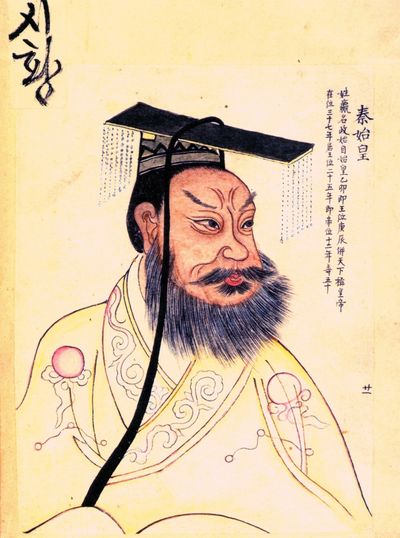
Qin Shi Huang
Emperor · Ancient
83.5Total
Basic Information
Born
1797
-259
Died
1871
-210
Era
Modern
Ancient
Nationality
Dagestan
China
Occupation
Revolutionary
Emperor
Civilization
Middle Eastern
Eastern
Score Comparison
Military (10%)
59.6
80.0
Political (20%)
75.6
88.0
Influence (20%)
73.0
82.0
Legacy (20%)
69.8
85.0
Leadership (15%)
86.2
88.0
Strategy (15%)
72.0
75.0
TOTAL
73.4
83.5
Rankings
🥇
Qin Shi HuangLeader
Mil: 80.0Pol: 88.0Inf: 82.0
83.5
🥈
Imam Shamil
Mil: 59.6Pol: 75.6Inf: 73.0
73.4
+10.1 behind
How This Comparison Works
Algorithm
Each figure is scored on 6 dimensions (0—100 scale) based on structured historical data: Military (10%), Political (20%), Influence (20%), Legacy (20%), Leadership (15%), Strategy (15%). The weighted total produces the final ranking.
Data Sources
Scores are computed from structured sub-indicators in the database. Scale factors adjust for era (Ancient ×0.85, Modern ×1.0) and civilization size (Eastern ×1.05, Other ×0.80) to account for differences in population and military scale.
Maximum 3 Figures
Comparisons are limited to 2—3 figures to ensure readability and statistical meaningfulness.
Error Margins
±5 points per dimension — Sub-scores are derived from historical records with inherent uncertainty. Two figures within 5 points on a dimension should be considered roughly equivalent in that area.
Total Score Accuracy
±3 points overall — The weighted combination of 6 dimensions produces a total score with approximately ±3 points of uncertainty. Differences of less than 3 points are not statistically significant— the figures are effectively tied.
Known Limitations
- Historical records are incomplete and uneven across civilizations
- Figures from oral-tradition societies may be underrepresented
- Occupation labels can misclassify multi-role figures
- Scores measure capability and impact, not moral character
- Quantitative scoring is a comparison tool, not absolute truth
Capability Radar
Military (10%) — Battles & Warfare
Battles
75
85
Win Rate
60
90
Expansion
65
90
Political (20%) — Governance & Reform
Reform
65
95
Diplomacy
60
75
Economy
40
90
Influence (20%) — Cultural & Global Reach
Cultural
70
95
Global
55
85
Legacy (20%) — Historical Impact
Historical
75
95
Longevity
65
95
Leadership (15%) — Power & Stability
Tenure
70
70
Stability
55
65
Strategy (15%) — Tactics & Innovation
Strategy
80
85
Tactics
85
80
Reform
70
95
Analysis will be generated on first visit.
Scores and timeline are available below. The page will refresh automatically when ready.
Imam Shamil — Complete Timeline
1834 AD
Proclaimed Imam of DagestanPolitical Action
Following the deaths of Ghazi Muhammad and Hamzat Bek, Shamil was elected as the third imam of the Caucasian Imamate. He united the mountain tribes of Dagestan and Chechnya under a theocratic state to continue resistance against Russian imperial expansion.
Caucasian WarLeadershipResistance
Impact: regionalconstructive
1839 AD
Battle of AkhulgoWar◆ Major
Russian forces under General Grabbe besieged Shamil's stronghold at Akhulgo. After a three-month siege, Shamil escaped with his family but suffered heavy losses. The battle demonstrated Russian military superiority but failed to end the rebellion.
Caucasian WarSiegeRussian Empire
Impact: regionaltragic
1843 AD
Capture of GergebilWar◆ Major
Shamil's forces captured the Russian fortress of Gergebil in Dagestan. This victory marked the peak of his military power, allowing him to control much of the Caucasus interior and threaten Russian supply lines.
Caucasian WarVictoryFortress
Impact: regionalconstructive
1859 AD
Surrender to Russian ForcesWar
After the fall of his last stronghold at Gunib, Shamil surrendered to Prince Baryatinsky. He was taken to Russia as a prisoner, ending the 25-year Caucasian War. The surrender marked the final Russian conquest of the North Caucasus.
Caucasian WarSurrenderRussian Empire
Impact: regionaltragic
Exile to KalugaPolitical Action
Shamil was exiled to Kaluga, Russia, where he lived under house arrest. He was treated with respect by Tsar Alexander II and allowed to perform religious duties. This exile ended his active role in the Caucasus.
ExileRussian EmpirePrisoner
Impact: national
1870 AD
Pilgrimage to MeccaCultural
Shamil received permission to perform the Hajj to Mecca. He traveled via Istanbul and Medina, meeting with Ottoman Sultan Abdulaziz. This pilgrimage fulfilled his religious duty and marked his final journey before death.
HajjReligiousOttoman Empire
Impact: regionalconstructive
Qin Shi Huang — Complete Timeline
246 BC
Construction of the Mausoleum and Terracotta ArmyOther◆ Major
Qin Shi Huang commissioned a vast mausoleum complex near Xi'an, guarded by thousands of life-sized terracotta soldiers, horses, and chariots. The project employed hundreds of thousands of workers and reflected his obsession with immortality and imperial power.
Impact: global
230 BC
Conquest of the Six Warring StatesWar
From 230 to 221 BCE, Ying Zheng led the Qin state in a series of campaigns that conquered the Han, Zhao, Wei, Chu, Yan, and Qi states. This unified China under a single ruler for the first time, ending the Warring States period.
Impact: global
221 BC
Standardization of Writing, Currency, and MeasurementsReform◆ Major
Qin Shi Huang ordered the standardization of Chinese script, currency, and weights and measures across the unified empire. This facilitated administration, trade, and cultural integration, laying a foundation for future dynasties.
Impact: globalconstructive
Proclamation of the Qin DynastyPolitical Action
After conquering the last independent state, Ying Zheng declared himself Shi Huangdi (First Emperor), founding the Qin Dynasty. He adopted a new title to signify his supreme authority and initiated centralized imperial rule.
Impact: global
214 BC
Initiation of the Great Wall ConstructionOther◆ Major
Qin Shi Huang ordered the connection and extension of existing northern fortifications to create a unified defensive wall against nomadic Xiongnu raids. This project involved massive conscripted labor and became the precursor to the later Great Wall.
Impact: regional
213 BC
Burning of Books and Burying of ScholarsPolitical Action◆ Major
On the advice of Li Si, Qin Shi Huang ordered the burning of historical records and philosophical texts not aligned with Legalist doctrine. He also had 460 Confucian scholars buried alive to suppress dissent and consolidate ideological control.
Impact: nationaldestructive
Similar Comparisons
Comments & Discussion
BLOOD-AND-TERRA-COTTA6/17/2026
Forget the false equivalence. Qin’s road toll alone—over a million conscripts dead building his Great Wall and mausoleum—makes Shamil’s mountain skirmishes look like an afternoon scuffle. Shamil fought for survival in a lost cause. The First Emperor constructed an apparatus of control that outlasted his dynasty. That’s not same ambition; that’s scale vs. spirit. One built a tomb city, the other just died in it.|en|Qin’s mass conscription claimed more lives than Shamil’s entire 25-year war. Apple
山鹰与虎符6/17/2026
把沙米尔和秦始皇放在一起比,本身就是在混淆历史逻辑。沙米尔领导的是高加索山民反抗俄罗斯帝国殖民的自卫战争,资源匮乏,孤立无援,输是注定的。而秦始皇拥有整个关中平原的粮仓、数十万正规军和法家机器,统一六国不过是时间问题。一个在泥泞中赤脚搏斗,一个坐在青铜战车上碾过对手。这不是对等对决,是蚂蚁撼树。|zh|Shamil fought colonial resistance with nothing; Qin had a state behind him. Different leagues entirely.
DEATH-BY-DIPLOMACY6/17/2026
Shamil’s surrender wasn’t just military defeat—it was a strategic trap. When he kissed the prince’s hand, he effectively abdicated his religious authority. In Islam, an imam who submits to a kafir ruler loses all legitimacy. Qin never faced that dilemma because he was his own god. That’s the real chasm: Shamil’s power came from divine delegation, Qin’s from self-deification. One could be deposed by his own followers; the other built a dynasty by erasing alternatives. |en|Shamil’s surrender cost
铁血书简6/17/2026
但别忘了,秦始皇是靠焚书坑儒来剪除异见的,这种文化暴力比沙米尔对俄罗斯人的宗教战争更彻底。沙米尔至少允许被征服的村庄保留习俗,只要交税就行。而秦始皇让所有思想统一到法家一条线上。从长期影响看,沙米尔的失败只是局部历史的插曲,秦始皇的专制主义却塑造了整个东亚的政治基因。一个被遗忘,一个被供奉——这才是历史的残酷。|zh|Shamil allowed cultural survival under submission; Qin demanded total ideological conformity. That’s a deeper violence.
CLASH-OF-CALIPHS6/17/2026
Shamil was fighting a rear-guard holy war against modern artillery and the Russian Empire’s industrial might. Qin was uniting agrarian kingdoms with bronze swords. The comparison is like pitting a guerrilla leader against a mob boss—both use power, but