Loading...
Analysis will be generated on first visit.
Scores and timeline are available below. The page will refresh automatically when ready.
Lord Lytton vs Napoleon Bonaparte
Napoleon Bonaparte leads by 23.8 pts · 2 figures compared
…
Lord Lytton
Politician · Modern
58.6Total
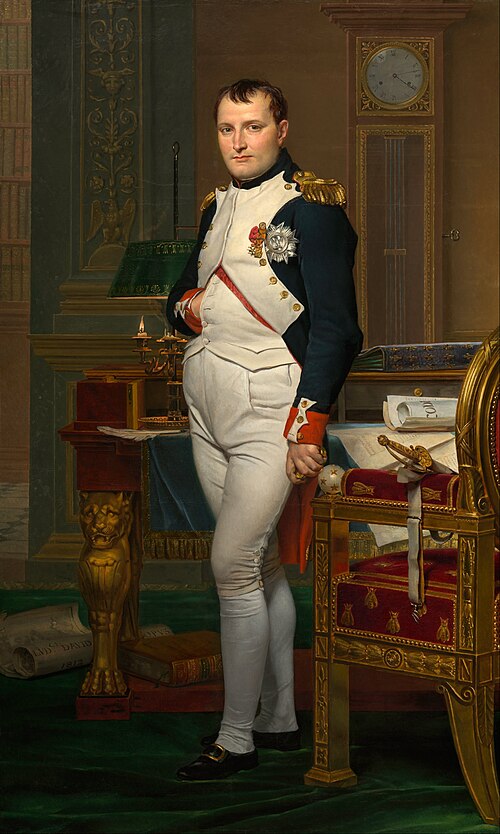
Napoleon Bonaparte
General · Modern
82.4Total
Basic Information
Born
1831
1769
Died
1891
1821
Era
Modern
Modern
Nationality
United Kingdom
France
Occupation
Politician
General
Civilization
Western
Western
Score Comparison
Military (10%)
46.1
94.0
Political (20%)
56.8
75.0
Influence (20%)
69.3
82.0
Legacy (20%)
57.1
78.0
Leadership (15%)
72.0
80.0
Strategy (15%)
43.6
93.0
TOTAL
58.6
82.4
Rankings
🥇
Napoleon BonaparteLeader
Mil: 94.0Pol: 75.0Inf: 82.0
82.4
🥈
Lord Lytton
Mil: 46.1Pol: 56.8Inf: 69.3
58.6
+23.8 behind
How This Comparison Works
Algorithm
Each figure is scored on 6 dimensions (0—100 scale) based on structured historical data: Military (10%), Political (20%), Influence (20%), Legacy (20%), Leadership (15%), Strategy (15%). The weighted total produces the final ranking.
Data Sources
Scores are computed from structured sub-indicators in the database. Scale factors adjust for era (Ancient ×0.85, Modern ×1.0) and civilization size (Eastern ×1.05, Other ×0.80) to account for differences in population and military scale.
Maximum 3 Figures
Comparisons are limited to 2—3 figures to ensure readability and statistical meaningfulness.
Error Margins
±5 points per dimension — Sub-scores are derived from historical records with inherent uncertainty. Two figures within 5 points on a dimension should be considered roughly equivalent in that area.
Total Score Accuracy
±3 points overall — The weighted combination of 6 dimensions produces a total score with approximately ±3 points of uncertainty. Differences of less than 3 points are not statistically significant— the figures are effectively tied.
Known Limitations
- Historical records are incomplete and uneven across civilizations
- Figures from oral-tradition societies may be underrepresented
- Occupation labels can misclassify multi-role figures
- Scores measure capability and impact, not moral character
- Quantitative scoring is a comparison tool, not absolute truth
Capability Radar
Military (10%) — Battles & Warfare
Battles
20
95
Win Rate
10
90
Expansion
5
95
Political (20%) — Governance & Reform
Reform
15
95
Diplomacy
10
80
Economy
10
85
Influence (20%) — Cultural & Global Reach
Cultural
10
85
Global
20
90
Legacy (20%) — Historical Impact
Historical
30
95
Longevity
20
90
Leadership (15%) — Power & Stability
Tenure
40
85
Stability
5
70
Strategy (15%) — Tactics & Innovation
Strategy
10
95
Tactics
15
98
Reform
5
92
Analysis will be generated on first visit.
Scores and timeline are available below. The page will refresh automatically when ready.
Lord Lytton — Complete Timeline
1876 AD
Great Famine of 1876-1878Other◆ Major
During Lytton's tenure, a severe famine struck southern India, particularly the Madras Presidency and Mysore, from 1876 to 1878. The famine caused an estimated 5 to 10 million deaths. Lytton's government was criticized for inadequate relief efforts and for continuing to export grain while people starved.
FamineDisasterCriticism
Impact: regionaltragic
1877 AD
Delhi Durbar of 1877Cultural◆ Major
Lytton organized the Delhi Durbar in 1877 to proclaim Queen Victoria as Empress of India. The grand ceremony was intended to assert British imperial authority and loyalty among Indian princes. However, it was criticized for its extravagance during a time of severe famine in southern India.
DurbarQueen VictoriaImperial
Impact: regional
1878 AD
Second Anglo-Afghan WarWar◆ Major
Lord Lytton, as Viceroy of India, initiated the Second Anglo-Afghan War in 1878 to counter Russian influence in Afghanistan. British forces invaded Afghanistan, leading to the Treaty of Gandamak in 1879, which gave Britain control over Afghan foreign affairs. The war was costly and controversial, and British forces later withdrew after a rebellion in Kabul.
Afghan WarInvasionForeign Policy
Impact: regionaldestructive
Vernacular Press Act of 1878Reform◆ Major
Lytton enacted the Vernacular Press Act in 1878, which imposed strict censorship on Indian-language newspapers. The act allowed the government to confiscate presses and punish editors for publishing 'seditious' material. It was widely criticized as repressive and was repealed in 1881 by Lytton's successor.
Press CensorshipRepressionLegislation
Impact: regionaldestructive
Similar Comparisons
Comments & Discussion
No comments yet. Be the first to share your thoughts!