Loading...
Analysis will be generated on first visit.
Scores and timeline are available below. The page will refresh automatically when ready.
Alberto Fujimori vs Julius Caesar
Julius Caesar leads by 16.3 pts · 2 figures compared
…

Alberto Fujimori
Politician · Modern
67.0Total
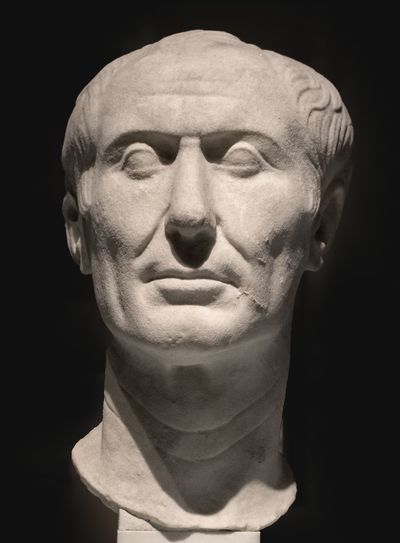
Julius Caesar
General · Ancient
83.3Total
Basic Information
Born
1938
-100
Died
—
-44
Era
Modern
Ancient
Nationality
Peru
Roman Republic
Occupation
Politician
General
Civilization
Western
Western
Score Comparison
Military (10%)
32.8
88.0
Political (20%)
72.0
78.0
Influence (20%)
73.2
85.0
Legacy (20%)
65.3
82.0
Leadership (15%)
81.6
82.0
Strategy (15%)
62.3
88.0
TOTAL
67.0
83.3
Rankings
🥇
Julius CaesarLeader
Mil: 88.0Pol: 78.0Inf: 85.0
83.3
🥈
Alberto Fujimori
Mil: 32.8Pol: 72.0Inf: 73.2
67.0
+16.3 behind
How This Comparison Works
Algorithm
Each figure is scored on 6 dimensions (0—100 scale) based on structured historical data: Military (10%), Political (20%), Influence (20%), Legacy (20%), Leadership (15%), Strategy (15%). The weighted total produces the final ranking.
Data Sources
Scores are computed from structured sub-indicators in the database. Scale factors adjust for era (Ancient ×0.85, Modern ×1.0) and civilization size (Eastern ×1.05, Other ×0.80) to account for differences in population and military scale.
Maximum 3 Figures
Comparisons are limited to 2—3 figures to ensure readability and statistical meaningfulness.
Error Margins
±5 points per dimension — Sub-scores are derived from historical records with inherent uncertainty. Two figures within 5 points on a dimension should be considered roughly equivalent in that area.
Total Score Accuracy
±3 points overall — The weighted combination of 6 dimensions produces a total score with approximately ±3 points of uncertainty. Differences of less than 3 points are not statistically significant— the figures are effectively tied.
Known Limitations
- Historical records are incomplete and uneven across civilizations
- Figures from oral-tradition societies may be underrepresented
- Occupation labels can misclassify multi-role figures
- Scores measure capability and impact, not moral character
- Quantitative scoring is a comparison tool, not absolute truth
Capability Radar
Military (10%) — Battles & Warfare
Battles
30
95
Win Rate
70
92
Expansion
10
97
Political (20%) — Governance & Reform
Reform
65
90
Diplomacy
55
85
Economy
60
82
Influence (20%) — Cultural & Global Reach
Cultural
30
88
Global
45
94
Legacy (20%) — Historical Impact
Historical
55
95
Longevity
30
96
Leadership (15%) — Power & Stability
Tenure
70
75
Stability
40
60
Strategy (15%) — Tactics & Innovation
Strategy
60
94
Tactics
40
96
Reform
50
88
Analysis will be generated on first visit.
Scores and timeline are available below. The page will refresh automatically when ready.
Alberto Fujimori — Complete Timeline
1990 AD
Economic stabilization and privatizationReform◆ Major
Fujimori implemented shock therapy economic reforms, including privatization of state enterprises, elimination of price controls, and reduction of tariffs. These policies ended hyperinflation and stabilized the economy, but also led to increased poverty and inequality in the short term.
Economic ReformNeoliberalismStabilization
Impact: national
Election as President of PeruPolitical Action
Fujimori, a political outsider, won the Peruvian presidential election, defeating novelist Mario Vargas Llosa. He ran on a platform of economic reform and anti-corruption, inheriting a country plagued by hyperinflation and the Shining Path insurgency.
ElectionPolitical OutsiderCrisis
Impact: national
1992 AD
Capture of Abimael GuzmánWar◆ Major
Fujimori's intelligence service captured Abimael Guzm
CounterinsurgencyVictoryShining Path
Impact: nationalconstructive
Self-coup and dissolution of CongressPolitical Action◆ Major
Fujimori staged a self-coup, dissolving Congress, suspending the constitution, and purging the judiciary. He claimed the action was necessary to fight corruption and the Shining Path. The coup was condemned internationally but supported by the military and many Peruvians.
CoupAuthoritarianismConstitutional Crisis
Impact: nationaldestructive
2000 AD
Resignation and exilePolitical Action◆ Major
Fujimori resigned the presidency while in Japan, after a corruption scandal involving his intelligence chief Vladimiro Montesinos. He remained in exile in Japan for five years, avoiding prosecution until his arrest in Chile in 2005.
ResignationCorruptionExile
Impact: nationaldestructive
Similar Comparisons
Comments & Discussion
No comments yet. Be the first to share your thoughts!