Loading...
Analysis will be generated on first visit.
Scores and timeline are available below. The page will refresh automatically when ready.
Alexander the Great vs Elizabeth I
Alexander the Great leads by 14.5 pts · 2 figures compared
…
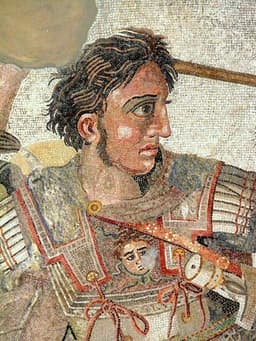
Alexander the Great
General · Ancient
84.7Total
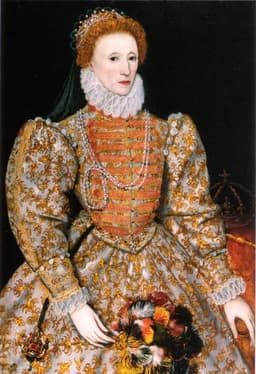
Elizabeth I
Politician · Modern
70.2Total
Basic Information
Born
-356
1533
Died
-323
1603
Era
Ancient
Modern
Nationality
Macedon
England
Occupation
General
Politician
Civilization
Western
Western
Score Comparison
Military (10%)
96.0
45.0
Political (20%)
65.0
82.0
Influence (20%)
90.0
70.0
Legacy (20%)
90.0
75.0
Leadership (15%)
82.0
80.0
Strategy (15%)
92.0
55.0
TOTAL
84.7
70.2
Rankings
🥇
Alexander the GreatLeader
Mil: 96.0Pol: 65.0Inf: 90.0
84.7
🥈
Elizabeth I
Mil: 45.0Pol: 82.0Inf: 70.0
70.2
+14.5 behind
How This Comparison Works
Algorithm
Each figure is scored on 6 dimensions (0—100 scale) based on structured historical data: Military (10%), Political (20%), Influence (20%), Legacy (20%), Leadership (15%), Strategy (15%). The weighted total produces the final ranking.
Data Sources
Scores are computed from structured sub-indicators in the database. Scale factors adjust for era (Ancient ×0.85, Modern ×1.0) and civilization size (Eastern ×1.05, Other ×0.80) to account for differences in population and military scale.
Maximum 3 Figures
Comparisons are limited to 2—3 figures to ensure readability and statistical meaningfulness.
Error Margins
±5 points per dimension — Sub-scores are derived from historical records with inherent uncertainty. Two figures within 5 points on a dimension should be considered roughly equivalent in that area.
Total Score Accuracy
±3 points overall — The weighted combination of 6 dimensions produces a total score with approximately ±3 points of uncertainty. Differences of less than 3 points are not statistically significant— the figures are effectively tied.
Known Limitations
- Historical records are incomplete and uneven across civilizations
- Figures from oral-tradition societies may be underrepresented
- Occupation labels can misclassify multi-role figures
- Scores measure capability and impact, not moral character
- Quantitative scoring is a comparison tool, not absolute truth
Capability Radar
Military (10%) — Battles & Warfare
Battles
98
45
Win Rate
99
70
Expansion
99
55
Political (20%) — Governance & Reform
Reform
75
80
Diplomacy
80
85
Economy
70
80
Influence (20%) — Cultural & Global Reach
Cultural
95
85
Global
95
80
Legacy (20%) — Historical Impact
Historical
98
85
Longevity
95
85
Leadership (15%) — Power & Stability
Tenure
60
90
Stability
55
75
Strategy (15%) — Tactics & Innovation
Strategy
98
75
Tactics
99
60
Reform
85
65
Analysis will be generated on first visit.
Scores and timeline are available below. The page will refresh automatically when ready.
Alexander the Great — Complete Timeline
334 BC
Battle of the Granicus RiverWar◆ Major
Alexander led his Macedonian army across the Hellespont into Asia Minor and defeated a Persian force under local satraps at the Granicus River. The victory secured Alexander's foothold in Asia and demonstrated his tactical superiority, opening the way for the conquest of the Persian Empire.
Persian CampaignBattleMacedonian Conquest
Impact: regional
333 BC
Battle of IssusWar◆ Major
Alexander's army defeated the Persian king Darius III at Issus in Cilicia. Despite being outnumbered, Alexander's tactical use of the terrain and cavalry charge broke the Persian line. Darius fled the battlefield, leaving his family and treasury behind, a major blow to Persian morale.
Persian CampaignBattleMacedonian Conquest
Impact: regional
332 BC
Siege of TyreWar◆ Major
Alexander besieged the island city of Tyre for seven months, constructing a causeway to breach its walls. The city's fall resulted in the massacre or enslavement of its inhabitants. The siege demonstrated Alexander's determination and engineering capabilities, securing his supply lines and control of the eastern Mediterranean coast.
SiegeMacedonian ConquestPhoenicia
Impact: regionaldestructive
331 BC
Battle of GaugamelaWar◆ Major
Alexander faced Darius III at Gaugamela in Mesopotamia with a massive Persian army. Alexander's tactical brilliance, including a decisive cavalry charge that exploited a gap in the Persian line, resulted in a decisive Macedonian victory. Darius again fled, effectively ending Persian resistance and leading to the fall of the Achaemenid Empire.
Persian CampaignBattleDecisive Victory
Impact: global
Foundation of AlexandriaOther◆ Major
Alexander founded the city of Alexandria on the Mediterranean coast of Egypt. He personally selected the site and oversaw the initial planning. Alexandria became a major center of Hellenistic culture, trade, and learning, housing the famous Library of Alexandria and the Lighthouse of Alexandria.
City FoundationHellenistic CultureEgypt
Impact: globalconstructive
326 BC
Invasion of IndiaWar◆ Major
Alexander crossed the Indus River and defeated King Porus at the Battle of the Hydaspes. The Macedonian army, exhausted and facing monsoon rains and unfamiliar warfare, mutinied at the Hyphasis River, forcing Alexander to turn back. This campaign marked the easternmost extent of his conquests.
Indian CampaignBattleMutiny
Impact: regional
Elizabeth I — Complete Timeline
1559 AD
Act of Supremacy 1559Political Action◆ Major
Elizabeth I re-established the Church of England's independence from Rome, declaring herself Supreme Governor. This act, part of the Elizabethan Religious Settlement, restored Protestantism while maintaining some Catholic traditions, creating a via media that aimed to unify the nation.
Religious SettlementProtestantismChurch of England
Impact: nationalconstructive
1587 AD
Execution of Mary, Queen of ScotsPolitical Action◆ Major
After years of imprisonment, Elizabeth I signed the death warrant for Mary, Queen of Scots, who had been implicated in the Babington Plot to assassinate Elizabeth and claim the English throne. Mary's execution removed a major Catholic rival and solidified Elizabeth's position.
ExecutionCatholic RivalPlot
Impact: nationaltragic
1588 AD
Defeat of the Spanish ArmadaWar
The English navy under Lord Howard and Sir Francis Drake defeated the Spanish Armada, a massive invasion fleet sent by Philip II. Storms and English fireships scattered the Spanish fleet, preventing the invasion and establishing England as a major naval power.
Naval BattleSpainProtestantism
Impact: globalconstructive
1600 AD
Chartering of the East India CompanyPolitical Action◆ Major
Elizabeth I granted a royal charter to the East India Company, giving it a monopoly on English trade with Asia. This company would become a powerful instrument of British imperialism, eventually controlling large parts of India and shaping global trade.
TradeColonialismCharter
Impact: globalconstructive
1601 AD
Golden SpeechPolitical Action
In her final address to Parliament, Elizabeth I delivered the 'Golden Speech,' expressing her love for her subjects and her dedication to the realm. She addressed grievances over monopolies, promising reform, and cemented her image as a beloved monarch devoted to her people.
SpeechParliamentMonarchy
Impact: nationalconstructive
Similar Comparisons
Comments & Discussion
东西史话6/16/2026
亚历山大和伊丽莎白放在一起比,感觉有点关公战秦琼。单论军事,亚历山大横扫波斯、打到印度,96分其实给低了——他要是放在中国战国时期,跟白起、韩信比,未必能保持全胜纪录。伊丽莎白的45分军事倒挺合理,她靠的是私掠船和天气打西班牙无敌舰队,跟戚继光抗倭那种系统性军事改革完全不是一回事。不过政治方面,伊丽莎白82分我觉得低了,她在宗教分裂的欧洲稳住王位、玩转议会,这种平衡术比亚历山大大帝强太多了。亚历山大一死帝国就崩,伊丽莎白留下的却是一个稳定的黄金时代。西方评分往往重军事轻政治,这在中国史学里是说不通的——治国安邦才是硬道理。
EmpireDeconstructor6/16/2026
This comparison is classic Western hero worship disguised as objective history. Alexander gets a 96 in military because he conquered a bunch of empires that were already crumbling—Persia was a hollow shell by the time he arrived. Meanwhile, Elizabeth’s 45 in military ignores that her reign avoided the catastrophic land wars that bankrupted Spain and France. She played a long game of strategic attrition while Alexander burned through his men in a decade of endless marching. And what about the colonial context? Elizabeth’s reign laid the groundwork for the transatlantic slave trade and Irish colonization—hardly a ‘golden age’ for everyone. The scoring system here reeks of Eurocentric bias that valorizes brute conquest over sustainable governance. Alexander’s empire lasted what, 13 years? Elizabeth’s institutional legacy shaped the British state for centuries. Maybe rethink your metrics.
量化历史控6/16/2026
我来算一下这个评分系统的合理性。总分的加权方式没公布,但从单项反推,军事权重可能高达40%以上,这本身就有问题。按中国史观,政治和治理应该占更高比重——比如秦始皇统一六国靠军事,但书同文车同轨的政治制度才是他得高分的关键。再说具体数字:亚历山大军事96,但他的后勤体系跟秦国的漕运系统比差远了,打印度时军队差点哗变,这扣分了吗?伊丽莎白政治82,可她对议会妥协、处决玛丽·斯图亚特的手段,放在中国语境下不过是合格君主的基操,汉武帝、唐太宗的政治手腕比她复杂十倍。建议引入均衡权重:军事30%、政治30%、影响20%、领导力20%,这样亚历山大总分会降到约81,伊丽莎白升到约73,差距缩小不少。