Loading...
Analysis will be generated on first visit.
Scores and timeline are available below. The page will refresh automatically when ready.
Alexander the Great vs Pedro I of Brazil
Alexander the Great leads by 19.0 pts · 2 figures compared
…
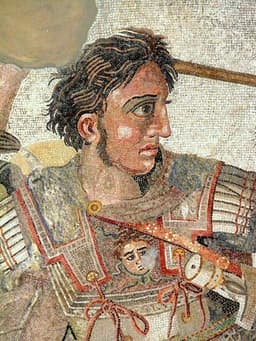
Alexander the Great
General · Ancient
84.7Total
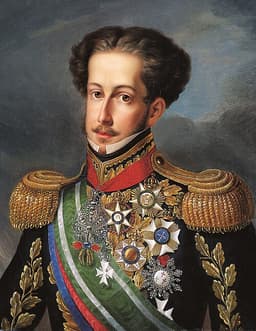
Pedro I of Brazil
Emperor · Modern
65.7Total
Basic Information
Born
-356
1798
Died
-323
1834
Era
Ancient
Modern
Nationality
Macedon
Brazil
Occupation
General
Emperor
Civilization
Western
Western
Score Comparison
Military (10%)
96.0
65.0
Political (20%)
65.0
60.2
Influence (20%)
90.0
72.3
Legacy (20%)
90.0
70.0
Leadership (15%)
82.0
74.5
Strategy (15%)
92.0
50.0
TOTAL
84.7
65.7
Rankings
🥇
Alexander the GreatLeader
Mil: 96.0Pol: 65.0Inf: 90.0
84.7
🥈
Pedro I of Brazil
Mil: 65.0Pol: 60.2Inf: 72.3
65.7
+19.0 behind
How This Comparison Works
Algorithm
Each figure is scored on 6 dimensions (0—100 scale) based on structured historical data: Military (10%), Political (20%), Influence (20%), Legacy (20%), Leadership (15%), Strategy (15%). The weighted total produces the final ranking.
Data Sources
Scores are computed from structured sub-indicators in the database. Scale factors adjust for era (Ancient ×0.85, Modern ×1.0) and civilization size (Eastern ×1.05, Other ×0.80) to account for differences in population and military scale.
Maximum 3 Figures
Comparisons are limited to 2—3 figures to ensure readability and statistical meaningfulness.
Error Margins
±5 points per dimension — Sub-scores are derived from historical records with inherent uncertainty. Two figures within 5 points on a dimension should be considered roughly equivalent in that area.
Total Score Accuracy
±3 points overall — The weighted combination of 6 dimensions produces a total score with approximately ±3 points of uncertainty. Differences of less than 3 points are not statistically significant— the figures are effectively tied.
Known Limitations
- Historical records are incomplete and uneven across civilizations
- Figures from oral-tradition societies may be underrepresented
- Occupation labels can misclassify multi-role figures
- Scores measure capability and impact, not moral character
- Quantitative scoring is a comparison tool, not absolute truth
Capability Radar
Military (10%) — Battles & Warfare
Battles
98
35
Win Rate
99
40
Expansion
99
30
Political (20%) — Governance & Reform
Reform
75
45
Diplomacy
80
50
Economy
70
30
Influence (20%) — Cultural & Global Reach
Cultural
95
40
Global
95
45
Legacy (20%) — Historical Impact
Historical
98
55
Longevity
95
50
Leadership (15%) — Power & Stability
Tenure
60
55
Stability
55
25
Strategy (15%) — Tactics & Innovation
Strategy
98
35
Tactics
99
30
Reform
85
20
Analysis will be generated on first visit.
Scores and timeline are available below. The page will refresh automatically when ready.
Alexander the Great — Complete Timeline
334 BC
Battle of the Granicus RiverWar◆ Major
Alexander led his Macedonian army across the Hellespont into Asia Minor and defeated a Persian force under local satraps at the Granicus River. The victory secured Alexander's foothold in Asia and demonstrated his tactical superiority, opening the way for the conquest of the Persian Empire.
Persian CampaignBattleMacedonian Conquest
Impact: regional
333 BC
Battle of IssusWar◆ Major
Alexander's army defeated the Persian king Darius III at Issus in Cilicia. Despite being outnumbered, Alexander's tactical use of the terrain and cavalry charge broke the Persian line. Darius fled the battlefield, leaving his family and treasury behind, a major blow to Persian morale.
Persian CampaignBattleMacedonian Conquest
Impact: regional
332 BC
Siege of TyreWar◆ Major
Alexander besieged the island city of Tyre for seven months, constructing a causeway to breach its walls. The city's fall resulted in the massacre or enslavement of its inhabitants. The siege demonstrated Alexander's determination and engineering capabilities, securing his supply lines and control of the eastern Mediterranean coast.
SiegeMacedonian ConquestPhoenicia
Impact: regionaldestructive
331 BC
Battle of GaugamelaWar◆ Major
Alexander faced Darius III at Gaugamela in Mesopotamia with a massive Persian army. Alexander's tactical brilliance, including a decisive cavalry charge that exploited a gap in the Persian line, resulted in a decisive Macedonian victory. Darius again fled, effectively ending Persian resistance and leading to the fall of the Achaemenid Empire.
Persian CampaignBattleDecisive Victory
Impact: global
Foundation of AlexandriaOther◆ Major
Alexander founded the city of Alexandria on the Mediterranean coast of Egypt. He personally selected the site and oversaw the initial planning. Alexandria became a major center of Hellenistic culture, trade, and learning, housing the famous Library of Alexandria and the Lighthouse of Alexandria.
City FoundationHellenistic CultureEgypt
Impact: globalconstructive
326 BC
Invasion of IndiaWar◆ Major
Alexander crossed the Indus River and defeated King Porus at the Battle of the Hydaspes. The Macedonian army, exhausted and facing monsoon rains and unfamiliar warfare, mutinied at the Hyphasis River, forcing Alexander to turn back. This campaign marked the easternmost extent of his conquests.
Indian CampaignBattleMutiny
Impact: regional
Pedro I of Brazil — Complete Timeline
1822 AD
Declaration of Independence of BrazilPolitical Action
Pedro I declared Brazil's independence from Portugal on September 7, 1822, at the Ipiranga River in S
Impact: globalprogressive
Coronation as Emperor of BrazilPolitical Action◆ Major
Pedro I was crowned Emperor of Brazil on December 1, 1822, in Rio de Janeiro. The coronation formalized the new imperial government, with Pedro I as constitutional monarch, though he retained significant executive powers.
Impact: nationalconstructive
1823 AD
War of Independence of BrazilWar◆ Major
Pedro I led Brazilian forces against Portuguese loyalists in the War of Independence. Key battles occurred in Bahia, Maranh
Impact: national
Dissolution of the Constituent AssemblyPolitical Action◆ Major
Pedro I dissolved the Constituent Assembly after conflicts over the constitution's limits on imperial power. He then imposed the 1824 Constitution, which granted the emperor extensive powers, including the Moderating Power, centralizing authority.
Impact: nationaldestructive
1831 AD
Abdication of the Brazilian ThronePolitical Action
Pedro I abdicated the Brazilian throne in favor of his five-year-old son Pedro II on April 7, 1831. He returned to Portugal to claim the Portuguese throne, leaving Brazil under a regency until his son came of age.
Impact: national
Similar Comparisons
Comments & Discussion
史海钩沉6/16/2026
亚历山大和佩德罗一世放一起比,这跨度真够大的。但说佩德罗政治分87?我有点意见。他那个1824宪法搞的是“温和专制”,给皇帝留了很大权力,可巴西独立后地方叛乱不断(比如赤道邦联),他后来还被迫退位回葡萄牙——这政治稳定性连中国南北朝那些半吊子君主都不如。反观亚历山大,虽然帝国死后分裂,但他在世时能融合波斯贵族、搞集体婚礼、推广希腊化治理,这种跨文化整合的政治手腕,放到中国历史上也就张骞通西域、北魏孝文帝汉化能比一比。西方评分常低估这种“软政治”的长远影响力,反而给一个退位君主打87分,有点双标了。
BattlefieldScholar6/16/2026
Let's talk about the military scores. Alexander's 96 is fair—he never lost a battle, and his combined arms tactics at Gaugamela (using the Companion cavalry as a hammer against Darius's center while the phalanx pinned the Persians) were revolutionary for the era. But giving Pedro I a 77? He commanded maybe 8,000 troops in the War of Independence against Portuguese garrisons that never exceeded 2,000 effectives. The Cisplatine War was a strategic stalemate against Argentina, not a display of genius. For comparison, Alexander at Issus had a 2:1 numerical disadvantage and still crushed the Persians. Pedro's political score being higher than his military is nonsense—he was a mediocre field commander at best. If we're ranking by tactical innovation, Pedro doesn't belong in the same tier as Alexander or even Pyrrhus.
数据拆解师6/16/2026
这套评分体系内部逻辑有问题。亚历山大总分84.7,军事96,政治65,影响90。佩德罗总分65.7,军事65,政治60.2,影响72.3。但请注意:政治65 vs 60.2,差距仅4.8分,可亚历山大统治了从希腊到印度的庞大帝国,而佩德罗只管了巴西一个殖民地还退位了。如果按中国史观,秦始皇统一六国后政治分可以给90+,因为建立了郡县制;亚历山大搞了“波斯化”但死后帝国立刻分裂,政治分65都算高了。更离谱的是影响分:亚历山大创造希腊化世界持续300年,佩德罗的影响就巴西+葡萄牙那一小块,结果只差不到18分?建议引入加权系数,比如“统治面积/人口/文化传播范围”作为分母再算,否则数字就是忽悠人的。