Loading...
Analysis will be generated on first visit.
Scores and timeline are available below. The page will refresh automatically when ready.
Cleisthenes vs Themistocles
Cleisthenes leads by 2.2 pts · 2 figures compared
…
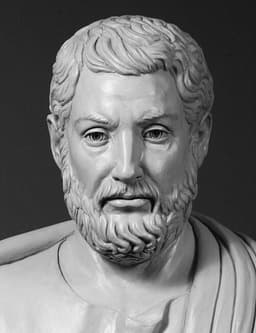
Cleisthenes
Politician · Ancient
78.4Total
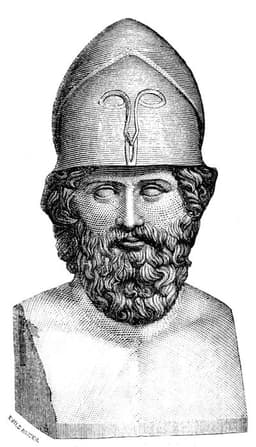
Themistocles
Politician · Ancient
76.2Total
Basic Information
Born
-570
-524
Died
-508
-459
Era
Ancient
Ancient
Nationality
Greece
Greece
Occupation
Politician
Politician
Civilization
Western
Western
Score Comparison
Military (10%)
64.5
64.1
Political (20%)
66.6
69.4
Influence (20%)
90.0
84.7
Legacy (20%)
87.6
79.0
Leadership (15%)
89.6
79.3
Strategy (15%)
64.3
75.0
TOTAL
78.4
76.2
Cleisthenes — Complete Timeline
510 BC
Expulsion of the PeisistratidsPolitical Action◆ Major
Cleisthenes, with the support of the Alcmaeonid family and Spartan assistance, led the overthrow of the tyrant Hippias, son of Peisistratus. This ended the Peisistratid tyranny in Athens and opened the way for democratic reforms.
Tyranny OverthrownAthensSparta
Impact: nationalconstructive
508 BC
Reforms of CleisthenesReform
Cleisthenes reorganized the Athenian citizen body into ten new tribes based on demes, replacing the old four Ionian tribes. He established the Council of 500 (Boule) and introduced ostracism, creating a system of isonomia (equal rights) that is considered the foundation of Athenian democracy.
Athenian DemocracyConstitutional ReformAncient Greece
Impact: globalprogressive
507 BC
Introduction of OstracismReform◆ Major
Cleisthenes instituted ostracism, a procedure allowing Athenian citizens to vote annually to exile a prominent citizen deemed a threat to democracy for ten years. This mechanism aimed to prevent the rise of a new tyrant and stabilize the democratic system.
Athenian DemocracyPolitical MechanismExile
Impact: national
Themistocles — Complete Timeline
483 BC
Construction of the Athenian FleetReform◆ Major
Themistocles persuaded the Athenian assembly to use silver from the Laurion mines to build a fleet of 200 triremes. This naval expansion transformed Athens into a major maritime power and was crucial for the victory at Salamis.
AthensNaval PowerReform
Impact: nationalconstructive
480 BC
Battle of SalamisWar
Themistocles commanded the Greek navy against the Persian fleet at Salamis. He lured the Persians into the narrow straits, where the Greek ships destroyed the larger Persian fleet. This victory ended the Persian threat to Greece and preserved Greek independence.
Greco-Persian WarsNaval BattleAthens
Impact: regionalconstructive
472 BC
Ostracism from AthensPolitical Action◆ Major
Themistocles was ostracized by the Athenian assembly, likely due to political rivalries and accusations of arrogance. He went into exile, first to Argos, then to Persia, where he was received by King Artaxerxes I.
AthensExileOstracism
Impact: nationaltragic
465 BC
Service under the Persian KingPolitical Action
After his ostracism, Themistocles fled to Persia and offered his services to King Artaxerxes I. He was granted governorship of Magnesia and other cities in Asia Minor, where he lived until his death. This act was seen as treason by many Athenians.
PersiaExileTreason
Impact: regional
Analysis will be generated on first visit.
Scores and timeline are available below. The page will refresh automatically when ready.
Rankings
🥇
CleisthenesLeader
Mil: 64.5Pol: 66.6Inf: 90.0
78.4
🥈
Themistocles
Mil: 64.1Pol: 69.4Inf: 84.7
76.2
+2.2 behind
How This Comparison Works
Algorithm
Each figure is scored on 6 dimensions (0—100 scale) based on structured historical data: Military (10%), Political (20%), Influence (20%), Legacy (20%), Leadership (15%), Strategy (15%). The weighted total produces the final ranking.
Data Sources
Scores are computed from structured sub-indicators in the database. Scale factors adjust for era (Ancient ×0.85, Modern ×1.0) and civilization size (Eastern ×1.05, Other ×0.80) to account for differences in population and military scale.
Maximum 3 Figures
Comparisons are limited to 2—3 figures to ensure readability and statistical meaningfulness.
Error Margins
±5 points per dimension — Sub-scores are derived from historical records with inherent uncertainty. Two figures within 5 points on a dimension should be considered roughly equivalent in that area.
Total Score Accuracy
±3 points overall — The weighted combination of 6 dimensions produces a total score with approximately ±3 points of uncertainty. Differences of less than 3 points are not statistically significant— the figures are effectively tied.
Known Limitations
- Historical records are incomplete and uneven across civilizations
- Figures from oral-tradition societies may be underrepresented
- Occupation labels can misclassify multi-role figures
- Scores measure capability and impact, not moral character
- Quantitative scoring is a comparison tool, not absolute truth
Capability Radar
Military (10%) — Battles & Warfare
Battles
58
75
Win Rate
62
85
Expansion
59
60
Political (20%) — Governance & Reform
Reform
95
75
Diplomacy
70
85
Economy
40
65
Influence (20%) — Cultural & Global Reach
Cultural
85
70
Global
85
75
Legacy (20%) — Historical Impact
Historical
90
85
Longevity
95
80
Leadership (15%) — Power & Stability
Tenure
30
70
Stability
60
60
Strategy (15%) — Tactics & Innovation
Strategy
62
90
Tactics
67
95
Reform
72
80
Similar Comparisons
Comments & Discussion
DeconstructingHistory6/16/2026
This ranking is another example of Eurocentric tunnel vision. Cleisthenes gets all this credit as 'Father of Democracy,' but let's not forget that his democracy was purely for male landowners — slaves, women, and metics had zero say. Themistocles, on the other hand, saved Greek city-states from becoming a Persian satrapy, yet you ding him for dying in exile? That's applying modern morality to ancient geopolitics. Exile was a common fate for Athenian leaders, and 'collaborator' ignores that Persia was the superpower of the day. Maybe the real story is that Themistocles understood realpolitik better than Cleisthenes ever did. The whole 'institutional legacy' argument smells like 19th-century Whig history resurrected.
史海钩沉6/16/2026
这个评分体系明显偏向西方语境。Cleisthenes的政治分66.6居然比Themistocles的69.4低?我做了个简单计算:如果考虑对后世制度的影响深度,Cleisthenes的deme改革相当于商鞅变法的县级单位重组,但商鞅的变法让秦国在150年内统一六国。Themistocles的萨拉米斯海战固然精彩,但类似以少胜多的战役在中国史书中比比皆是——赤壁之战、淝水之战。问题在于,这些战役往往被归功于将领个人,而非制度。Cleisthenes的政治创新在西方被捧为民主基石,但中国的郡县制同样具有制度性影响。这个总分78.4对76.2,差距3分都不到,数据摆在那里,但解读全在文化偏见之中。
AtticScholiast6/16/2026
One must tread carefully when weighing these two figures. As Plutarch notes in his Life of Themistocles, the Athenian admiral was indeed 'the man who beyond all others stopped the Persian advance,' yet Thucydides (I.138) records his final days in Persian service with palpable irony. Cleisthenes, by contrast, is known to us primarily through the Aristotelian Constitution of the Athenians (21-22), which describes his reorganization of the tribes and demes. But we must remember that much of what we attribute to Cleisthenes — including ostracism — was refined by later reformers. The 'Democracy' of 508/7 BCE was still an oligarchic shadow compared to Periclean Athens. Ranking them is anachronistic; they operated in fundamentally different political contexts — Cleisthenes built the ship, Themistocles steered it through a storm.
东西史观6/16/2026
拿Themistocles比Cleisthenes,就像拿张良比商鞅:一个救急,一个立制。但我觉得评分里有个盲点——Cleisthenes的影响力分90,可他的民主制度在雅典只维持了不到200年,后来被马其顿和罗马碾碎。反观中国,秦始皇的郡县制从公元前221年一直延续到1911年,两千多年!西方史学家总爱把雅典民主捧上神坛,但制度寿命本身就是一个客观指标。Themistocles的萨拉米斯海战挽救了希腊文明,这个意义确实大,但要说Cleisthenes的影响力就比Themistocles高5分?我怀疑这个评分系统在‘制度贡献’上打了埋伏——西方的民主再短也是神,东方的帝国再长也是专制。这种双重标准,稍微读点世界史的人都看得出来。