Loading...
Analysis will be generated on first visit.
Scores and timeline are available below. The page will refresh automatically when ready.
Duke Huan of Qi vs Qin Shi Huang
Qin Shi Huang leads by 16.3 pts · 2 figures compared
…
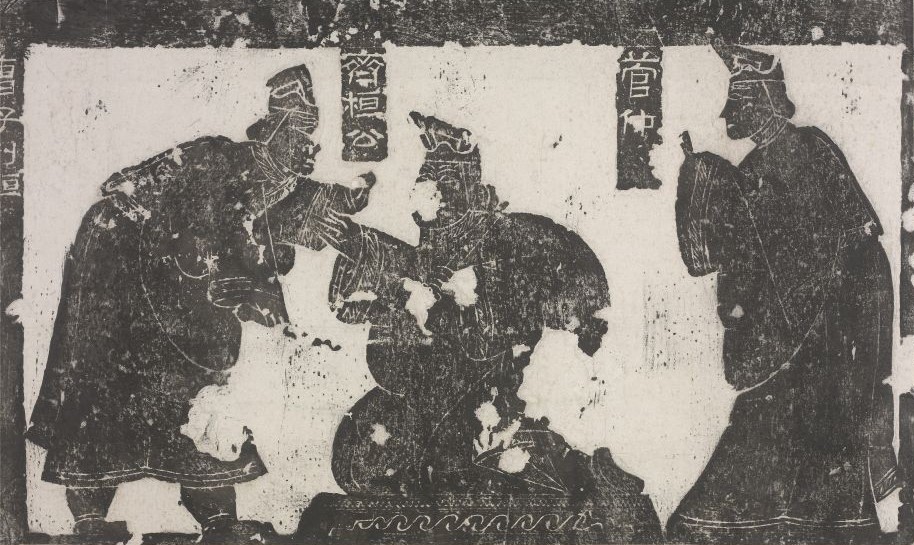
Duke Huan of Qi
Emperor · Ancient
67.2Total
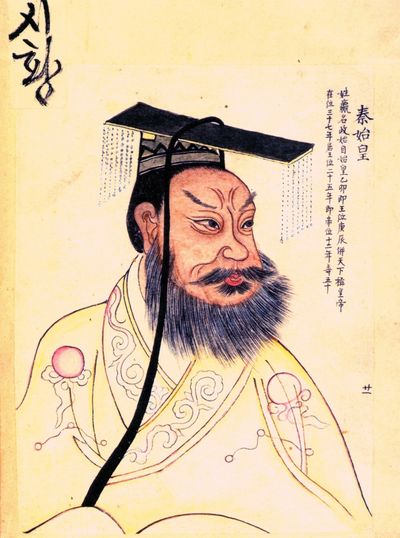
Qin Shi Huang
Emperor · Ancient
83.5Total
Basic Information
Born
-685
-259
Died
-643
-210
Era
Ancient
Ancient
Nationality
China
China
Occupation
Emperor
Emperor
Civilization
Eastern
Eastern
Score Comparison
Military (10%)
65.8
80.0
Political (20%)
65.8
88.0
Influence (20%)
71.1
82.0
Legacy (20%)
69.2
85.0
Leadership (15%)
74.0
88.0
Strategy (15%)
55.0
75.0
TOTAL
67.2
83.5
Rankings
🥇
Qin Shi HuangLeader
Mil: 80.0Pol: 88.0Inf: 82.0
83.5
🥈
Duke Huan of Qi
Mil: 65.8Pol: 65.8Inf: 71.1
67.2
+16.3 behind
How This Comparison Works
Algorithm
Each figure is scored on 6 dimensions (0—100 scale) based on structured historical data: Military (10%), Political (20%), Influence (20%), Legacy (20%), Leadership (15%), Strategy (15%). The weighted total produces the final ranking.
Data Sources
Scores are computed from structured sub-indicators in the database. Scale factors adjust for era (Ancient ×0.85, Modern ×1.0) and civilization size (Eastern ×1.05, Other ×0.80) to account for differences in population and military scale.
Maximum 3 Figures
Comparisons are limited to 2—3 figures to ensure readability and statistical meaningfulness.
Error Margins
±5 points per dimension — Sub-scores are derived from historical records with inherent uncertainty. Two figures within 5 points on a dimension should be considered roughly equivalent in that area.
Total Score Accuracy
±3 points overall — The weighted combination of 6 dimensions produces a total score with approximately ±3 points of uncertainty. Differences of less than 3 points are not statistically significant— the figures are effectively tied.
Known Limitations
- Historical records are incomplete and uneven across civilizations
- Figures from oral-tradition societies may be underrepresented
- Occupation labels can misclassify multi-role figures
- Scores measure capability and impact, not moral character
- Quantitative scoring is a comparison tool, not absolute truth
Capability Radar
Military (10%) — Battles & Warfare
Battles
65
85
Win Rate
70
90
Expansion
70
90
Political (20%) — Governance & Reform
Reform
65
95
Diplomacy
80
75
Economy
75
90
Influence (20%) — Cultural & Global Reach
Cultural
65
95
Global
55
85
Legacy (20%) — Historical Impact
Historical
75
95
Longevity
70
95
Leadership (15%) — Power & Stability
Tenure
70
70
Stability
60
65
Strategy (15%) — Tactics & Innovation
Strategy
75
85
Tactics
60
80
Reform
55
95
Analysis will be generated on first visit.
Scores and timeline are available below. The page will refresh automatically when ready.
Duke Huan of Qi — Complete Timeline
685 BC
Reforms under Guan ZhongReform◆ Major
Duke Huan appointed Guan Zhong as chancellor, who implemented administrative and economic reforms. These included reorganizing the state into districts, standardizing taxes, and promoting trade, which strengthened Qi's power and wealth.
Qi StateReformGuan Zhong
Impact: regionalprogressive
Reign as Hegemon of QiPolitical Action◆ Major
Duke Huan of Qi became the first of the Five Hegemons, dominating the Spring and Autumn period. He used the authority of the Zhou king to lead alliances of states, maintaining order and defending against non-Chinese tribes.
Spring and AutumnHegemonAlliance
Impact: regionalconstructive
664 BC
Defeat of the Northern Di TribesWar
Duke Huan led a campaign against the Northern Di tribes who were threatening the states of Yan and Xing. His victory protected the northern borders and earned him gratitude from the Zhou court, enhancing his prestige as protector of Chinese civilization.
Spring and AutumnWarDefense
Impact: regionalconstructive
651 BC
Convening of the Alliance of KuiqiuPolitical Action◆ Major
Duke Huan convened a major alliance of states at Kuiqiu, where he reaffirmed the authority of the Zhou king and established a code of conduct among states. This meeting solidified his position as hegemon and set precedents for interstate relations.
Spring and AutumnAllianceHegemon
Impact: regionalconstructive
Qin Shi Huang — Complete Timeline
246 BC
Construction of the Mausoleum and Terracotta ArmyOther◆ Major
Qin Shi Huang commissioned a vast mausoleum complex near Xi'an, guarded by thousands of life-sized terracotta soldiers, horses, and chariots. The project employed hundreds of thousands of workers and reflected his obsession with immortality and imperial power.
Impact: global
230 BC
Conquest of the Six Warring StatesWar
From 230 to 221 BCE, Ying Zheng led the Qin state in a series of campaigns that conquered the Han, Zhao, Wei, Chu, Yan, and Qi states. This unified China under a single ruler for the first time, ending the Warring States period.
Impact: global
221 BC
Standardization of Writing, Currency, and MeasurementsReform◆ Major
Qin Shi Huang ordered the standardization of Chinese script, currency, and weights and measures across the unified empire. This facilitated administration, trade, and cultural integration, laying a foundation for future dynasties.
Impact: globalconstructive
Proclamation of the Qin DynastyPolitical Action
After conquering the last independent state, Ying Zheng declared himself Shi Huangdi (First Emperor), founding the Qin Dynasty. He adopted a new title to signify his supreme authority and initiated centralized imperial rule.
Impact: global
214 BC
Initiation of the Great Wall ConstructionOther◆ Major
Qin Shi Huang ordered the connection and extension of existing northern fortifications to create a unified defensive wall against nomadic Xiongnu raids. This project involved massive conscripted labor and became the precursor to the later Great Wall.
Impact: regional
213 BC
Burning of Books and Burying of ScholarsPolitical Action◆ Major
On the advice of Li Si, Qin Shi Huang ordered the burning of historical records and philosophical texts not aligned with Legalist doctrine. He also had 460 Confucian scholars buried alive to suppress dissent and consolidate ideological control.
Impact: nationaldestructive
Similar Comparisons
Comments & Discussion
HEGEMON-SCEPTIC6/17/2026
Let’s be real—Duke Huan was just a glorified warlord in a fancy robe. His “hegemon” title was a polite fiction; the Zhou king was a puppet, and the other lords laughed behind their sleeves. Without Guan Zhong’s brain, Huan would’ve been a footnote. Compare that to Qin Shi Huang’s actual state-building—standardized scripts, roads, laws that lasted millennia. Huan’s alliance? A tea party with swords. One man built a dynasty; the other hosted a meeting. Check the historical ledger.
马镫刽子手6/17/2026
说“葵丘会盟”是文明之光?少来了。齐桓公那套“尊王攘夷”就是给旧贵族脸上贴金,本质上跟黑帮收保护费没区别。真要比治理,秦朝的郡县制、书同文车同轨才是实打实的硬货。齐桓公死后的内乱简直像场闹剧,公子们为了争位互相捅刀,比《权力的游戏》还狗血。反观秦始皇,虽然后人黑他暴政,但谁敢说他留下的不是一个统一帝国的骨架?吹齐桓公的,多半是被儒家那套“王者之风”洗脑了。
CONCRETE-WALLS6/17/2026
Duke Huan's "alliance" was held together by charisma and a good chancellor—both gone in a generation. Qin Shi Huang's legacy was physical: the Great Wall, straight roads, bronze arrows stamped from a single die. You can't negotiate standardization into existence. The Qin legal code was harsh, but it forced a cultural fusion that lasted two thousand years. Huan’s unity was a diplomatic mirage; the First Emperor’s was iron logic.
书虫不灭火6/17/2026
数据不会骗人:齐桓公时代的齐国疆域不过十几万平方公里,而秦朝统一后面积三百多万。齐桓公搞的“九合诸侯”听着威风,实际上每次会盟都要靠贿赂和人情维系,跟现代联合国一样虚。秦始皇呢?直接废封建、立郡县,一套官僚体系管到底。论效率,论持久,哪个更狠?别跟我提“仁政”——春秋战国的战争死人少吗?秦始皇至少结束了五百年流血。
NOMAD-CRUSHER6/17/2026
Duke Huan fought barbarians with parleys; Qin Shi Huang fought them with walls. Guess which approach actually worked? The Xiongnu weren’t impressed by ritual bronze vessels—they respected blockades. The First Emperor’s northern fortifications, crude as they were, bought centuries of stability. Huan’s allies broke ranks the minute he died. Walls don’t break ranks. Give me an engineer-emperor over a flattering hegemon any