Loading...
Analysis will be generated on first visit.
Scores and timeline are available below. The page will refresh automatically when ready.
Emperor Pedro I of Brazil vs Zhao Kuangyin
Zhao Kuangyin leads by 11.5 pts · 2 figures compared
…
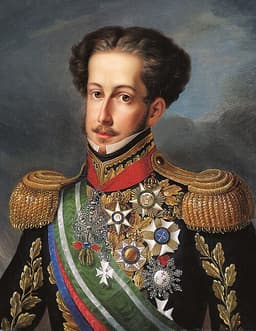
Emperor Pedro I of Brazil
Emperor · Modern
64.0Total
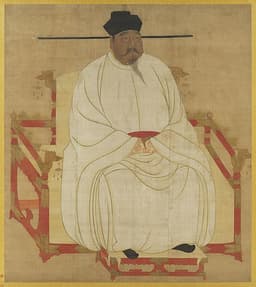
Zhao Kuangyin
Emperor · Medieval
75.5Total
Basic Information
Born
1798
927
Died
1834
976
Era
Modern
Medieval
Nationality
Brazil
China
Occupation
Emperor
Emperor
Civilization
Western
Eastern
Score Comparison
Military (10%)
32.8
74.6
Political (20%)
60.2
75.9
Influence (20%)
72.3
74.9
Legacy (20%)
70.0
75.1
Leadership (15%)
75.2
82.3
Strategy (15%)
59.3
69.8
TOTAL
64.0
75.5
Rankings
🥇
Zhao KuangyinLeader
Mil: 74.6Pol: 75.9Inf: 74.9
75.5
🥈
Emperor Pedro I of Brazil
Mil: 32.8Pol: 60.2Inf: 72.3
64.0
+11.5 behind
How This Comparison Works
Algorithm
Each figure is scored on 6 dimensions (0—100 scale) based on structured historical data: Military (10%), Political (20%), Influence (20%), Legacy (20%), Leadership (15%), Strategy (15%). The weighted total produces the final ranking.
Data Sources
Scores are computed from structured sub-indicators in the database. Scale factors adjust for era (Ancient ×0.85, Modern ×1.0) and civilization size (Eastern ×1.05, Other ×0.80) to account for differences in population and military scale.
Maximum 3 Figures
Comparisons are limited to 2—3 figures to ensure readability and statistical meaningfulness.
Error Margins
±5 points per dimension — Sub-scores are derived from historical records with inherent uncertainty. Two figures within 5 points on a dimension should be considered roughly equivalent in that area.
Total Score Accuracy
±3 points overall — The weighted combination of 6 dimensions produces a total score with approximately ±3 points of uncertainty. Differences of less than 3 points are not statistically significant— the figures are effectively tied.
Known Limitations
- Historical records are incomplete and uneven across civilizations
- Figures from oral-tradition societies may be underrepresented
- Occupation labels can misclassify multi-role figures
- Scores measure capability and impact, not moral character
- Quantitative scoring is a comparison tool, not absolute truth
Capability Radar
Military (10%) — Battles & Warfare
Battles
25
75
Win Rate
30
85
Expansion
35
75
Political (20%) — Governance & Reform
Reform
50
90
Diplomacy
45
85
Economy
30
80
Influence (20%) — Cultural & Global Reach
Cultural
45
70
Global
40
60
Legacy (20%) — Historical Impact
Historical
55
80
Longevity
50
75
Leadership (15%) — Power & Stability
Tenure
40
65
Stability
20
85
Strategy (15%) — Tactics & Innovation
Strategy
25
80
Tactics
20
70
Reform
15
90
Analysis will be generated on first visit.
Scores and timeline are available below. The page will refresh automatically when ready.
Emperor Pedro I of Brazil — Complete Timeline
1822 AD
Declaration of Brazilian IndependencePolitical Action
Dom Pedro declared Brazil's independence from Portugal on September 7, 1822, at the Ipiranga River. He was acclaimed Emperor Pedro I of Brazil, establishing a constitutional monarchy separate from Portugal.
IndependenceFounding
Impact: globalprogressive
Coronation as Emperor of BrazilPolitical Action◆ Major
Pedro I was crowned Emperor of Brazil on December 1, 1822, in Rio de Janeiro. The coronation formalized his rule over the newly independent nation, with a constitution promulgated in 1824.
CoronationMonarchy
Impact: national
1825 AD
Cisplatine WarWar◆ Major
Brazil went to war with the United Provinces of the R
WarTerritorial Loss
Impact: regionaldestructive
1831 AD
Abdication of the Brazilian ThronePolitical Action
Facing political crisis and military unrest, Pedro I abdicated the Brazilian throne on April 7, 1831, in favor of his five-year-old son Pedro II. He then returned to Portugal to claim the Portuguese throne.
AbdicationPolitical Crisis
Impact: nationaltragic
Zhao Kuangyin — Complete Timeline
960 AD
Founded Song dynastyPolitical Action
Zhao Kuangyin, a general of Later Zhou, was proclaimed emperor by his troops at Chenqiao. He established the Song dynasty, ending the Five Dynasties period and beginning a new era of Chinese history.
Song dynastyFoundingChenqiao
Impact: globalconstructive
961 AD
Removed military power from generalsPolitical Action◆ Major
Zhao Kuangyin invited senior generals to a banquet and persuaded them to retire peacefully. This 'removal of military power over wine' prevented military coups and centralized control.
Song dynastyMilitary reformCentralization
Impact: nationalconstructive
963 AD
Unified southern ChinaWar◆ Major
Zhao Kuangyin launched campaigns to conquer the southern kingdoms, including Jingnan, Later Shu, and Southern Tang. By his death, most of China was reunified under Song rule.
Song unificationConquestSouthern kingdoms
Impact: national
Similar Comparisons
Comments & Discussion
黄袍加身考古员6/16/2026
赵匡胤那杯酒释兵权,看着是温情脉脉,实则是五代十国血腥教训逼出来的天才操作。别跟我扯什么佩德罗一世“自由呐喊”,他退位就是纯纯的政治撤退。赵匡胤最绝的是,他既不想当柴荣那样的傀儡,又不愿做朱温那种屠夫——用一顿饭解决两百年的兵祸循环,这成本控制力,佩德罗写一辈子宣言都学不会。