Loading...
Analysis will be generated on first visit.
Scores and timeline are available below. The page will refresh automatically when ready.
Emperor Sujin vs Napoleon Bonaparte
Napoleon Bonaparte leads by 19.9 pts · 2 figures compared
…
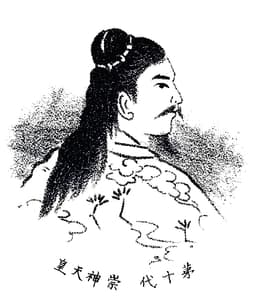
Emperor Sujin
Emperor · Ancient
62.5Total

Napoleon Bonaparte
General · Modern
82.4Total
Basic Information
Born
-148
1769
Died
-30
1821
Era
Ancient
Modern
Nationality
Japan
France
Occupation
Emperor
General
Civilization
Eastern
Western
Score Comparison
Military (10%)
25.8
94.0
Political (20%)
69.4
75.0
Influence (20%)
67.8
82.0
Legacy (20%)
62.2
78.0
Leadership (15%)
86.6
80.0
Strategy (15%)
46.8
93.0
TOTAL
62.5
82.4
Rankings
🥇
Napoleon BonaparteLeader
Mil: 94.0Pol: 75.0Inf: 82.0
82.4
🥈
Emperor Sujin
Mil: 25.8Pol: 69.4Inf: 67.8
62.5
+19.9 behind
How This Comparison Works
Algorithm
Each figure is scored on 6 dimensions (0—100 scale) based on structured historical data: Military (10%), Political (20%), Influence (20%), Legacy (20%), Leadership (15%), Strategy (15%). The weighted total produces the final ranking.
Data Sources
Scores are computed from structured sub-indicators in the database. Scale factors adjust for era (Ancient ×0.85, Modern ×1.0) and civilization size (Eastern ×1.05, Other ×0.80) to account for differences in population and military scale.
Maximum 3 Figures
Comparisons are limited to 2—3 figures to ensure readability and statistical meaningfulness.
Error Margins
±5 points per dimension — Sub-scores are derived from historical records with inherent uncertainty. Two figures within 5 points on a dimension should be considered roughly equivalent in that area.
Total Score Accuracy
±3 points overall — The weighted combination of 6 dimensions produces a total score with approximately ±3 points of uncertainty. Differences of less than 3 points are not statistically significant— the figures are effectively tied.
Known Limitations
- Historical records are incomplete and uneven across civilizations
- Figures from oral-tradition societies may be underrepresented
- Occupation labels can misclassify multi-role figures
- Scores measure capability and impact, not moral character
- Quantitative scoring is a comparison tool, not absolute truth
Capability Radar
Military (10%) — Battles & Warfare
Battles
10
95
Win Rate
10
90
Expansion
20
95
Political (20%) — Governance & Reform
Reform
50
95
Diplomacy
30
80
Economy
30
85
Influence (20%) — Cultural & Global Reach
Cultural
30
85
Global
10
90
Legacy (20%) — Historical Impact
Historical
40
95
Longevity
30
90
Leadership (15%) — Power & Stability
Tenure
40
85
Stability
40
70
Strategy (15%) — Tactics & Innovation
Strategy
10
95
Tactics
10
98
Reform
20
92
Analysis will be generated on first visit.
Scores and timeline are available below. The page will refresh automatically when ready.
Emperor Sujin — Complete Timeline
100 BC
Organized the Yamato StateReform◆ Major
Emperor Sujin is recorded in the Nihon Shoki as having organized the Yamato state, establishing administrative structures and military garrisons. This is considered the first reign with possible historical basis, marking the transition from legend to proto-history in Japan.
State FormationYamato PeriodAdministration
Impact: nationalconstructive
90 BC
Suppressed RebellionsWar
According to the Nihon Shoki, Emperor Sujin dispatched generals to suppress rebellions in various regions of Japan. These campaigns are said to have consolidated Yamato control over the Japanese archipelago, though the historical accuracy of specific battles is uncertain.
Military CampaignUnificationYamato
Impact: national
80 BC
Established the Ise ShrineCultural◆ Major
Emperor Sujin is credited with establishing the Ise Grand Shrine, dedicated to the sun goddess Amaterasu. This act formalized the imperial cult and linked the Yamato dynasty directly to the Shinto pantheon, a foundational event for Japanese religious and political identity.
ShintoImperial CultReligion
Impact: nationalconstructive
Napoleon Bonaparte — Complete Timeline
1799 AD
Coup of 18 BrumaireOther◆ Major
Napoleon Bonaparte, with support from his brother Lucien and key political figures, overthrew the Directory in a bloodless coup. He established the Consulate with himself as First Consul, effectively becoming the ruler of France. This event ended the French Revolution's most unstable period.
French RevolutionCoupRise to Power
Impact: regional
1804 AD
Promulgation of the Napoleonic CodeOther◆ Major
Napoleon enacted the Civil Code of the French, known as the Napoleonic Code, a comprehensive set of laws that replaced the fragmented feudal legal systems. The code established legal equality, protected property rights, and secularized law. It became the basis for legal systems in many European and world countries.
Legal ReformNapoleonic CodeCivil Law
Impact: globalconstructive
1805 AD
Battle of AusterlitzWar◆ Major
Napoleon's Grande Arm
Napoleonic WarsBattleDecisive Victory
Impact: global
1812 AD
Invasion of RussiaWar◆ Major
Napoleon led the Grande Arm
Napoleonic WarsInvasionDisaster
Impact: globaldestructive
1815 AD
Battle of WaterlooWar◆ Major
Napoleon's French army was defeated by the combined forces of the Duke of Wellington's Anglo-Allied army and Gebhard Leberecht von Bl
Napoleonic WarsBattleFinal Defeat
Impact: globaldestructive
Similar Comparisons
Comments & Discussion
COUNTERBATTERY NAPOLEON6/16/2026
People romanticize Napoleonic tactics, but Waterloo proves his system was brittle. He lost because Grouchy chased ghosts while Blucher crushed the flank. No commander with perfect vision lets a subordinate wander 12 miles away when the Prussians are breathing down his neck. Sujin, at least, built a dynasty through consolidation, not glory-chasing. Napoleon’s genius was real, but his ego made him stupid in the end.
数字怀疑论者6/16/2026
说什么Sujin半历史半神话,你们就被《日本书纪》骗了。考古能挖出几座木桩就说有国家?148 BCE根本没文字信史,全是八世纪宫廷编的祖宗崇拜。拿破仑的战役有伤亡记录、有地形测量——Sujin连战场都没留下,你们拿什么比?一个数据点对一百个,这叫比较吗?这叫神话对历史的重拳。
THE OLD WAR DOG6/16/2026
Here's what the academic gloss leaves out: Napoleon didn't just win battles, he won *nations*. The Napoleonic Code, the metric system, the modern army corps—these outlasted his empire. Sujin's contribution is basically "he built a shrine and prayed harder than the last guy." One man rewired Europe's legal soul; the other got a mention in a chronicle written 800 years later. I know who I'm betting on in the long game.
正史铁粉6/16/2026
拿拿破仑这种有证有据的人物跟半神话的崇神天皇比,本身就离谱。拿破仑有画像、有书信、有法律条文,崇神连生卒年都是猜的,全靠考古和《古事记》那些神怪故事撑场。你们还敢下结论谁更强?这就像拿真刀和竹剑比锋利。历史比较得有底线,不能把传说当证据吧?
THE CURATOR OF ECHOES6/16/2026
Every generation reinvents Napoleon: the tyrant, the reformer, the romantic. But Sujin reveals something rarer—a leader who built legitimacy through ritual rather than blood. Napoleon’s empire fell in a decade; Sujin’s line claims unbroken descent for over 2,000 years. One left ruins and memoirs; the other left a throne still warm. That’s not comparison—that’s a lesson in what power really means.