Loading...
Analysis will be generated on first visit.
Scores and timeline are available below. The page will refresh automatically when ready.
Ferdinand I of Aragon vs Julius Caesar
Julius Caesar leads by 21.5 pts · 2 figures compared
…
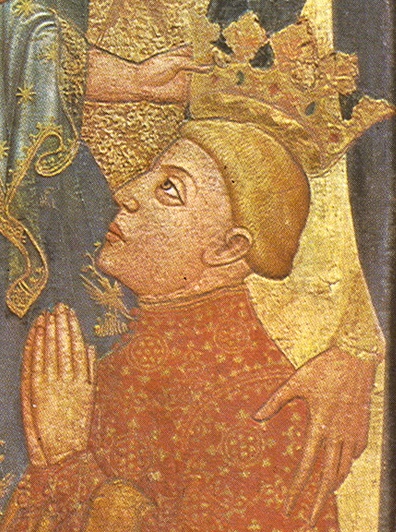
Ferdinand I of Aragon
Emperor · Medieval
61.8Total
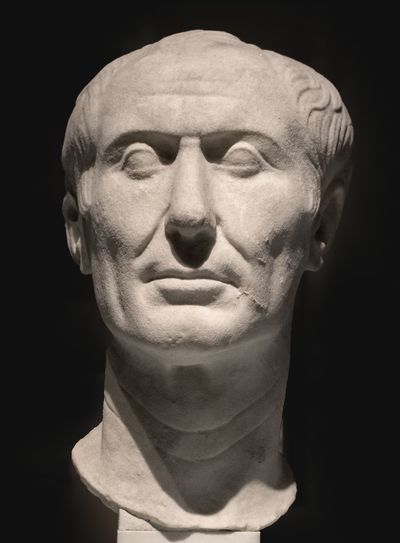
Julius Caesar
General · Ancient
83.3Total
Basic Information
Born
1380
-100
Died
1416
-44
Era
Medieval
Ancient
Nationality
Aragon
Roman Republic
Occupation
Emperor
General
Civilization
Western
Western
Score Comparison
Military (10%)
34.6
88.0
Political (20%)
54.2
78.0
Influence (20%)
74.2
85.0
Legacy (20%)
59.5
82.0
Leadership (15%)
77.4
82.0
Strategy (15%)
61.1
88.0
TOTAL
61.8
83.3
Rankings
🥇
Julius CaesarLeader
Mil: 88.0Pol: 78.0Inf: 85.0
83.3
🥈
Ferdinand I of Aragon
Mil: 34.6Pol: 54.2Inf: 74.2
61.8
+21.5 behind
How This Comparison Works
Algorithm
Each figure is scored on 6 dimensions (0—100 scale) based on structured historical data: Military (10%), Political (20%), Influence (20%), Legacy (20%), Leadership (15%), Strategy (15%). The weighted total produces the final ranking.
Data Sources
Scores are computed from structured sub-indicators in the database. Scale factors adjust for era (Ancient ×0.85, Modern ×1.0) and civilization size (Eastern ×1.05, Other ×0.80) to account for differences in population and military scale.
Maximum 3 Figures
Comparisons are limited to 2—3 figures to ensure readability and statistical meaningfulness.
Error Margins
±5 points per dimension — Sub-scores are derived from historical records with inherent uncertainty. Two figures within 5 points on a dimension should be considered roughly equivalent in that area.
Total Score Accuracy
±3 points overall — The weighted combination of 6 dimensions produces a total score with approximately ±3 points of uncertainty. Differences of less than 3 points are not statistically significant— the figures are effectively tied.
Known Limitations
- Historical records are incomplete and uneven across civilizations
- Figures from oral-tradition societies may be underrepresented
- Occupation labels can misclassify multi-role figures
- Scores measure capability and impact, not moral character
- Quantitative scoring is a comparison tool, not absolute truth
Capability Radar
Military (10%) — Battles & Warfare
Battles
40
95
Win Rate
45
92
Expansion
50
97
Political (20%) — Governance & Reform
Reform
45
90
Diplomacy
60
85
Economy
50
82
Influence (20%) — Cultural & Global Reach
Cultural
35
88
Global
30
94
Legacy (20%) — Historical Impact
Historical
40
95
Longevity
30
96
Leadership (15%) — Power & Stability
Tenure
55
75
Stability
50
60
Strategy (15%) — Tactics & Innovation
Strategy
40
94
Tactics
35
96
Reform
30
88
Analysis will be generated on first visit.
Scores and timeline are available below. The page will refresh automatically when ready.
Ferdinand I of Aragon — Complete Timeline
1412 AD
Compromise of CaspePolitical Action
Ferdinand I was elected King of Aragon by the Compromise of Caspe, a commission of nine representatives from Aragon, Catalonia, and Valencia. This resolved the succession crisis following the death of Martin I without a direct heir, bringing the Trastamara dynasty to the Aragonese throne.
Succession crisisTrastamara dynasty
Impact: regionalconstructive
1414 AD
Conquest of SardiniaWar◆ Major
Ferdinand I launched a military campaign to subdue the rebellious Sardinian nobles who had resisted Aragonese rule. The campaign successfully reasserted Aragonese control over the island, consolidating the Crown of Aragon's Mediterranean possessions.
Mediterranean expansionSardinia
Impact: regional
1415 AD
Reform of the Aragonese administrationReform
Ferdinand I implemented administrative reforms in the Crown of Aragon, including the reorganization of the royal council and the standardization of tax collection. These reforms strengthened royal authority and improved the efficiency of governance across the diverse territories of Aragon.
Administrative reformRoyal authority
Impact: nationalconstructive
Julius Caesar — Complete Timeline
58 BC
Gallic WarsWar◆ Major
Caesar, as proconsul of Gaul, launched a series of campaigns that conquered all of Gaul (modern France, Belgium, and parts of Switzerland). He fought numerous battles, including against the Helvetii, the Belgae, and the Gallic chieftain Vercingetorix. The wars brought immense wealth and a loyal army to Caesar.
Gallic WarsConquestRoman Expansion
Impact: regional
49 BC
Crossing the RubiconPolitical Action◆ Major
Caesar led Legio XIII across the Rubicon River into Italy, defying the Roman Senate's order to disband his army. This act triggered a civil war against Pompey and the Optimates, ultimately leading to Caesar's dictatorship and the end of the Roman Republic.
Roman Civil WarEnd of RepublicPower Struggle
Impact: global
48 BC
Battle of PharsalusWar◆ Major
Caesar's outnumbered army defeated the larger forces of Pompey the Great at Pharsalus in Greece. Caesar's tactical use of a reserve line to counter Pompey's cavalry charge proved decisive. Pompey fled to Egypt, where he was assassinated, leaving Caesar as the undisputed master of the Roman world.
Roman Civil WarBattleDecisive Victory
Impact: regional
44 BC
Appointment as Dictator for LifePolitical Action◆ Major
The Roman Senate appointed Caesar dictator perpetuo (dictator for life), granting him unprecedented personal power. This move concentrated military, legislative, and judicial authority in one person, effectively ending the Roman Republic's traditional system of checks and balances and alarming many senators.
DictatorshipEnd of RepublicPower Consolidation
Impact: regionaldestructive
Assassination on the Ides of MarchPolitical Action◆ Major
A group of Roman senators, led by Marcus Junius Brutus and Gaius Cassius Longinus, stabbed Caesar to death at a meeting of the Senate in the Theatre of Pompey. The assassination was intended to restore the Republic, but instead triggered another civil war that led to the rise of the Roman Empire.
AssassinationRoman PoliticsEnd of Republic
Impact: globaldestructive
Similar Comparisons
Comments & Discussion
LegionOverlord6/17/2026
Caesar vs Ferdinand? This is like comparing a tactical nuke to a damp firecracker. Ferdinand got his crown through the Compromise of Caspe, a backroom deal by nine cronies, not a single battle. Caesar crossed the Rubicon with a single legion and dared the Senate to stop him. One inherited a throne through a committee; the other took an empire with sheer audacity. Ferdinand's entire reign couldn't match Caesar's first summer in Gaul. There's no contest—Caesar built the template for western ambiti
穿越电镜的史官6/17/2026
从数据分析来看,这个对比简直是鸡同鸭讲。恺撒死于58岁,费迪南一世活了72岁,但寿命长不代表成就大。恺撒在8年内征服了高卢全境,涉及约300次交战,而费迪南主要靠外交联姻巩固阿拉贡,连一次大规模战役记录都模糊不清。作为数据主义者,我只能说:量化结果一面倒。恺撒的遗产是罗马帝国的骨架,费迪南只是伊比利亚半岛的尘埃。别拿稳定型选手去碰瓷变革者,数据不会说谎。
RhetoricianAtArms6/17/2026
Ferdinand I is the guy you skip in history class; Caesar is the legend who made history class worth taking. Caesar's Commentaries are still studied as rhetorical masterpieces, shaping how we talk about power. What did Ferdinand leave? A few royal charters? The Compromise of Caspe was decided by jurists, not soldiers. That's their difference: Caesar wrote his own narrative with blood and ink; Ferdinand had his story written by bureaucrats. One is immortal; the other is a liturgical footnote in Ar
古史辩手6/17/2026
你们都在贬低费迪南,但别忘了历史不是只看火药桶。费迪南一世在1410年通过卡佩协议即位,稳定了阿拉贡王国避免内战,这在14世纪欧洲是罕见政治智慧。恺撒虽然伟大,但他种下了罗马共和国的丧钟,直接引发数百年内乱。费迪南通过联姻和谈判整合了伊比利亚势力范围,为后来西班牙统一打下基础。稳定也是成就,别只崇拜暴力英雄。恺撒是毁灭者,费迪南是建设者,价值取向不同而已。
ContraVentum6/17/2026
Here’s the thing: Caesar’s "genius" was luck wrapped in propaganda. He crossed the Rubicon with one legion because his debts made death certain otherwise. Compare that to Ferdinand’s deliberate consolidation after the Compromise of Caspe—he inherited a fractured realm and held it together without civil war. Caesar’s empire crumbled within decades; Ferdinand’s Aragonese federation lasted centuries. The real test of leadership isn't dramatic gestures