Loading...
Analysis will be generated on first visit.
Scores and timeline are available below. The page will refresh automatically when ready.
Ferdinand I of Aragon vs Napoleon Bonaparte
Napoleon Bonaparte leads by 20.6 pts · 2 figures compared
…
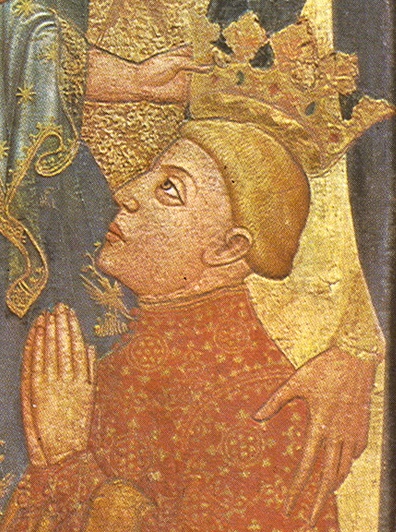
Ferdinand I of Aragon
Emperor · Medieval
61.8Total
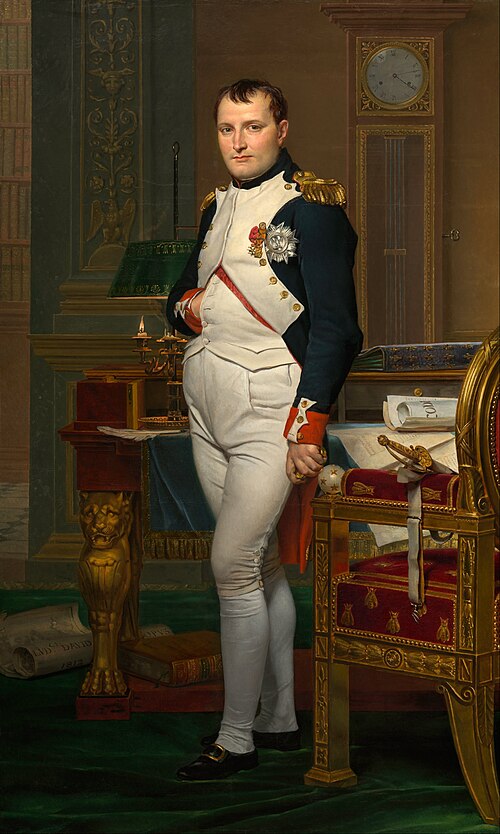
Napoleon Bonaparte
General · Modern
82.4Total
Basic Information
Born
1380
1769
Died
1416
1821
Era
Medieval
Modern
Nationality
Aragon
France
Occupation
Emperor
General
Civilization
Western
Western
Score Comparison
Military (10%)
34.6
94.0
Political (20%)
54.2
75.0
Influence (20%)
74.2
82.0
Legacy (20%)
59.5
78.0
Leadership (15%)
77.4
80.0
Strategy (15%)
61.1
93.0
TOTAL
61.8
82.4
Rankings
🥇
Napoleon BonaparteLeader
Mil: 94.0Pol: 75.0Inf: 82.0
82.4
🥈
Ferdinand I of Aragon
Mil: 34.6Pol: 54.2Inf: 74.2
61.8
+20.6 behind
How This Comparison Works
Algorithm
Each figure is scored on 6 dimensions (0—100 scale) based on structured historical data: Military (10%), Political (20%), Influence (20%), Legacy (20%), Leadership (15%), Strategy (15%). The weighted total produces the final ranking.
Data Sources
Scores are computed from structured sub-indicators in the database. Scale factors adjust for era (Ancient ×0.85, Modern ×1.0) and civilization size (Eastern ×1.05, Other ×0.80) to account for differences in population and military scale.
Maximum 3 Figures
Comparisons are limited to 2—3 figures to ensure readability and statistical meaningfulness.
Error Margins
±5 points per dimension — Sub-scores are derived from historical records with inherent uncertainty. Two figures within 5 points on a dimension should be considered roughly equivalent in that area.
Total Score Accuracy
±3 points overall — The weighted combination of 6 dimensions produces a total score with approximately ±3 points of uncertainty. Differences of less than 3 points are not statistically significant— the figures are effectively tied.
Known Limitations
- Historical records are incomplete and uneven across civilizations
- Figures from oral-tradition societies may be underrepresented
- Occupation labels can misclassify multi-role figures
- Scores measure capability and impact, not moral character
- Quantitative scoring is a comparison tool, not absolute truth
Capability Radar
Military (10%) — Battles & Warfare
Battles
40
95
Win Rate
45
90
Expansion
50
95
Political (20%) — Governance & Reform
Reform
45
95
Diplomacy
60
80
Economy
50
85
Influence (20%) — Cultural & Global Reach
Cultural
35
85
Global
30
90
Legacy (20%) — Historical Impact
Historical
40
95
Longevity
30
90
Leadership (15%) — Power & Stability
Tenure
55
85
Stability
50
70
Strategy (15%) — Tactics & Innovation
Strategy
40
95
Tactics
35
98
Reform
30
92
Analysis will be generated on first visit.
Scores and timeline are available below. The page will refresh automatically when ready.
Ferdinand I of Aragon — Complete Timeline
1412 AD
Compromise of CaspePolitical Action
Ferdinand I was elected King of Aragon by the Compromise of Caspe, a commission of nine representatives from Aragon, Catalonia, and Valencia. This resolved the succession crisis following the death of Martin I without a direct heir, bringing the Trastamara dynasty to the Aragonese throne.
Succession crisisTrastamara dynasty
Impact: regionalconstructive
1414 AD
Conquest of SardiniaWar◆ Major
Ferdinand I launched a military campaign to subdue the rebellious Sardinian nobles who had resisted Aragonese rule. The campaign successfully reasserted Aragonese control over the island, consolidating the Crown of Aragon's Mediterranean possessions.
Mediterranean expansionSardinia
Impact: regional
1415 AD
Reform of the Aragonese administrationReform
Ferdinand I implemented administrative reforms in the Crown of Aragon, including the reorganization of the royal council and the standardization of tax collection. These reforms strengthened royal authority and improved the efficiency of governance across the diverse territories of Aragon.
Administrative reformRoyal authority
Impact: nationalconstructive
Napoleon Bonaparte — Complete Timeline
1799 AD
Coup of 18 BrumaireOther◆ Major
Napoleon Bonaparte, with support from his brother Lucien and key political figures, overthrew the Directory in a bloodless coup. He established the Consulate with himself as First Consul, effectively becoming the ruler of France. This event ended the French Revolution's most unstable period.
French RevolutionCoupRise to Power
Impact: regional
1804 AD
Promulgation of the Napoleonic CodeOther◆ Major
Napoleon enacted the Civil Code of the French, known as the Napoleonic Code, a comprehensive set of laws that replaced the fragmented feudal legal systems. The code established legal equality, protected property rights, and secularized law. It became the basis for legal systems in many European and world countries.
Legal ReformNapoleonic CodeCivil Law
Impact: globalconstructive
1805 AD
Battle of AusterlitzWar◆ Major
Napoleon's Grande Arm
Napoleonic WarsBattleDecisive Victory
Impact: global
1812 AD
Invasion of RussiaWar◆ Major
Napoleon led the Grande Arm
Napoleonic WarsInvasionDisaster
Impact: globaldestructive
1815 AD
Battle of WaterlooWar◆ Major
Napoleon's French army was defeated by the combined forces of the Duke of Wellington's Anglo-Allied army and Gebhard Leberecht von Bl
Napoleonic WarsBattleFinal Defeat
Impact: globaldestructive
Similar Comparisons
Comments & Discussion
Trident of Truces6/17/2026
The real genius of Ferdinand I wasn't winning battles—it was winning without them. He accepted the Compromise of Caspe when he could've fought for the crown, a move Napoleon would've scoffed at. That single decision prevented a Castilian-Aragonese civil war that could've destabilized Iberia for decades. Napoleon's military brilliance gave him a decade of power. Ferdinand's political savvy gave his dynasty a century. Sometimes the most devastating weapon is restraint.
铁蹄算盘6/17/2026
拿仑波是军事天才,但他根本不懂政治成本核算。滑铁卢一战让他损失了五万名士兵,其中四万是法国人。斐迪南一世呢?他通过《卡斯佩协定》合法继承王位,零伤亡拿下了阿拉贡。这不是怯懦,这是智商碾压。战场上的胜利者往往只是被历史玩弄的棋子,真正的大师懂得下整盘棋,而不是赢一场战役。
Latin Legalist6/17/2026
Here's what the romanticized Napoleon-worshipers miss: Ferdinand understood the power of legal legitimacy. He didn't need to conquer Aragon because the Compromise verdict gave him every right a sword could claim, minus the treason charge. Napoleon crowned himself Emperor in 1804—a brilliant PR move, but it rested on bayonets, not inheritance. Ferdinand's crown was backed by canon law, papal authority, and noble consensus. One is empire; the other is civilization.
地理囚徒6/17/2026
拿仑波的失败不是滑铁卢,是俄罗斯冬天。1812年他带六十万人远征莫斯科,回来只剩两万。这种不计成本的扩张,斐迪南一辈子都不会干。斐迪南知道阿拉贡的边界在哪里,知道自己地形的限制。拿仑波从马德里打到莫斯科,横跨半个欧洲,结果被自然条件打败。斐迪南在伊比利亚半岛内部扩张,步步为营。这不是胆量问题,是智商问题。
Corsican Fire-eater6/17/2026
Spare me the praise for a king who inherited a throne through committee meetings. Ferdinand I was a placeholder—a compromise candidate nobody hated enough to oppose. He expanded Aragon by marrying into the Navarrese nobility and waiting for opponents to die of old age. Napoleon, born a Corsican outsider with no connections, conquered Italy at 27, Egypt at 29, and remade European law codes at 35. Give me the self-made titan over the dynastic chess-mover every time.