Loading...
Analysis will be generated on first visit.
Scores and timeline are available below. The page will refresh automatically when ready.
Francisco de Orellana vs Qin Shi Huang
Qin Shi Huang leads by 37.1 pts · 2 figures compared
…

Francisco de Orellana
Explorer · Modern
46.4Total
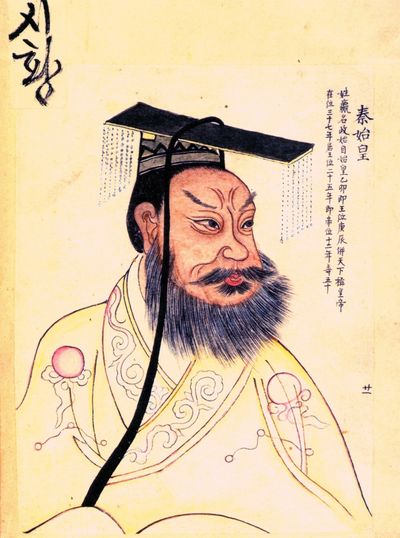
Qin Shi Huang
Emperor · Ancient
83.5Total
Basic Information
Born
1511
-259
Died
1546
-210
Era
Modern
Ancient
Nationality
Spain
China
Occupation
Explorer
Emperor
Civilization
Western
Eastern
Score Comparison
Military (10%)
22.5
80.0
Political (20%)
26.5
88.0
Influence (20%)
74.2
82.0
Legacy (20%)
65.3
85.0
Leadership (15%)
22.6
88.0
Strategy (15%)
50.7
75.0
TOTAL
46.4
83.5
Rankings
🥇
Qin Shi HuangLeader
Mil: 80.0Pol: 88.0Inf: 82.0
83.5
🥈
Francisco de Orellana
Mil: 22.5Pol: 26.5Inf: 74.2
46.4
+37.1 behind
How This Comparison Works
Algorithm
Each figure is scored on 6 dimensions (0—100 scale) based on structured historical data: Military (10%), Political (20%), Influence (20%), Legacy (20%), Leadership (15%), Strategy (15%). The weighted total produces the final ranking.
Data Sources
Scores are computed from structured sub-indicators in the database. Scale factors adjust for era (Ancient ×0.85, Modern ×1.0) and civilization size (Eastern ×1.05, Other ×0.80) to account for differences in population and military scale.
Maximum 3 Figures
Comparisons are limited to 2—3 figures to ensure readability and statistical meaningfulness.
Error Margins
±5 points per dimension — Sub-scores are derived from historical records with inherent uncertainty. Two figures within 5 points on a dimension should be considered roughly equivalent in that area.
Total Score Accuracy
±3 points overall — The weighted combination of 6 dimensions produces a total score with approximately ±3 points of uncertainty. Differences of less than 3 points are not statistically significant— the figures are effectively tied.
Known Limitations
- Historical records are incomplete and uneven across civilizations
- Figures from oral-tradition societies may be underrepresented
- Occupation labels can misclassify multi-role figures
- Scores measure capability and impact, not moral character
- Quantitative scoring is a comparison tool, not absolute truth
Capability Radar
Military (10%) — Battles & Warfare
Battles
15
85
Win Rate
10
90
Expansion
30
90
Political (20%) — Governance & Reform
Reform
5
95
Diplomacy
15
75
Economy
10
90
Influence (20%) — Cultural & Global Reach
Cultural
40
95
Global
55
85
Legacy (20%) — Historical Impact
Historical
55
95
Longevity
50
95
Leadership (15%) — Power & Stability
Tenure
10
70
Stability
5
65
Strategy (15%) — Tactics & Innovation
Strategy
25
85
Tactics
20
80
Reform
5
95
Analysis will be generated on first visit.
Scores and timeline are available below. The page will refresh automatically when ready.
Francisco de Orellana — Complete Timeline
1541 AD
Separation from Gonzalo Pizarro's expeditionOther◆ Major
Orellana was sent by Gonzalo Pizarro to scout ahead for food along the Napo River. When he failed to return, Pizarro accused him of desertion. Orellana continued downstream, eventually reaching the Amazon, while Pizarro's starving expedition returned to Quito.
Age of DiscoveryExpeditionAmazon
Impact: regional
1542 AD
First navigation of the entire Amazon RiverOther
Orellana led a group of 50 men down the Napo River and into the Amazon River, becoming the first Europeans to navigate the entire length of the Amazon. The journey covered over 4,000 miles from the Andes to the Atlantic Ocean, taking 8 months.
Age of DiscoveryAmazon RiverExploration
Impact: globalconstructive
Encounter with the AmazonsOther
Orellana's expedition reported being attacked by a tribe of female warriors near the mouth of the Tapaj
Amazon RiverMythologyExploration
Impact: regional
1543 AD
Return to Spain and royal commissionPolitical Action◆ Major
Orellana returned to Spain and reported his discovery to King Charles I. He was granted a royal commission to conquer and colonize the Amazon region, with the title of Governor of New Andalusia. He was given permission to take 300 men and 30 horses.
Royal CommissionColonizationAmazon
Impact: regionalconstructive
1546 AD
Death during the second Amazon expeditionOther◆ Major
Orellana died on the Amazon River during his second expedition to colonize the region. The exact cause of death is unknown, but it is believed to be from disease or attack by indigenous peoples. The expedition failed to establish a colony.
DeathAmazon RiverColonization
Impact: regionaltragic
Qin Shi Huang — Complete Timeline
246 BC
Construction of the Mausoleum and Terracotta ArmyOther◆ Major
Qin Shi Huang commissioned a vast mausoleum complex near Xi'an, guarded by thousands of life-sized terracotta soldiers, horses, and chariots. The project employed hundreds of thousands of workers and reflected his obsession with immortality and imperial power.
Impact: global
230 BC
Conquest of the Six Warring StatesWar
From 230 to 221 BCE, Ying Zheng led the Qin state in a series of campaigns that conquered the Han, Zhao, Wei, Chu, Yan, and Qi states. This unified China under a single ruler for the first time, ending the Warring States period.
Impact: global
221 BC
Standardization of Writing, Currency, and MeasurementsReform◆ Major
Qin Shi Huang ordered the standardization of Chinese script, currency, and weights and measures across the unified empire. This facilitated administration, trade, and cultural integration, laying a foundation for future dynasties.
Impact: globalconstructive
Proclamation of the Qin DynastyPolitical Action
After conquering the last independent state, Ying Zheng declared himself Shi Huangdi (First Emperor), founding the Qin Dynasty. He adopted a new title to signify his supreme authority and initiated centralized imperial rule.
Impact: global
214 BC
Initiation of the Great Wall ConstructionOther◆ Major
Qin Shi Huang ordered the connection and extension of existing northern fortifications to create a unified defensive wall against nomadic Xiongnu raids. This project involved massive conscripted labor and became the precursor to the later Great Wall.
Impact: regional
213 BC
Burning of Books and Burying of ScholarsPolitical Action◆ Major
On the advice of Li Si, Qin Shi Huang ordered the burning of historical records and philosophical texts not aligned with Legalist doctrine. He also had 460 Confucian scholars buried alive to suppress dissent and consolidate ideological control.
Impact: nationaldestructive
Similar Comparisons
Comments & Discussion
汉唐遗风6/17/2026
说奥雷利亚纳伟大?他就靠印第安人带路和抢粮食活命,跟刘邦入关中比都寒碜。秦始皇修长城、开灵渠,把中国捏成一个名字;奥雷利亚纳的胜利是运气和土著内斗的产物。别拿航海冒险跟帝国工程相提并论,前者是发现,后者是创造。
史观修正者6/17/2026
得了吧,两人都是暴力狂。秦始皇上台就杀人灭国,奥雷利亚纳把印第安人当柴烧。但皇帝留下了官僚体系和统一文字,这比探险家多一张牌:控制。奥雷利亚纳画条河有何用?地图是欧洲人后来的血债。所以别比谁更“好”,就看谁的影响力能扇耳光打到现在。
泰晤士河上的骑士6/17/2026
Orellana’s Amazon feat is romanticized but strategically hollow. Qin Shi Huang built the Great Wall, standardized writing, and unified China for two millennia. Orellana just sailed a river that was already there, while his men died of fever and arrows. Which legacy endures? One shaped the modern world; the other became a footnote for National Geographic explorers. Don’t mistake wanderlust for empire.
数据侦探6/17/2026
The comparison ignores scale. Orellana’s journey covered ~4,000 km over 3 months with 50 survivors. Qin Shi Huang’s unification war spanned 9 years and annexed 6 states with hundreds of thousands of troops. The logistical chasm is staggering—but Qin’s manpower came from forced conscription, Orellana’s from desperate volunteers. One was a state project, the other a death wish. Apples and oranges, but the orange rotted faster.
大漠孤烟6/17/2026
秦始皇烧书坑儒,却统一了文字和度量衡,让中华文明不散架;奥雷利亚纳只是给西班牙画了张没人能用的地图。哪个贡献大?显然是皇帝。探险家不过替侵略者踩点,而帝国缔造者改变了亿万人命运——哪怕手段残忍,也比徒劳的漂流强。