Loading...
Analysis will be generated on first visit.
Scores and timeline are available below. The page will refresh automatically when ready.
Jose Sarney vs Julius Caesar
Julius Caesar leads by 22.4 pts · 2 figures compared
…

Jose Sarney
Politician · Modern
60.9Total
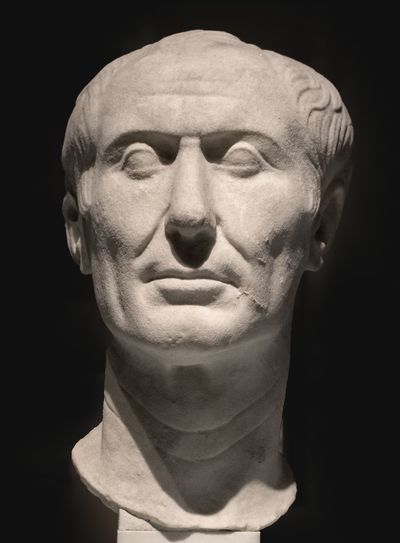
Julius Caesar
General · Ancient
83.3Total
Basic Information
Born
1930
-100
Died
—
-44
Era
Modern
Ancient
Nationality
Brazil
Roman Republic
Occupation
Politician
General
Civilization
Western
Western
Score Comparison
Military (10%)
19.2
88.0
Political (20%)
63.2
78.0
Influence (20%)
71.5
85.0
Legacy (20%)
59.5
82.0
Leadership (15%)
72.0
82.0
Strategy (15%)
62.3
88.0
TOTAL
60.9
83.3
Rankings
🥇
Julius CaesarLeader
Mil: 88.0Pol: 78.0Inf: 85.0
83.3
🥈
Jose Sarney
Mil: 19.2Pol: 63.2Inf: 71.5
60.9
+22.4 behind
How This Comparison Works
Algorithm
Each figure is scored on 6 dimensions (0—100 scale) based on structured historical data: Military (10%), Political (20%), Influence (20%), Legacy (20%), Leadership (15%), Strategy (15%). The weighted total produces the final ranking.
Data Sources
Scores are computed from structured sub-indicators in the database. Scale factors adjust for era (Ancient ×0.85, Modern ×1.0) and civilization size (Eastern ×1.05, Other ×0.80) to account for differences in population and military scale.
Maximum 3 Figures
Comparisons are limited to 2—3 figures to ensure readability and statistical meaningfulness.
Error Margins
±5 points per dimension — Sub-scores are derived from historical records with inherent uncertainty. Two figures within 5 points on a dimension should be considered roughly equivalent in that area.
Total Score Accuracy
±3 points overall — The weighted combination of 6 dimensions produces a total score with approximately ±3 points of uncertainty. Differences of less than 3 points are not statistically significant— the figures are effectively tied.
Known Limitations
- Historical records are incomplete and uneven across civilizations
- Figures from oral-tradition societies may be underrepresented
- Occupation labels can misclassify multi-role figures
- Scores measure capability and impact, not moral character
- Quantitative scoring is a comparison tool, not absolute truth
Capability Radar
Military (10%) — Battles & Warfare
Battles
13
95
Win Rate
12
92
Expansion
17
97
Political (20%) — Governance & Reform
Reform
40
90
Diplomacy
45
85
Economy
35
82
Influence (20%) — Cultural & Global Reach
Cultural
20
88
Global
20
94
Legacy (20%) — Historical Impact
Historical
40
95
Longevity
20
96
Leadership (15%) — Power & Stability
Tenure
60
75
Stability
30
60
Strategy (15%) — Tactics & Innovation
Strategy
21
94
Tactics
23
96
Reform
27
88
Analysis will be generated on first visit.
Scores and timeline are available below. The page will refresh automatically when ready.
Jose Sarney — Complete Timeline
1985 AD
Assumed the Presidency of BrazilPolitical Action
José Sarney assumed the presidency on April 21, 1985, after the death of President-elect Tancredo Neves. He became the first civilian president since the 1964 military coup, serving until March 15, 1990.
PresidencyDemocratizationBrazil
Impact: nationalconstructive
Appointed as Vice PresidentPolitical Action
Sarney was elected vice president in 1985 on the ticket of Tancredo Neves. When Neves fell ill and died before taking office, Sarney succeeded him, becoming president under the transitional democratic government.
Vice PresidencyTransitionBrazil
Impact: nationalconstructive
1986 AD
Launched the Cruzado PlanReform◆ Major
Sarney launched the Cruzado Plan in February 1986, a heterodox economic program to combat hyperinflation. It included a currency reform, price freezes, and wage adjustments. The plan initially succeeded but later collapsed, leading to renewed inflation.
Economic PolicyInflationBrazil
Impact: national
1987 AD
Faced the 1987 Economic CrisisOther◆ Major
In 1987, Brazil faced a severe economic crisis with hyperinflation reaching over 200% per month. Sarney's government declared a moratorium on foreign debt payments in February 1987, straining relations with international creditors.
Economic CrisisDebt MoratoriumBrazil
Impact: nationaldestructive
1988 AD
Promulgated the 1988 ConstitutionPolitical Action
Sarney oversaw the promulgation of Brazil's new constitution on October 5, 1988, which replaced the 1967 military-era constitution. The 1988 constitution expanded social rights, decentralized power, and established democratic institutions.
ConstitutionDemocracyBrazil
Impact: nationalprogressive
Similar Comparisons
Comments & Discussion
Cleopatra's Regret6/17/2026
Caesar crossed the Rubicon with a single legion, gambling everything on personal ambition. Sarney crossed no river—he stumbled into power after Tancredo Neves died before taking office. One man built an empire through calculated risk; the other inherited a crisis through sheer luck. Sarney's inflation rate hit 2,000% in 1989, while Caesar stabilized Rome after years of civil war. Comparing them insults the word "leadership." Sarney was a placeholder; Caesar was a force of nature.
数据怀疑论者6/17/2026
说真的,这个对比有什么意义?萨尼和凯撒生活的世界隔着两千年,经济、政治、军事环境完全不同。凯撒跨过卢比孔河是军事政变,萨尼接任总统只是宪法程序。硬要比较的话,萨尼至少让巴西平稳过渡到民主,而凯撒的独裁直接导致罗马共和国崩溃。历史不是数学题,别硬找公式。
Pompey's Ghost6/17/2026
The absurdity here is breathtaking. Caesar was a military genius who conquered Gaul, invaded Britain, and defeated Pompey's armies across three continents. Sarney was a lawyer who accidentally became president and spent his term fighting hyperinflation. One reshaped the known world; the other is a footnote in Brazilian history. If we're comparing political gambles, at least pick someone who took a real risk—like Lula or Vargas. This is like comparing a hurricane to a drizzle.
拉丁文爱好者6/17/2026
从古典学角度看,凯撒是“英雄叙事”的代表,他的跨河之举成为西方政治神话的符号。萨尼呢?他更像是一个“过渡者”,在巴西民主化进程中扮演了稳定器角色。凯撒的《高卢战记》流传两千年,萨尼的执政却鲜有人提起。这不公平,但历史对戏剧性事件有偏好。凯撒是史诗,萨尼只是注脚。
Revisionist Realist6/17/2026
Stop romanticizing Caesar. He crossed the Rubicon because he faced prosecution for corruption and illegal war-making. Sarney took power in a chaotic transition, kept Brazil from backsliding into dictatorship, and handed over power to a democratically elected successor. Caesar destroyed the Republic; Sarney helped save Brazil's democracy. By any moral standard, Sarney's "crossing" was more honorable. History just loves a good drama over a quiet success story.