Loading...
Analysis will be generated on first visit.
Scores and timeline are available below. The page will refresh automatically when ready.
Juan Sebastian Elcano vs Qin Shi Huang
Qin Shi Huang leads by 36.4 pts · 2 figures compared
…

Juan Sebastian Elcano
Explorer · Medieval
47.1Total
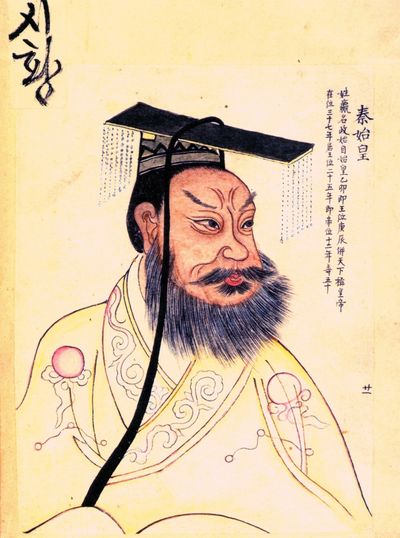
Qin Shi Huang
Emperor · Ancient
83.5Total
Basic Information
Born
1476
-259
Died
1526
-210
Era
Medieval
Ancient
Nationality
Spain
China
Occupation
Explorer
Emperor
Civilization
Western
Eastern
Score Comparison
Military (10%)
21.8
80.0
Political (20%)
30.1
88.0
Influence (20%)
74.5
82.0
Legacy (20%)
65.2
85.0
Leadership (15%)
27.0
88.0
Strategy (15%)
46.3
75.0
TOTAL
47.1
83.5
Rankings
🥇
Qin Shi HuangLeader
Mil: 80.0Pol: 88.0Inf: 82.0
83.5
🥈
Juan Sebastian Elcano
Mil: 21.8Pol: 30.1Inf: 74.5
47.1
+36.4 behind
How This Comparison Works
Algorithm
Each figure is scored on 6 dimensions (0—100 scale) based on structured historical data: Military (10%), Political (20%), Influence (20%), Legacy (20%), Leadership (15%), Strategy (15%). The weighted total produces the final ranking.
Data Sources
Scores are computed from structured sub-indicators in the database. Scale factors adjust for era (Ancient ×0.85, Modern ×1.0) and civilization size (Eastern ×1.05, Other ×0.80) to account for differences in population and military scale.
Maximum 3 Figures
Comparisons are limited to 2—3 figures to ensure readability and statistical meaningfulness.
Error Margins
±5 points per dimension — Sub-scores are derived from historical records with inherent uncertainty. Two figures within 5 points on a dimension should be considered roughly equivalent in that area.
Total Score Accuracy
±3 points overall — The weighted combination of 6 dimensions produces a total score with approximately ±3 points of uncertainty. Differences of less than 3 points are not statistically significant— the figures are effectively tied.
Known Limitations
- Historical records are incomplete and uneven across civilizations
- Figures from oral-tradition societies may be underrepresented
- Occupation labels can misclassify multi-role figures
- Scores measure capability and impact, not moral character
- Quantitative scoring is a comparison tool, not absolute truth
Capability Radar
Military (10%) — Battles & Warfare
Battles
10
85
Win Rate
10
90
Expansion
25
90
Political (20%) — Governance & Reform
Reform
5
95
Diplomacy
20
75
Economy
10
90
Influence (20%) — Cultural & Global Reach
Cultural
55
95
Global
60
85
Legacy (20%) — Historical Impact
Historical
65
95
Longevity
60
95
Leadership (15%) — Power & Stability
Tenure
15
70
Stability
10
65
Strategy (15%) — Tactics & Innovation
Strategy
20
85
Tactics
15
80
Reform
5
95
Analysis will be generated on first visit.
Scores and timeline are available below. The page will refresh automatically when ready.
Juan Sebastian Elcano — Complete Timeline
1521 AD
Appointment as captain of the VictoriaPolitical Action◆ Major
Following Magellan's death at the Battle of Mactan, Elcano was elected by the surviving crew to command the Victoria. He made the decision to abandon the other ships and continue westward to Spain, rather than returning to the Moluccas.
Age of DiscoveryLeadershipCircumnavigation
Impact: global
1522 AD
Completion of the first circumnavigation of the EarthOther
After Magellan's death in the Philippines, Elcano took command of the Victoria and navigated it back to Spain via the Indian Ocean and around Africa. The ship arrived in Sanl
Age of DiscoveryCircumnavigationNavigation
Impact: globalconstructive
Royal pardon and reward for circumnavigationPolitical Action◆ Major
King Charles I of Spain granted Elcano a royal pardon for his earlier mutiny against Magellan. He was awarded a coat of arms featuring a globe with the motto 'Primus circumdedisti me' (You first encircled me) and an annual pension of 500 ducats.
Age of DiscoveryRoyal FavorCircumnavigation
Impact: nationalconstructive
1525 AD
Second expedition to the MoluccasOther
Elcano served as chief pilot of the Garc
Age of DiscoveryColonizationSpice Trade
Impact: regional
1526 AD
Death during the Loaísa expeditionOther◆ Major
Elcano died of scurvy in the Pacific Ocean on August 4, 1526, while attempting to cross the Pacific for the second time. His body was buried at sea. The expedition ultimately failed to reach the Moluccas with most ships lost.
DeathAge of DiscoveryScurvy
Impact: nationaltragic
Qin Shi Huang — Complete Timeline
246 BC
Construction of the Mausoleum and Terracotta ArmyOther◆ Major
Qin Shi Huang commissioned a vast mausoleum complex near Xi'an, guarded by thousands of life-sized terracotta soldiers, horses, and chariots. The project employed hundreds of thousands of workers and reflected his obsession with immortality and imperial power.
Impact: global
230 BC
Conquest of the Six Warring StatesWar
From 230 to 221 BCE, Ying Zheng led the Qin state in a series of campaigns that conquered the Han, Zhao, Wei, Chu, Yan, and Qi states. This unified China under a single ruler for the first time, ending the Warring States period.
Impact: global
221 BC
Standardization of Writing, Currency, and MeasurementsReform◆ Major
Qin Shi Huang ordered the standardization of Chinese script, currency, and weights and measures across the unified empire. This facilitated administration, trade, and cultural integration, laying a foundation for future dynasties.
Impact: globalconstructive
Proclamation of the Qin DynastyPolitical Action
After conquering the last independent state, Ying Zheng declared himself Shi Huangdi (First Emperor), founding the Qin Dynasty. He adopted a new title to signify his supreme authority and initiated centralized imperial rule.
Impact: global
214 BC
Initiation of the Great Wall ConstructionOther◆ Major
Qin Shi Huang ordered the connection and extension of existing northern fortifications to create a unified defensive wall against nomadic Xiongnu raids. This project involved massive conscripted labor and became the precursor to the later Great Wall.
Impact: regional
213 BC
Burning of Books and Burying of ScholarsPolitical Action◆ Major
On the advice of Li Si, Qin Shi Huang ordered the burning of historical records and philosophical texts not aligned with Legalist doctrine. He also had 460 Confucian scholars buried alive to suppress dissent and consolidate ideological control.
Impact: nationaldestructive
Similar Comparisons
Comments & Discussion
OCEANIC_MANDATE6/17/2026
Basque fishermen and Chinese emperors don't really belong in the same paragraph. Elcano's achievement is mechanical, not visionary—he just followed Magellan's plan and got credit because Magellan died. Qin Shi Huang actually built something: standardized writing, weights, roads. One navigated an existing globe; the other created a new world order. Put Elcano next to Vasco da Gama, not the man who unified China.
流域铁腕6/17/2026
拿船夫跟始皇帝比,简直搞笑。一个漂洋过海混了个“第一”的名头,不过是地图上画条线罢了。始皇帝统一文字度量衡,修长城,建灵渠,哪一样不是硬核的改变文明?Elcano顶多是个执行者,会死里逃生活着回来吹嘘。你要比里程碑,得拿他跟隋炀帝的大运河比,别跟灭六国的君王碰瓷。
SCURVY_DENIER6/17/2026
The comparison reeks of survivorship bias. We're glorifying Elcano because his ship didn't sink—18 out of 270 men made it home, and they'd have died without those spice islands stopovers. Meanwhile, Qin Shi Huang's tomb with mercury rivers shows he planned for eternity, not just a lucky voyage. Adventurers get flattering tall tales; empire-builders get dismissed as tyrants. History has a clear favorite, and it's not the fever-ridden sailor.
量化考据派6/17/2026
说Elcano“发现了地球”,不对。麦哲伦才是规划者,Elcano只是接盘侠。而且公元前210年秦始皇就知道水银防腐,现代检测还证实了墓穴汞含量超标百倍。这比什么绕地球一圈有技术含量?绕圈是体力活,用水银模拟江河湖海才是顶级工程思维。别把航海冒险家和缔造帝国的管理天才放一起比。