Loading...
Analysis will be generated on first visit.
Scores and timeline are available below. The page will refresh automatically when ready.
Julius Caesar vs Pachacuti
Julius Caesar leads by 9.6 pts · 2 figures compared
…

Julius Caesar
General · Ancient
83.3Total
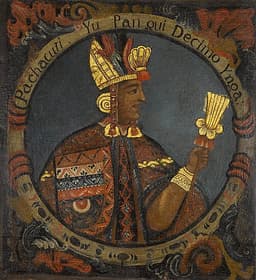
Pachacuti
Emperor · Medieval
73.7Total
Basic Information
Born
-100
1418
Died
-44
1472
Era
Ancient
Medieval
Nationality
Roman Republic
Inca Empire
Occupation
General
Emperor
Civilization
Western
Other
Score Comparison
Military (10%)
88.0
66.8
Political (20%)
78.0
70.6
Influence (20%)
85.0
77.6
Legacy (20%)
82.0
66.1
Leadership (15%)
82.0
84.5
Strategy (15%)
88.0
76.7
TOTAL
83.3
73.7
Rankings
🥇
Julius CaesarLeader
Mil: 88.0Pol: 78.0Inf: 85.0
83.3
🥈
Pachacuti
Mil: 66.8Pol: 70.6Inf: 77.6
73.7
+9.6 behind
How This Comparison Works
Algorithm
Each figure is scored on 6 dimensions (0—100 scale) based on structured historical data: Military (10%), Political (20%), Influence (20%), Legacy (20%), Leadership (15%), Strategy (15%). The weighted total produces the final ranking.
Data Sources
Scores are computed from structured sub-indicators in the database. Scale factors adjust for era (Ancient ×0.85, Modern ×1.0) and civilization size (Eastern ×1.05, Other ×0.80) to account for differences in population and military scale.
Maximum 3 Figures
Comparisons are limited to 2—3 figures to ensure readability and statistical meaningfulness.
Error Margins
±5 points per dimension — Sub-scores are derived from historical records with inherent uncertainty. Two figures within 5 points on a dimension should be considered roughly equivalent in that area.
Total Score Accuracy
±3 points overall — The weighted combination of 6 dimensions produces a total score with approximately ±3 points of uncertainty. Differences of less than 3 points are not statistically significant— the figures are effectively tied.
Known Limitations
- Historical records are incomplete and uneven across civilizations
- Figures from oral-tradition societies may be underrepresented
- Occupation labels can misclassify multi-role figures
- Scores measure capability and impact, not moral character
- Quantitative scoring is a comparison tool, not absolute truth
Capability Radar
Military (10%) — Battles & Warfare
Battles
95
85
Win Rate
92
90
Expansion
97
90
Political (20%) — Governance & Reform
Reform
90
92
Diplomacy
85
75
Economy
82
80
Influence (20%) — Cultural & Global Reach
Cultural
88
85
Global
94
65
Legacy (20%) — Historical Impact
Historical
95
80
Longevity
96
70
Leadership (15%) — Power & Stability
Tenure
75
85
Stability
60
82
Strategy (15%) — Tactics & Innovation
Strategy
94
88
Tactics
96
80
Reform
88
85
Analysis will be generated on first visit.
Scores and timeline are available below. The page will refresh automatically when ready.
Julius Caesar — Complete Timeline
58 BC
Gallic WarsWar◆ Major
Caesar, as proconsul of Gaul, launched a series of campaigns that conquered all of Gaul (modern France, Belgium, and parts of Switzerland). He fought numerous battles, including against the Helvetii, the Belgae, and the Gallic chieftain Vercingetorix. The wars brought immense wealth and a loyal army to Caesar.
Gallic WarsConquestRoman Expansion
Impact: regional
49 BC
Crossing the RubiconPolitical Action◆ Major
Caesar led Legio XIII across the Rubicon River into Italy, defying the Roman Senate's order to disband his army. This act triggered a civil war against Pompey and the Optimates, ultimately leading to Caesar's dictatorship and the end of the Roman Republic.
Roman Civil WarEnd of RepublicPower Struggle
Impact: global
48 BC
Battle of PharsalusWar◆ Major
Caesar's outnumbered army defeated the larger forces of Pompey the Great at Pharsalus in Greece. Caesar's tactical use of a reserve line to counter Pompey's cavalry charge proved decisive. Pompey fled to Egypt, where he was assassinated, leaving Caesar as the undisputed master of the Roman world.
Roman Civil WarBattleDecisive Victory
Impact: regional
44 BC
Appointment as Dictator for LifePolitical Action◆ Major
The Roman Senate appointed Caesar dictator perpetuo (dictator for life), granting him unprecedented personal power. This move concentrated military, legislative, and judicial authority in one person, effectively ending the Roman Republic's traditional system of checks and balances and alarming many senators.
DictatorshipEnd of RepublicPower Consolidation
Impact: regionaldestructive
Assassination on the Ides of MarchPolitical Action◆ Major
A group of Roman senators, led by Marcus Junius Brutus and Gaius Cassius Longinus, stabbed Caesar to death at a meeting of the Senate in the Theatre of Pompey. The assassination was intended to restore the Republic, but instead triggered another civil war that led to the rise of the Roman Empire.
AssassinationRoman PoliticsEnd of Republic
Impact: globaldestructive
Pachacuti — Complete Timeline
1438 AD
Conquest of the Chanka KingdomWar
Pachacuti led the Inca army to defeat the Chanka, a powerful rival, in a decisive battle near Cusco. This victory secured his position as Sapa Inca and initiated a period of rapid expansion, transforming the Inca from a small kingdom into a vast empire.
ConquestInca ExpansionChanka
Impact: regional
1440 AD
Reconstruction of CuscoCultural◆ Major
Pachacuti rebuilt Cusco as the imperial capital, designing it in the shape of a puma and constructing massive stone structures like Sacsayhuam
Urban PlanningArchitectureInca Empire
Impact: regionalconstructive
1450 AD
Initiation of Machu Picchu's ConstructionCultural◆ Major
Pachacuti ordered the construction of Machu Picchu, a royal estate and ceremonial site high in the Andes. The complex featured sophisticated dry-stone masonry and terraced agriculture, serving as a symbol of Inca engineering and a retreat for the emperor.
ArchitectureRoyal EstateInca Engineering
Impact: regionalconstructive
Similar Comparisons
Comments & Discussion
数证史鉴6/16/2026
看这个评分,我总觉得对帕查库蒂的军事分压得太低了(66.8 vs 88)。恺撒在高卢打的是部落联军,帕查库蒂面对的是安第斯山区复杂的城邦和部落联盟,地形难度完全不同。如果按照中国历史上“拓疆面积与治理效率”的公式算,帕查库蒂从库斯科一个小邦扩张到从哥伦比亚到智利的帝国,其疆域增长倍数和统治成本比,可能不输于恺撒的征服。另外,政治分78对71,恺撒最后被刺杀说明他的政治整合没有成功,而帕查库蒂建立了稳定的世袭体系,这个差距应该更小才对。我怀疑评分模型对非欧亚大陆文明的军事技术复杂度赋权过高了。
东西史观6/16/2026
恺撒和帕查库蒂的比较,让我想到秦始皇。帕查库蒂搞的“米塔”劳役制、修道路网、强制迁徙(mitma),本质上和秦始皇的郡县制、驰道、移民实边是一个逻辑——用国家工程整合多元族群。但西方史学家总把帕查库蒂的成就看作“区域性”的,而恺撒的遗产是“全球性”的。可问题是,如果印加帝国没有被西班牙人打断,它的行政体系很可能演变成更成熟的中枢集权模式。反过来,恺撒的独裁路线导致了罗马陷入两百年的军事暴君循环——这一点,中国史书会写得更清楚。帕查库蒂在稳定性和制度建设上,其实比恺撒更像一个合格的“帝业开创者”。