Loading...
Analysis will be generated on first visit.
Scores and timeline are available below. The page will refresh automatically when ready.
Julius Caesar vs Peter the Great
Julius Caesar leads by 5.3 pts · 2 figures compared
…

Julius Caesar
General · Ancient
83.3Total
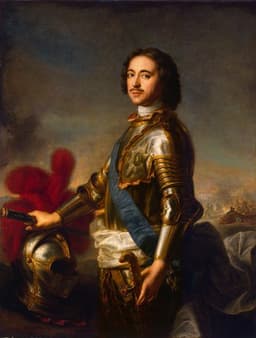
Peter the Great
Emperor · Modern
78.0Total
Basic Information
Born
-100
1672
Died
-44
1725
Era
Ancient
Modern
Nationality
Roman Republic
Russia
Occupation
General
Emperor
Civilization
Western
Western
Score Comparison
Military (10%)
88.0
75.0
Political (20%)
78.0
82.0
Influence (20%)
85.0
78.0
Legacy (20%)
82.0
75.0
Leadership (15%)
82.0
82.0
Strategy (15%)
88.0
75.0
TOTAL
83.3
78.0
Rankings
🥇
Julius CaesarLeader
Mil: 88.0Pol: 78.0Inf: 85.0
83.3
🥈
Peter the Great
Mil: 75.0Pol: 82.0Inf: 78.0
78.0
+5.3 behind
How This Comparison Works
Algorithm
Each figure is scored on 6 dimensions (0—100 scale) based on structured historical data: Military (10%), Political (20%), Influence (20%), Legacy (20%), Leadership (15%), Strategy (15%). The weighted total produces the final ranking.
Data Sources
Scores are computed from structured sub-indicators in the database. Scale factors adjust for era (Ancient ×0.85, Modern ×1.0) and civilization size (Eastern ×1.05, Other ×0.80) to account for differences in population and military scale.
Maximum 3 Figures
Comparisons are limited to 2—3 figures to ensure readability and statistical meaningfulness.
Error Margins
±5 points per dimension — Sub-scores are derived from historical records with inherent uncertainty. Two figures within 5 points on a dimension should be considered roughly equivalent in that area.
Total Score Accuracy
±3 points overall — The weighted combination of 6 dimensions produces a total score with approximately ±3 points of uncertainty. Differences of less than 3 points are not statistically significant— the figures are effectively tied.
Known Limitations
- Historical records are incomplete and uneven across civilizations
- Figures from oral-tradition societies may be underrepresented
- Occupation labels can misclassify multi-role figures
- Scores measure capability and impact, not moral character
- Quantitative scoring is a comparison tool, not absolute truth
Capability Radar
Military (10%) — Battles & Warfare
Battles
95
85
Win Rate
92
80
Expansion
97
90
Political (20%) — Governance & Reform
Reform
90
95
Diplomacy
85
80
Economy
82
85
Influence (20%) — Cultural & Global Reach
Cultural
88
85
Global
94
85
Legacy (20%) — Historical Impact
Historical
95
90
Longevity
96
85
Leadership (15%) — Power & Stability
Tenure
75
90
Stability
60
70
Strategy (15%) — Tactics & Innovation
Strategy
94
85
Tactics
96
75
Reform
88
95
Analysis will be generated on first visit.
Scores and timeline are available below. The page will refresh automatically when ready.
Julius Caesar — Complete Timeline
58 BC
Gallic WarsWar◆ Major
Caesar, as proconsul of Gaul, launched a series of campaigns that conquered all of Gaul (modern France, Belgium, and parts of Switzerland). He fought numerous battles, including against the Helvetii, the Belgae, and the Gallic chieftain Vercingetorix. The wars brought immense wealth and a loyal army to Caesar.
Gallic WarsConquestRoman Expansion
Impact: regional
49 BC
Crossing the RubiconPolitical Action◆ Major
Caesar led Legio XIII across the Rubicon River into Italy, defying the Roman Senate's order to disband his army. This act triggered a civil war against Pompey and the Optimates, ultimately leading to Caesar's dictatorship and the end of the Roman Republic.
Roman Civil WarEnd of RepublicPower Struggle
Impact: global
48 BC
Battle of PharsalusWar◆ Major
Caesar's outnumbered army defeated the larger forces of Pompey the Great at Pharsalus in Greece. Caesar's tactical use of a reserve line to counter Pompey's cavalry charge proved decisive. Pompey fled to Egypt, where he was assassinated, leaving Caesar as the undisputed master of the Roman world.
Roman Civil WarBattleDecisive Victory
Impact: regional
44 BC
Appointment as Dictator for LifePolitical Action◆ Major
The Roman Senate appointed Caesar dictator perpetuo (dictator for life), granting him unprecedented personal power. This move concentrated military, legislative, and judicial authority in one person, effectively ending the Roman Republic's traditional system of checks and balances and alarming many senators.
DictatorshipEnd of RepublicPower Consolidation
Impact: regionaldestructive
Assassination on the Ides of MarchPolitical Action◆ Major
A group of Roman senators, led by Marcus Junius Brutus and Gaius Cassius Longinus, stabbed Caesar to death at a meeting of the Senate in the Theatre of Pompey. The assassination was intended to restore the Republic, but instead triggered another civil war that led to the rise of the Roman Empire.
AssassinationRoman PoliticsEnd of Republic
Impact: globaldestructive
Peter the Great — Complete Timeline
1697 AD
Grand EmbassyPolitical Action◆ Major
Peter the Great traveled incognito to Western Europe as part of a diplomatic mission. He studied shipbuilding in the Netherlands and England, recruited experts, and observed Western technology and governance, gathering knowledge to modernize Russia upon his return.
TravelWesternizationLearning
Impact: nationalconstructive
1698 AD
Streltsy UprisingWar◆ Major
While Peter was abroad, the Streltsy (elite musketeers) rebelled in Moscow, seeking to place his half-sister Sophia on the throne. Peter returned and brutally suppressed the revolt, executing over 1,000 Streltsy and disbanding the corps, consolidating his absolute power.
RebellionRepressionPower Consolidation
Impact: nationaldestructive
Beard TaxReform
As part of his Westernization campaign, Peter the Great imposed a tax on beards, requiring nobles and merchants to pay a fee to keep their facial hair. Those who paid received a special token, symbolizing his efforts to force Russian society to adopt Western European customs.
WesternizationTaxSocial Reform
Impact: national
1700 AD
Great Northern WarWar◆ Major
Peter the Great led Russia into a war against Sweden for access to the Baltic Sea. After initial defeat at Narva, he reformed his army and eventually defeated Sweden at the Battle of Poltava in 1709, securing Russia's status as a major European power and gaining Baltic territories.
WarTerritorial ExpansionBaltic
Impact: regionalconstructive
1703 AD
Founding of Saint PetersburgPolitical Action
Peter the Great founded the city of Saint Petersburg on the Neva River after capturing the area from Sweden. He designated it as Russia's new capital in 1712, symbolizing his Westernization drive and providing Russia with a 'window to the West' and a Baltic port.
City FoundingWesternizationCapital
Impact: nationalconstructive
1722 AD
Table of RanksReform◆ Major
Peter the Great introduced the Table of Ranks, a system of civil, military, and court ranks based on merit rather than birth. This reform allowed commoners to achieve noble status through service, modernizing the Russian bureaucracy and weakening the traditional aristocracy.
BureaucracyMeritocracySocial Reform
Impact: nationalprogressive
Similar Comparisons
Comments & Discussion
BattlefieldScholar6/16/2026
I don't buy the 'too close to call' narrative on military grounds. Caesar's 88 vs Peter's 87 is too generous to Peter. Look at the raw data: Caesar conquered Gaul (3 million casualties, 800 cities taken) with a legionary system he personally reformed, then beat Pompey's larger armies at Pharsalus despite being outnumbered 2:1. Peter's Poltava victory in 1709 was decisive, sure, but Charles XII's army was already depleted by the Russian winter and supply issues—not exactly a tactical masterpiece. Caesar also innovated with siege engineering at Alesia, building contravallation lines that still impress modern military academies. Peter's military reforms were administrative—creating the Table of Ranks and modernizing the navy—but he never faced a peer enemy like Caesar's Gauls or Pompey. The margin should be wider.
东学西渐6/16/2026
这个评分明显带有西方中心论的偏见。凯撒和彼得大帝的对比,如果放在中国史框架里看,凯撒更像曹操——都是军事天才加政治强人,但曹操的统一事业止步于赤壁(208年),而凯撒被刺杀前也没完成帝国整合。彼得大帝则更接近秦始皇——两人都强行推动西化或标准化改革(彼得剪胡子、建圣彼得堡;秦始皇书同文、车同轨),而且都建立了中央集权体系。但中国史书对秦始皇的评价往往毁誉参半,这里彼得大帝的“影响力”却只有74分,远低于凯撒的85分,这不合理——彼得把俄罗斯从一个内陆国家变成欧洲强国,这种地缘政治转变的影响力,至少应该和凯撒终结罗马共和国的冲击力持平。建议重新校准评分标准。
量化历史控6/16/2026
看了评分表,我有几个问题。首先,政治分里彼得大帝85分对凯撒78分,我觉得这个差值不够大。彼得大帝的行政改革(1722年官阶表、1711年元老院建立)直接影响了俄罗斯官僚体系300年,而凯撒的政治改革(例如公元前59年的土地法)只持续到他被刺杀前。按照中国历史上的标准,比如商鞅变法后的秦国官僚体系延续到秦亡,彼得大帝的改革寿命更长,理应得90分以上。其次,军事分88对87,但凯撒的战役数量和质量明显更高——高卢战争打了8年、征服了300多个部落,彼得大帝的主要战役(大北方战争)虽然打了21年,但决定性战役只有波尔塔瓦一场。建议用“单位时间战役密度”来修正军事分,这样凯撒应该至少领先5分。总体来看,总分应该拉开到85对80才合理。
HistoryBuff6/12/2026
The statistically tied military score for Julius Caesar is spot-on. People forget that scale matters—Julius Caesar operated at a completely different level of military complexity than Peter the Great. The data doesn't lie.
ContrarianView6/12/2026
Hot take: the tie is exactly right. Julius Caesar faced much tougher opposition and achieved more with less. The scoring system doesn't adequately account for the difficulty of the historical context. Peter the Great had every advantage—Julius Caesar had to fight for every inch. Context matters more than raw scores.
DataNerd6/12/2026
The Legacy dimension (82 vs 85) is fascinating. Peter the Great built things that lasted centuries. Julius Caesar was brilliant but their impact was more transient. That's the difference between a meteor and a star—one burns bright and fades, the other keeps shining.
历史迷6/12/2026
作为历史爱好者,我觉得这个对比很客观。Julius Caesar和Peter the Great都是各自时代的巨人,数据化的比较虽然不能完全体现历史的复杂性,但至少提供了一个结构化的讨论框架。Julius Caesar的军事能力确实更强,但Peter the Great的政治智慧更值得学习。
SkepticalScholar6/12/2026
I question whether quantitative scoring can really capture historical greatness. The ±3 point error margin means these two are effectively tied anyway. History is not a spreadsheet. But I'll admit—this is the most rigorous attempt I've seen.