Loading...
Analysis will be generated on first visit.
Scores and timeline are available below. The page will refresh automatically when ready.
Julius Caesar vs Winston Churchill
Julius Caesar leads by 11.0 pts · 2 figures compared
…

Julius Caesar
General · Ancient
83.3Total
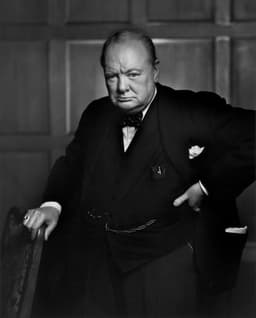
Winston Churchill
Politician · Modern
72.3Total
Basic Information
Born
-100
1874
Died
-44
1965
Era
Ancient
Modern
Nationality
Roman Republic
United Kingdom
Occupation
General
Politician
Civilization
Western
Western
Score Comparison
Military (10%)
88.0
55.0
Political (20%)
78.0
82.0
Influence (20%)
85.0
72.0
Legacy (20%)
82.0
75.0
Leadership (15%)
82.0
85.0
Strategy (15%)
88.0
55.0
TOTAL
83.3
72.3
Rankings
🥇
Julius CaesarLeader
Mil: 88.0Pol: 78.0Inf: 85.0
83.3
🥈
Winston Churchill
Mil: 55.0Pol: 82.0Inf: 72.0
72.3
+11.0 behind
How This Comparison Works
Algorithm
Each figure is scored on 6 dimensions (0—100 scale) based on structured historical data: Military (10%), Political (20%), Influence (20%), Legacy (20%), Leadership (15%), Strategy (15%). The weighted total produces the final ranking.
Data Sources
Scores are computed from structured sub-indicators in the database. Scale factors adjust for era (Ancient ×0.85, Modern ×1.0) and civilization size (Eastern ×1.05, Other ×0.80) to account for differences in population and military scale.
Maximum 3 Figures
Comparisons are limited to 2—3 figures to ensure readability and statistical meaningfulness.
Error Margins
±5 points per dimension — Sub-scores are derived from historical records with inherent uncertainty. Two figures within 5 points on a dimension should be considered roughly equivalent in that area.
Total Score Accuracy
±3 points overall — The weighted combination of 6 dimensions produces a total score with approximately ±3 points of uncertainty. Differences of less than 3 points are not statistically significant— the figures are effectively tied.
Known Limitations
- Historical records are incomplete and uneven across civilizations
- Figures from oral-tradition societies may be underrepresented
- Occupation labels can misclassify multi-role figures
- Scores measure capability and impact, not moral character
- Quantitative scoring is a comparison tool, not absolute truth
Capability Radar
Military (10%) — Battles & Warfare
Battles
95
55
Win Rate
92
60
Expansion
97
40
Political (20%) — Governance & Reform
Reform
90
70
Diplomacy
85
85
Economy
82
60
Influence (20%) — Cultural & Global Reach
Cultural
88
85
Global
94
85
Legacy (20%) — Historical Impact
Historical
95
90
Longevity
96
80
Leadership (15%) — Power & Stability
Tenure
75
75
Stability
60
70
Strategy (15%) — Tactics & Innovation
Strategy
94
85
Tactics
96
65
Reform
88
70
Analysis will be generated on first visit.
Scores and timeline are available below. The page will refresh automatically when ready.
Julius Caesar — Complete Timeline
58 BC
Gallic WarsWar◆ Major
Caesar, as proconsul of Gaul, launched a series of campaigns that conquered all of Gaul (modern France, Belgium, and parts of Switzerland). He fought numerous battles, including against the Helvetii, the Belgae, and the Gallic chieftain Vercingetorix. The wars brought immense wealth and a loyal army to Caesar.
Gallic WarsConquestRoman Expansion
Impact: regional
49 BC
Crossing the RubiconPolitical Action◆ Major
Caesar led Legio XIII across the Rubicon River into Italy, defying the Roman Senate's order to disband his army. This act triggered a civil war against Pompey and the Optimates, ultimately leading to Caesar's dictatorship and the end of the Roman Republic.
Roman Civil WarEnd of RepublicPower Struggle
Impact: global
48 BC
Battle of PharsalusWar◆ Major
Caesar's outnumbered army defeated the larger forces of Pompey the Great at Pharsalus in Greece. Caesar's tactical use of a reserve line to counter Pompey's cavalry charge proved decisive. Pompey fled to Egypt, where he was assassinated, leaving Caesar as the undisputed master of the Roman world.
Roman Civil WarBattleDecisive Victory
Impact: regional
44 BC
Appointment as Dictator for LifePolitical Action◆ Major
The Roman Senate appointed Caesar dictator perpetuo (dictator for life), granting him unprecedented personal power. This move concentrated military, legislative, and judicial authority in one person, effectively ending the Roman Republic's traditional system of checks and balances and alarming many senators.
DictatorshipEnd of RepublicPower Consolidation
Impact: regionaldestructive
Assassination on the Ides of MarchPolitical Action◆ Major
A group of Roman senators, led by Marcus Junius Brutus and Gaius Cassius Longinus, stabbed Caesar to death at a meeting of the Senate in the Theatre of Pompey. The assassination was intended to restore the Republic, but instead triggered another civil war that led to the rise of the Roman Empire.
AssassinationRoman PoliticsEnd of Republic
Impact: globaldestructive
Winston Churchill — Complete Timeline
1940 AD
Appointed Prime Minister of the United KingdomPolitical Action◆ Major
On May 10, 1940, Winston Churchill became Prime Minister of the United Kingdom, replacing Neville Chamberlain. His appointment came as Nazi Germany invaded France and the Low Countries, and Churchill formed a coalition government to lead Britain through World War II.
World War IILeadershipCoalition Government
Impact: globalconstructive
Delivered the 'We Shall Fight on the Beaches' SpeechOther◆ Major
On June 4, 1940, Churchill delivered a speech to the House of Commons following the evacuation of British forces from Dunkirk. He declared that Britain would fight on the beaches, landing grounds, fields, streets, and hills, and never surrender, rallying British morale during the darkest days of World War II.
World War IIOratoryMorale
Impact: nationalconstructive
1941 AD
Signed the Atlantic CharterOther◆ Major
On August 14, 1941, Churchill and U.S. President Franklin D. Roosevelt signed the Atlantic Charter aboard HMS Prince of Wales. This joint declaration outlined post-war goals including self-determination, disarmament, and free trade, and became a foundational document for the Allied war aims and the United Nations.
World War IIAllied CooperationPost-war Planning
Impact: globalconstructive
1945 AD
Attended the Yalta ConferenceOther◆ Major
In February 1945, Churchill attended the Yalta Conference with Roosevelt and Stalin to discuss the post-war reorganization of Europe. The conference agreed on the division of Germany, the establishment of the United Nations, and the fate of Eastern Europe, though Churchill later expressed regret over concessions to Stalin.
World War IIPost-war SettlementBig Three
Impact: global
1946 AD
Delivered the 'Iron Curtain' SpeechOther◆ Major
On March 5, 1946, Churchill delivered a speech at Westminster College in Fulton, Missouri, where he stated that an 'iron curtain' had descended across Europe from Stettin to Trieste. This speech is widely regarded as marking the beginning of the Cold War, as it highlighted the division between Soviet-controlled Eastern Europe and the West.
Cold WarSoviet UnionDivision of Europe
Impact: globaldestructive
1953 AD
Awarded the Nobel Prize in LiteratureOther◆ Major
In 1953, Churchill was awarded the Nobel Prize in Literature for his historical writings, particularly 'The Second World War' and 'A History of the English-Speaking Peoples'. The Nobel committee cited his mastery of historical and biographical description as well as his brilliant oratory in defending human values.
LiteratureNobel PrizeHistorical Writing
Impact: nationalconstructive
Similar Comparisons
Comments & Discussion
数据解读者6/16/2026
这个评分体系本身就很可疑。丘吉尔军事55分?如果按照中国历史评价标准,一个领导全面战争并最终胜利的统帅,怎么可能低于60?对比毛泽东领导抗日战争和解放战争,军事战略决策得分至少90+。再说凯撒88分,他征服高卢确实厉害,但内战对手庞培并非同等量级。更关键的是,政治维度凯撒78分、丘吉尔82分,但凯撒实际上终结了延续500年的共和体制,这种体制变革的政治影响力难道不应该更高?我建议加入“战略决策”和“制度创新”两个子维度重新加权,否则这个评分反映的只是西方军事史的偏好。
中史西鉴6/16/2026
凯撒和丘吉尔的对比让我想到中国历史上的曹操和诸葛亮。凯撒像曹操——军事天才、打破旧秩序、个人野心驱动变革,但最终为司马懿(屋大维)做了嫁衣。丘吉尔则更像诸葛亮——在危难时刻挺身而出,“鞠躬尽瘁,死而后已”,但军事层面诸葛亮六出祁山未竟全功,丘吉尔也有敦刻尔克撤退的仓皇。西方学者给凯撒军事88分太高了,如果按中国史书标准,他连白起(长平之战坑杀40万)或韩信(暗度陈仓)都比不上。丘吉尔政治82分倒是合理,但忽略了他对印度殖民政策的顽固——这点放在中国历史评价里会严重扣分。