Loading...
Analysis will be generated on first visit.
Scores and timeline are available below. The page will refresh automatically when ready.
Julius Caesar vs Zhao Kuangyin
Julius Caesar leads by 7.8 pts · 2 figures compared
…

Julius Caesar
General · Ancient
83.3Total
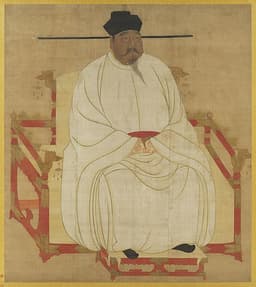
Zhao Kuangyin
Emperor · Medieval
75.5Total
Basic Information
Born
-100
927
Died
-44
976
Era
Ancient
Medieval
Nationality
Roman Republic
China
Occupation
General
Emperor
Civilization
Western
Eastern
Score Comparison
Military (10%)
88.0
74.6
Political (20%)
78.0
75.9
Influence (20%)
85.0
74.9
Legacy (20%)
82.0
75.1
Leadership (15%)
82.0
82.3
Strategy (15%)
88.0
69.8
TOTAL
83.3
75.5
Rankings
🥇
Julius CaesarLeader
Mil: 88.0Pol: 78.0Inf: 85.0
83.3
🥈
Zhao Kuangyin
Mil: 74.6Pol: 75.9Inf: 74.9
75.5
+7.8 behind
How This Comparison Works
Algorithm
Each figure is scored on 6 dimensions (0—100 scale) based on structured historical data: Military (10%), Political (20%), Influence (20%), Legacy (20%), Leadership (15%), Strategy (15%). The weighted total produces the final ranking.
Data Sources
Scores are computed from structured sub-indicators in the database. Scale factors adjust for era (Ancient ×0.85, Modern ×1.0) and civilization size (Eastern ×1.05, Other ×0.80) to account for differences in population and military scale.
Maximum 3 Figures
Comparisons are limited to 2—3 figures to ensure readability and statistical meaningfulness.
Error Margins
±5 points per dimension — Sub-scores are derived from historical records with inherent uncertainty. Two figures within 5 points on a dimension should be considered roughly equivalent in that area.
Total Score Accuracy
±3 points overall — The weighted combination of 6 dimensions produces a total score with approximately ±3 points of uncertainty. Differences of less than 3 points are not statistically significant— the figures are effectively tied.
Known Limitations
- Historical records are incomplete and uneven across civilizations
- Figures from oral-tradition societies may be underrepresented
- Occupation labels can misclassify multi-role figures
- Scores measure capability and impact, not moral character
- Quantitative scoring is a comparison tool, not absolute truth
Capability Radar
Military (10%) — Battles & Warfare
Battles
95
75
Win Rate
92
85
Expansion
97
75
Political (20%) — Governance & Reform
Reform
90
90
Diplomacy
85
85
Economy
82
80
Influence (20%) — Cultural & Global Reach
Cultural
88
70
Global
94
60
Legacy (20%) — Historical Impact
Historical
95
80
Longevity
96
75
Leadership (15%) — Power & Stability
Tenure
75
65
Stability
60
85
Strategy (15%) — Tactics & Innovation
Strategy
94
80
Tactics
96
70
Reform
88
90
Analysis will be generated on first visit.
Scores and timeline are available below. The page will refresh automatically when ready.
Julius Caesar — Complete Timeline
58 BC
Gallic WarsWar◆ Major
Caesar, as proconsul of Gaul, launched a series of campaigns that conquered all of Gaul (modern France, Belgium, and parts of Switzerland). He fought numerous battles, including against the Helvetii, the Belgae, and the Gallic chieftain Vercingetorix. The wars brought immense wealth and a loyal army to Caesar.
Gallic WarsConquestRoman Expansion
Impact: regional
49 BC
Crossing the RubiconPolitical Action◆ Major
Caesar led Legio XIII across the Rubicon River into Italy, defying the Roman Senate's order to disband his army. This act triggered a civil war against Pompey and the Optimates, ultimately leading to Caesar's dictatorship and the end of the Roman Republic.
Roman Civil WarEnd of RepublicPower Struggle
Impact: global
48 BC
Battle of PharsalusWar◆ Major
Caesar's outnumbered army defeated the larger forces of Pompey the Great at Pharsalus in Greece. Caesar's tactical use of a reserve line to counter Pompey's cavalry charge proved decisive. Pompey fled to Egypt, where he was assassinated, leaving Caesar as the undisputed master of the Roman world.
Roman Civil WarBattleDecisive Victory
Impact: regional
44 BC
Appointment as Dictator for LifePolitical Action◆ Major
The Roman Senate appointed Caesar dictator perpetuo (dictator for life), granting him unprecedented personal power. This move concentrated military, legislative, and judicial authority in one person, effectively ending the Roman Republic's traditional system of checks and balances and alarming many senators.
DictatorshipEnd of RepublicPower Consolidation
Impact: regionaldestructive
Assassination on the Ides of MarchPolitical Action◆ Major
A group of Roman senators, led by Marcus Junius Brutus and Gaius Cassius Longinus, stabbed Caesar to death at a meeting of the Senate in the Theatre of Pompey. The assassination was intended to restore the Republic, but instead triggered another civil war that led to the rise of the Roman Empire.
AssassinationRoman PoliticsEnd of Republic
Impact: globaldestructive
Zhao Kuangyin — Complete Timeline
960 AD
Founded Song dynastyPolitical Action
Zhao Kuangyin, a general of Later Zhou, was proclaimed emperor by his troops at Chenqiao. He established the Song dynasty, ending the Five Dynasties period and beginning a new era of Chinese history.
Song dynastyFoundingChenqiao
Impact: globalconstructive
961 AD
Removed military power from generalsPolitical Action◆ Major
Zhao Kuangyin invited senior generals to a banquet and persuaded them to retire peacefully. This 'removal of military power over wine' prevented military coups and centralized control.
Song dynastyMilitary reformCentralization
Impact: nationalconstructive
963 AD
Unified southern ChinaWar◆ Major
Zhao Kuangyin launched campaigns to conquer the southern kingdoms, including Jingnan, Later Shu, and Southern Tang. By his death, most of China was reunified under Song rule.
Song unificationConquestSouthern kingdoms
Impact: national
Similar Comparisons
Comments & Discussion
BarbarianSlayer6/16/2026
Honestly, giving Zhao Kuangyin a 75 in military vs Caesar's 88 is a joke. Yeah, Caesar conquered Gaul and beat Pompey, but Zhao unified a China that had been fractured for over 50 years of the Five Dynasties period—that's like trying to glue together a dozen warring factions, each with their own armies and loyalties. And he did it mostly through strategic alliances and the bloodless 'coup at Chen Bridge.' Caesar was a brilliant tactician, sure—Alesia and Pharsalus were masterpieces—but his methods were brutal and destabilized the entire Roman world. Zhao's military genius was in knowing when NOT to fight, which is a skill Caesar never mastered. The score's way off.
数字考证者6/16/2026
这个分数体系有个根本问题:军事维度给赵匡胤75分,但拿他与统一罗马的凯撒相比,忽略了赵匡胤面对的对手质量。五代十国末期,南方有南唐、吴越、后蜀等割据政权,北方还有契丹虎视眈眈。赵匡胤用“先南后北”策略,十六年内灭荆南、武平、后蜀、南汉、南唐——这是五场独立战争,每场都需要不同的战术和后勤规划。而凯撒的高卢战争虽然规模大,但面对的部落联盟组织度远不如宋朝的南方政权。如果按“统一难度系数”加权,赵匡胤的军事得分至少应该82以上。政治维度78 vs 76更荒谬:凯撒的集权导致被刺杀,赵匡胤的“杯酒释兵权”却让宋朝稳定延续三百年。
历史两栖人6/16/2026
西方的评分体系有个明显的盲区:他们把凯撒的“影响力”定在85,因为他改变了西方政治结构。但赵匡胤的影响在东亚同样深远——他创立了文人治国传统,推行科举扩大化,让宋朝成为中国历史上文化最繁荣的朝代之一。凯撒的历法改革固然重要,但赵匡胤的经济政策,比如废除唐代的坊市制度、允许夜市开放,直接催生了《清明上河图》里的商业盛世。而且赵匡胤留下的“不杀士大夫”祖训,让宋朝知识分子敢于直谏,这在中国政治史上是革命性的。凯撒的影响力是破坏旧秩序,赵匡胤的影响力是建立新范式。硬要比的话,赵匡胤在政治遗产上绝对不输凯撒。