Loading...
Analysis will be generated on first visit.
Scores and timeline are available below. The page will refresh automatically when ready.
Kublai Khan vs Qin Shi Huang
Qin Shi Huang leads by 3.9 pts · 2 figures compared
…
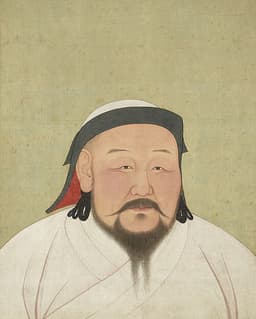
Kublai Khan
Emperor · Medieval
79.6Total
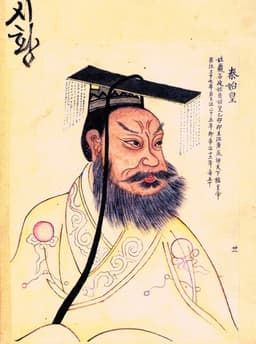
Qin Shi Huang
Emperor · Ancient
83.5Total
Basic Information
Born
1215
-259
Died
1294
-210
Era
Medieval
Ancient
Nationality
Mongolia
China
Occupation
Emperor
Emperor
Civilization
Eastern
Eastern
Score Comparison
Military (10%)
88.0
80.0
Political (20%)
78.0
88.0
Influence (20%)
78.0
82.0
Legacy (20%)
75.0
85.0
Leadership (15%)
82.0
88.0
Strategy (15%)
82.0
75.0
TOTAL
79.6
83.5
Analysis will be generated on first visit.
Scores and timeline are available below. The page will refresh automatically when ready.
Rankings
🥇
Qin Shi HuangLeader
Mil: 80.0Pol: 88.0Inf: 82.0
83.5
🥈
Kublai Khan
Mil: 88.0Pol: 78.0Inf: 78.0
79.6
+3.9 behind
How This Comparison Works
Algorithm
Each figure is scored on 6 dimensions (0—100 scale) based on structured historical data: Military (10%), Political (20%), Influence (20%), Legacy (20%), Leadership (15%), Strategy (15%). The weighted total produces the final ranking.
Data Sources
Scores are computed from structured sub-indicators in the database. Scale factors adjust for era (Ancient ×0.85, Modern ×1.0) and civilization size (Eastern ×1.05, Other ×0.80) to account for differences in population and military scale.
Maximum 3 Figures
Comparisons are limited to 2—3 figures to ensure readability and statistical meaningfulness.
Error Margins
±5 points per dimension — Sub-scores are derived from historical records with inherent uncertainty. Two figures within 5 points on a dimension should be considered roughly equivalent in that area.
Total Score Accuracy
±3 points overall — The weighted combination of 6 dimensions produces a total score with approximately ±3 points of uncertainty. Differences of less than 3 points are not statistically significant— the figures are effectively tied.
Known Limitations
- Historical records are incomplete and uneven across civilizations
- Figures from oral-tradition societies may be underrepresented
- Occupation labels can misclassify multi-role figures
- Scores measure capability and impact, not moral character
- Quantitative scoring is a comparison tool, not absolute truth
Capability Radar
Military (10%) — Battles & Warfare
Battles
95
85
Win Rate
90
90
Expansion
95
90
Political (20%) — Governance & Reform
Reform
88
95
Diplomacy
85
75
Economy
90
90
Influence (20%) — Cultural & Global Reach
Cultural
85
95
Global
85
85
Legacy (20%) — Historical Impact
Historical
90
95
Longevity
80
95
Leadership (15%) — Power & Stability
Tenure
90
70
Stability
80
65
Strategy (15%) — Tactics & Innovation
Strategy
92
85
Tactics
85
80
Reform
88
95
Kublai Khan — Complete Timeline
1260 AD
Adoption of Tibetan Buddhism as State ReligionCultural◆ Major
Kublai Khan appointed the Tibetan lama Drog
Tibetan BuddhismReligionMongol-Tibet Relations
Impact: regional
1271 AD
Proclamation of the Yuan DynastyPolitical Action◆ Major
Kublai Khan officially proclaimed the Yuan dynasty, adopting a Chinese-style dynastic name. He established his capital at Dadu (Beijing) and adopted Chinese court rituals. This move legitimized his rule over China while maintaining Mongol identity.
Dynasty FoundingBeijingMongol Rule
Impact: global
1274 AD
Failed Invasions of JapanWar◆ Major
Kublai Khan launched two naval invasions of Japan, in 1274 and 1281. Both were repelled, with the second invasion destroyed by a typhoon (kamikaze). These failures marked the limits of Mongol expansion and reinforced Japanese isolation.
Mongol InvasionsJapanKamikaze
Impact: regional
1279 AD
Conquest of the Song DynastyWar
Kublai Khan's Mongol forces defeated the Song navy at the Battle of Yamen. The last Song emperor drowned, ending the Song dynasty. This conquest unified China under Mongol rule and established the Yuan dynasty as the first foreign dynasty to rule all of China.
Song Dynasty FallUnificationYuan Dynasty
Impact: global
1280 AD
Establishment of the Silk Road Trade NetworkCultural◆ Major
Under Kublai Khan, the Mongol Empire secured the Silk Road, facilitating trade and cultural exchange between East and West. Marco Polo visited his court. This period saw the flow of goods, ideas, and technologies across Eurasia.
Silk RoadTradeCultural Exchange
Impact: globalconstructive
Qin Shi Huang — Complete Timeline
246 BC
Construction of the Mausoleum and Terracotta ArmyOther◆ Major
Qin Shi Huang commissioned a vast mausoleum complex near Xi'an, guarded by thousands of life-sized terracotta soldiers, horses, and chariots. The project employed hundreds of thousands of workers and reflected his obsession with immortality and imperial power.
Impact: global
230 BC
Conquest of the Six Warring StatesWar
From 230 to 221 BCE, Ying Zheng led the Qin state in a series of campaigns that conquered the Han, Zhao, Wei, Chu, Yan, and Qi states. This unified China under a single ruler for the first time, ending the Warring States period.
Impact: global
221 BC
Standardization of Writing, Currency, and MeasurementsReform◆ Major
Qin Shi Huang ordered the standardization of Chinese script, currency, and weights and measures across the unified empire. This facilitated administration, trade, and cultural integration, laying a foundation for future dynasties.
Impact: globalconstructive
Proclamation of the Qin DynastyPolitical Action
After conquering the last independent state, Ying Zheng declared himself Shi Huangdi (First Emperor), founding the Qin Dynasty. He adopted a new title to signify his supreme authority and initiated centralized imperial rule.
Impact: global
214 BC
Initiation of the Great Wall ConstructionOther◆ Major
Qin Shi Huang ordered the connection and extension of existing northern fortifications to create a unified defensive wall against nomadic Xiongnu raids. This project involved massive conscripted labor and became the precursor to the later Great Wall.
Impact: regional
213 BC
Burning of Books and Burying of ScholarsPolitical Action◆ Major
On the advice of Li Si, Qin Shi Huang ordered the burning of historical records and philosophical texts not aligned with Legalist doctrine. He also had 460 Confucian scholars buried alive to suppress dissent and consolidate ideological control.
Impact: nationaldestructive
Similar Comparisons
Comments & Discussion
丝路墨客6/16/2026
这个评分体系明显偏西方本位。忽必烈政治分78低于秦始皇88,但若考量元朝打通欧亚大陆、建立驿站系统、促进东西方科技医药交流,这种影响力绝非短命王朝可以概括。秦始皇的确统一文字度量衡,但秦制严苛导致二世而亡;忽必烈虽保留蒙古特权,却巧妙融合汉法、藏传佛教、伊斯兰天文历算,元大都成为当时最国际化的都市。西方史家常以汉族正统论贬低元朝,却忽略了忽必烈在跨文明治理上的开创性。若论军事,忽必烈灭南宋、征日本、攻缅甸,战略布局远比秦王横扫六合复杂——秦军面对的是同质化的战国诸雄,而蒙古铁骑要应对完全不同形态的敌人。
数据推理师6/16/2026
军事分给忽必烈88而秦始皇80,这个差距我不认同。秦灭六国历时十年,每场大战都体现后勤统筹与战术迭代:长平之战诱敌深入、灭楚之战六十万大军分进合击、南征百越开辟灵渠保障粮道。忽必烈灭宋虽是大规模水陆协同,但更多依赖蒙古骑兵优势与南宋内部腐败,且征日本两次惨败说明后勤短板。若算实际战果:秦始皇统一区域约340万平方公里,忽必烈治下元朝约1400万平方公里,但后者继承了大片已征服领土。更关键的是政治维度:秦始皇88分合理——三公九卿制、郡县制、书同文车同轨,这套体系影响两千年;忽必烈78分略高,四等人制、行省形同虚设、纸币贬值引发经济危机。建议重新计算权重:政治应设35%,军事30%,忽必烈总分会降至75左右。