Loading...
Analysis will be generated on first visit.
Scores and timeline are available below. The page will refresh automatically when ready.
Mohammad Yaqoob vs Qin Shi Huang
Qin Shi Huang leads by 32.9 pts · 2 figures compared
…

Mohammad Yaqoob
General · Modern
50.6Total
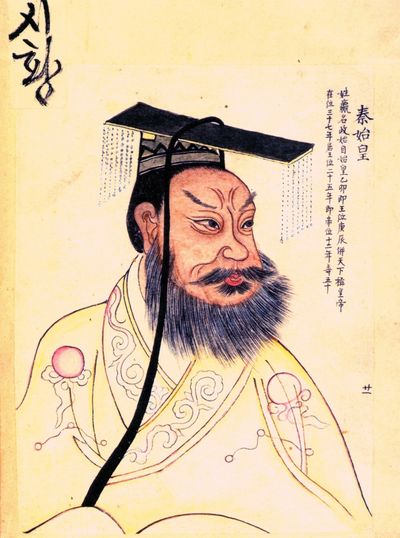
Qin Shi Huang
Emperor · Ancient
83.5Total
Basic Information
Born
1990
-259
Died
—
-210
Era
Modern
Ancient
Nationality
Afghanistan
China
Occupation
General
Emperor
Civilization
Middle Eastern
Eastern
Score Comparison
Military (10%)
33.5
80.0
Political (20%)
45.1
88.0
Influence (20%)
64.0
82.0
Legacy (20%)
51.2
85.0
Leadership (15%)
42.7
88.0
Strategy (15%)
58.8
75.0
TOTAL
50.6
83.5
Rankings
🥇
Qin Shi HuangLeader
Mil: 80.0Pol: 88.0Inf: 82.0
83.5
🥈
Mohammad Yaqoob
Mil: 33.5Pol: 45.1Inf: 64.0
50.6
+32.9 behind
How This Comparison Works
Algorithm
Each figure is scored on 6 dimensions (0—100 scale) based on structured historical data: Military (10%), Political (20%), Influence (20%), Legacy (20%), Leadership (15%), Strategy (15%). The weighted total produces the final ranking.
Data Sources
Scores are computed from structured sub-indicators in the database. Scale factors adjust for era (Ancient ×0.85, Modern ×1.0) and civilization size (Eastern ×1.05, Other ×0.80) to account for differences in population and military scale.
Maximum 3 Figures
Comparisons are limited to 2—3 figures to ensure readability and statistical meaningfulness.
Error Margins
±5 points per dimension — Sub-scores are derived from historical records with inherent uncertainty. Two figures within 5 points on a dimension should be considered roughly equivalent in that area.
Total Score Accuracy
±3 points overall — The weighted combination of 6 dimensions produces a total score with approximately ±3 points of uncertainty. Differences of less than 3 points are not statistically significant— the figures are effectively tied.
Known Limitations
- Historical records are incomplete and uneven across civilizations
- Figures from oral-tradition societies may be underrepresented
- Occupation labels can misclassify multi-role figures
- Scores measure capability and impact, not moral character
- Quantitative scoring is a comparison tool, not absolute truth
Capability Radar
Military (10%) — Battles & Warfare
Battles
15
85
Win Rate
10
90
Expansion
10
90
Political (20%) — Governance & Reform
Reform
5
95
Diplomacy
15
75
Economy
5
90
Influence (20%) — Cultural & Global Reach
Cultural
10
95
Global
10
85
Legacy (20%) — Historical Impact
Historical
15
95
Longevity
10
95
Leadership (15%) — Power & Stability
Tenure
25
70
Stability
10
65
Strategy (15%) — Tactics & Innovation
Strategy
20
85
Tactics
20
80
Reform
5
95
Analysis will be generated on first visit.
Scores and timeline are available below. The page will refresh automatically when ready.
Mohammad Yaqoob — Complete Timeline
2021 AD
Led Taliban Military OperationsWar◆ Major
As a senior military commander, Yaqoob oversaw Taliban offensives during the final stages of the 2021 war against the Afghan government. His leadership contributed to the rapid collapse of government forces and the capture of provincial capitals.
Afghan WarTaliban OffensiveMilitary Command
Impact: national
Appointed Taliban Defense MinisterPolitical Action◆ Major
Following the Taliban's takeover of Kabul in August 2021, Mohammad Yaqoob was appointed as the acting Minister of Defense in the new Taliban government. This appointment formalized his role as a senior military leader within the regime.
Taliban GovernmentAfghanistanCabinet Appointment
Impact: national
Qin Shi Huang — Complete Timeline
246 BC
Construction of the Mausoleum and Terracotta ArmyOther◆ Major
Qin Shi Huang commissioned a vast mausoleum complex near Xi'an, guarded by thousands of life-sized terracotta soldiers, horses, and chariots. The project employed hundreds of thousands of workers and reflected his obsession with immortality and imperial power.
Impact: global
230 BC
Conquest of the Six Warring StatesWar
From 230 to 221 BCE, Ying Zheng led the Qin state in a series of campaigns that conquered the Han, Zhao, Wei, Chu, Yan, and Qi states. This unified China under a single ruler for the first time, ending the Warring States period.
Impact: global
221 BC
Standardization of Writing, Currency, and MeasurementsReform◆ Major
Qin Shi Huang ordered the standardization of Chinese script, currency, and weights and measures across the unified empire. This facilitated administration, trade, and cultural integration, laying a foundation for future dynasties.
Impact: globalconstructive
Proclamation of the Qin DynastyPolitical Action
After conquering the last independent state, Ying Zheng declared himself Shi Huangdi (First Emperor), founding the Qin Dynasty. He adopted a new title to signify his supreme authority and initiated centralized imperial rule.
Impact: global
214 BC
Initiation of the Great Wall ConstructionOther◆ Major
Qin Shi Huang ordered the connection and extension of existing northern fortifications to create a unified defensive wall against nomadic Xiongnu raids. This project involved massive conscripted labor and became the precursor to the later Great Wall.
Impact: regional
213 BC
Burning of Books and Burying of ScholarsPolitical Action◆ Major
On the advice of Li Si, Qin Shi Huang ordered the burning of historical records and philosophical texts not aligned with Legalist doctrine. He also had 460 Confucian scholars buried alive to suppress dissent and consolidate ideological control.
Impact: nationaldestructive
Similar Comparisons
Comments & Discussion
HelmetHead6/17/2026
Comparing Yaqoob to Qin Shi Huang is like comparing a village strongman to a cosmic force. Yaqoob inherited a guerrilla movement in a broken country; Qin standardized weights, measures, and writing across a continent. One built a bureaucracy that lasted millennia; the other can barely hold Kabul without foreign aid. Yaqoob is not an emperor—he’s a caretaker with an RPG.
数据狂人6/17/2026
这个对比根本站不住脚。秦始皇统一六国,靠的是制度、铁器和官僚体系;雅库布靠的是部落联盟和无人机。数据上,秦朝人口约四千万,阿富汗今天才三千万。秦始皇修了七千公里的长城,雅库布连条公路都修不好。别拿管理一个国家跟管理一个游击队混为一谈,量级完全不同。
ParchmentScribe6/17/2026
The only honest comparison here is the father-son dynastic pattern. Mullah Omar and Qin’s King Zhuangxiang both created movements their sons clumsily inherited. But Qin Shi Huang actually *surpassed* his father—conquering what the old king only dreamed of. Yaqoob? He inherited a victory won by American withdrawal, not by his own sword. History remembers the doers, not the lucky sons.
墨攻6/17/2026
秦始皇能治国,雅库布能治什么?秦灭六国后废分封、立郡县,统一文字法律;塔利班呢?连基础教育都不想给女孩。雅库布不是秦始皇,他最多是阿富汗的刘禅——靠父荫上位,内斗不止,外患不断。两千年前的人懂得建设,今天的人只懂得破坏。这叫进步?
RealityAnchor6/17/2026
Let’s be blunt: Yaqoob isn’t even a historical footnote yet. Qin Shi Huang redefined civilization for half of Asia. Yaqoob is a faction leader in a country that has never been stable for more than a decade. Until he builds a corvée system that mobilizes millions, unifies a script, or leaves a bronze army behind, he’s just another warlord with a beard. Context matters—but so do results.