Loading...
Analysis will be generated on first visit.
Scores and timeline are available below. The page will refresh automatically when ready.
Ancus Marcius vs Julius Caesar
Julius Caesar leads by 28.3 pts · 2 figures compared
…

Ancus Marcius
Emperor · Ancient
55.0Total
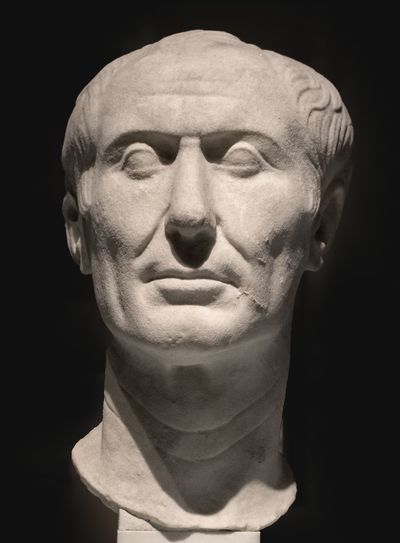
Julius Caesar
General · Ancient
83.3Total
Basic Information
Born
-642
-100
Died
-617
-44
Era
Ancient
Ancient
Nationality
Roman Kingdom
Roman Republic
Occupation
Emperor
General
Civilization
Western
Western
Score Comparison
Military (10%)
39.7
88.0
Political (20%)
49.0
78.0
Influence (20%)
68.5
85.0
Legacy (20%)
61.9
82.0
Leadership (15%)
42.0
82.0
Strategy (15%)
58.8
88.0
TOTAL
55.0
83.3
Rankings
🥇
Julius CaesarLeader
Mil: 88.0Pol: 78.0Inf: 85.0
83.3
🥈
Ancus Marcius
Mil: 39.7Pol: 49.0Inf: 68.5
55.0
+28.3 behind
How This Comparison Works
Algorithm
Each figure is scored on 6 dimensions (0—100 scale) based on structured historical data: Military (10%), Political (20%), Influence (20%), Legacy (20%), Leadership (15%), Strategy (15%). The weighted total produces the final ranking.
Data Sources
Scores are computed from structured sub-indicators in the database. Scale factors adjust for era (Ancient ×0.85, Modern ×1.0) and civilization size (Eastern ×1.05, Other ×0.80) to account for differences in population and military scale.
Maximum 3 Figures
Comparisons are limited to 2—3 figures to ensure readability and statistical meaningfulness.
Error Margins
±5 points per dimension — Sub-scores are derived from historical records with inherent uncertainty. Two figures within 5 points on a dimension should be considered roughly equivalent in that area.
Total Score Accuracy
±3 points overall — The weighted combination of 6 dimensions produces a total score with approximately ±3 points of uncertainty. Differences of less than 3 points are not statistically significant— the figures are effectively tied.
Known Limitations
- Historical records are incomplete and uneven across civilizations
- Figures from oral-tradition societies may be underrepresented
- Occupation labels can misclassify multi-role figures
- Scores measure capability and impact, not moral character
- Quantitative scoring is a comparison tool, not absolute truth
Capability Radar
Military (10%) — Battles & Warfare
Battles
20
95
Win Rate
25
92
Expansion
35
97
Political (20%) — Governance & Reform
Reform
45
90
Diplomacy
35
85
Economy
50
82
Influence (20%) — Cultural & Global Reach
Cultural
30
88
Global
20
94
Legacy (20%) — Historical Impact
Historical
40
95
Longevity
35
96
Leadership (15%) — Power & Stability
Tenure
40
75
Stability
45
60
Strategy (15%) — Tactics & Innovation
Strategy
30
94
Tactics
20
96
Reform
15
88
Analysis will be generated on first visit.
Scores and timeline are available below. The page will refresh automatically when ready.
Ancus Marcius — Complete Timeline
640 BC
Foundation of OstiaOther◆ Major
Ancus Marcius founded the port city of Ostia at the mouth of the Tiber River. This colony served as Rome's primary naval base and commercial port, facilitating trade and military control over the Tyrrhenian Sea and the salt flats.
ColonizationPort CityRoman Trade
Impact: regionalconstructive
Construction of the Pons SubliciusCultural
Ancus Marcius ordered the construction of the Pons Sublicius, the first bridge across the Tiber River in Rome. This wooden bridge improved transportation and communication between Rome and the Janiculum hill, and became a strategic military structure.
InfrastructureBridgeTiber River
constructive
Annexation of the Janiculum HillOther
Ancus Marcius incorporated the Janiculum hill into the city of Rome, fortifying it with walls. This strategic hill on the west bank of the Tiber provided a defensive position and was used as a citadel against Etruscan threats.
Urban ExpansionFortificationJaniculum
constructive
Establishment of the Salt WorksOther
Ancus Marcius established state-controlled salt works near Ostia, securing a vital resource for Rome. Salt was essential for food preservation and trade, and this monopoly generated revenue and ensured supply for the growing Roman population.
Economic PolicySalt ProductionState Monopoly
Impact: nationalconstructive
630 BC
War with the LatinsWar◆ Major
Ancus Marcius waged war against the Latin tribes, defeating them and expanding Roman territory. He annexed several Latin towns and forcibly relocated their populations to Rome, increasing the city's population and extending Roman hegemony over Latium.
Roman ExpansionLatin WarTerritorial Gain
Impact: regional
Similar Comparisons
Comments & Discussion
Capitoline Salt-Bridge6/17/2026
Look, I get it—Ancus Marcius built the first bridge and salt works, but calling him a king on Caesar's level is like comparing a mud hut to the Colosseum. Marcius was a mythic admin, not a conqueror. Sure, he expanded Rome's territory a bit, but Caesar reshaped the entire Western world. One dug a ditch, the other crossed the Rubicon. Let's not pretend these are equal legacies.
史河钓客6/17/2026
拿安库斯·马基乌斯跟凯撒比,简直是把村长和皇帝搁一块儿聊。安库斯修桥铺路当然有点意思,但他统治的那四十来年,罗马本质上还是个小破村子。凯撒呢?一个人单枪匹马把元老院按在地上摩擦,硬生生把一个共和国拧成帝制。桥能运盐,但盐可买不来高卢。
LegionaryMetrics6/17/2026
Statistically, Caesar wins hands down: conquered 800+ cities, fought 50+ battles, wrote two best-selling war memoirs. Ancus Marcius? We have maybe three verified facts about his reign—built a bridge, a salt mine, and annexed a forest. That's not a king, that's a municipal manager with a good PR team. Put the data on a balance sheet, and Caesar's empire crushes Marcius's hamlet every time.
古典迷踪6/17/2026
你们太看重功业规模了。安库斯·马基乌斯在罗马尚处襁褓时建立制度,这份奠基意义远胜凯撒的扩张。凯撒踩在几百年征服的地基上大搞个人秀,而安库斯从零开始搞基建、立法、宗教秩序。没有他架那座桥,凯撒连过河都困难。论根基,安库斯才是真正的罗马之父。
BloodAndInk6/17/2026
Caesar wasn't just a conqueror—he was a writer who reshaped how we see power. His Commentaries are still studied as masterpieces of propaganda and narrative control. Ancus Marcius left behind a salt road and a wooden bridge. Great. Caesar left behind a blueprint for autocracy that emperors would follow for centuries. Who do you think has more impact on how we actually live today?