Loading...
Analysis will be generated on first visit.
Scores and timeline are available below. The page will refresh automatically when ready.
Carl Spaatz vs Qin Shi Huang
Qin Shi Huang leads by 3.9 pts · 2 figures compared
…

Carl Spaatz
General · Modern
79.6Total
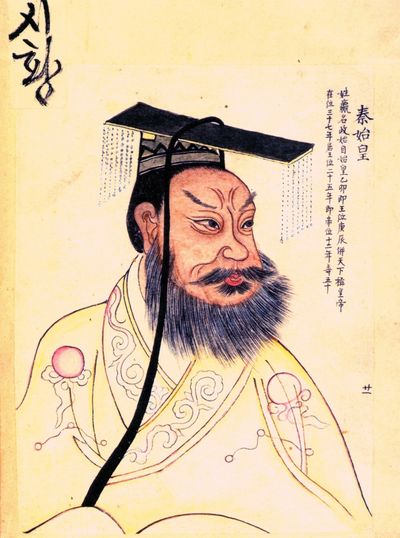
Qin Shi Huang
Emperor · Ancient
83.5Total
Basic Information
Born
1891
-259
Died
1974
-210
Era
Modern
Ancient
Nationality
United States
China
Occupation
General
Emperor
Civilization
Western
Eastern
Score Comparison
Military (10%)
86.6
80.0
Political (20%)
79.8
88.0
Influence (20%)
80.0
82.0
Legacy (20%)
75.0
85.0
Leadership (15%)
82.9
88.0
Strategy (15%)
77.2
75.0
TOTAL
79.6
83.5
Rankings
🥇
Qin Shi HuangLeader
Mil: 80.0Pol: 88.0Inf: 82.0
83.5
🥈
Carl Spaatz
Mil: 86.6Pol: 79.8Inf: 80.0
79.6
+3.9 behind
How This Comparison Works
Algorithm
Each figure is scored on 6 dimensions (0—100 scale) based on structured historical data: Military (10%), Political (20%), Influence (20%), Legacy (20%), Leadership (15%), Strategy (15%). The weighted total produces the final ranking.
Data Sources
Scores are computed from structured sub-indicators in the database. Scale factors adjust for era (Ancient ×0.85, Modern ×1.0) and civilization size (Eastern ×1.05, Other ×0.80) to account for differences in population and military scale.
Maximum 3 Figures
Comparisons are limited to 2—3 figures to ensure readability and statistical meaningfulness.
Error Margins
±5 points per dimension — Sub-scores are derived from historical records with inherent uncertainty. Two figures within 5 points on a dimension should be considered roughly equivalent in that area.
Total Score Accuracy
±3 points overall — The weighted combination of 6 dimensions produces a total score with approximately ±3 points of uncertainty. Differences of less than 3 points are not statistically significant— the figures are effectively tied.
Known Limitations
- Historical records are incomplete and uneven across civilizations
- Figures from oral-tradition societies may be underrepresented
- Occupation labels can misclassify multi-role figures
- Scores measure capability and impact, not moral character
- Quantitative scoring is a comparison tool, not absolute truth
Capability Radar
Military (10%) — Battles & Warfare
Battles
75
85
Win Rate
80
90
Expansion
85
90
Political (20%) — Governance & Reform
Reform
90
95
Diplomacy
75
75
Economy
60
90
Influence (20%) — Cultural & Global Reach
Cultural
55
95
Global
75
85
Legacy (20%) — Historical Impact
Historical
80
95
Longevity
70
95
Leadership (15%) — Power & Stability
Tenure
70
70
Stability
80
65
Strategy (15%) — Tactics & Innovation
Strategy
85
85
Tactics
70
80
Reform
90
95
Analysis will be generated on first visit.
Scores and timeline are available below. The page will refresh automatically when ready.
Carl Spaatz — Complete Timeline
1942 AD
Commanded Eighth Air Force in EnglandWar◆ Major
Spaatz commanded the Eighth Air Force in England, establishing the US strategic bombing capability in Europe. He built up the force from scratch and conducted the first US bombing missions against occupied Europe.
World War IIEighth Air ForceStrategic Bombing
Impact: regional
1944 AD
Commanded US Strategic Air Forces in EuropeWar◆ Major
Spaatz commanded the US Strategic Air Forces in Europe, directing the combined bomber offensive against Nazi Germany. He oversaw the bombing of oil refineries, transportation networks, and industrial targets.
World War IIStrategic BombingEurope
Impact: global
1945 AD
Commanded US Strategic Air Forces in the PacificWar◆ Major
Spaatz commanded the US Strategic Air Forces in the Pacific, overseeing the strategic bombing of Japan including the atomic bombings of Hiroshima and Nagasaki. He was responsible for the final air campaign against Japan.
World War IIAtomic BombStrategic Bombing
Impact: global
1947 AD
Appointed First Chief of Staff of the US Air ForcePolitical Action◆ Major
Spaatz was appointed the first Chief of Staff of the newly independent US Air Force. He oversaw the transition from the Army Air Forces to a separate service and shaped its early organization and doctrine.
Air ForceLeadershipPost-War
Impact: nationalconstructive
Qin Shi Huang — Complete Timeline
246 BC
Construction of the Mausoleum and Terracotta ArmyOther◆ Major
Qin Shi Huang commissioned a vast mausoleum complex near Xi'an, guarded by thousands of life-sized terracotta soldiers, horses, and chariots. The project employed hundreds of thousands of workers and reflected his obsession with immortality and imperial power.
Impact: global
230 BC
Conquest of the Six Warring StatesWar
From 230 to 221 BCE, Ying Zheng led the Qin state in a series of campaigns that conquered the Han, Zhao, Wei, Chu, Yan, and Qi states. This unified China under a single ruler for the first time, ending the Warring States period.
Impact: global
221 BC
Standardization of Writing, Currency, and MeasurementsReform◆ Major
Qin Shi Huang ordered the standardization of Chinese script, currency, and weights and measures across the unified empire. This facilitated administration, trade, and cultural integration, laying a foundation for future dynasties.
Impact: globalconstructive
Proclamation of the Qin DynastyPolitical Action
After conquering the last independent state, Ying Zheng declared himself Shi Huangdi (First Emperor), founding the Qin Dynasty. He adopted a new title to signify his supreme authority and initiated centralized imperial rule.
Impact: global
214 BC
Initiation of the Great Wall ConstructionOther◆ Major
Qin Shi Huang ordered the connection and extension of existing northern fortifications to create a unified defensive wall against nomadic Xiongnu raids. This project involved massive conscripted labor and became the precursor to the later Great Wall.
Impact: regional
213 BC
Burning of Books and Burying of ScholarsPolitical Action◆ Major
On the advice of Li Si, Qin Shi Huang ordered the burning of historical records and philosophical texts not aligned with Legalist doctrine. He also had 460 Confucian scholars buried alive to suppress dissent and consolidate ideological control.
Impact: nationaldestructive
Similar Comparisons
Comments & Discussion
EMPEROR'S SHADOW6/17/2026
Spaatz and Qin Shi Huang both built something that outlasted them, but the Chinese emperor's vision was terrifyingly total. The First Emperor standardized writing, currency, and axle widths across China—you literally couldn't drive a cart from one province to another without his decrees. Meanwhile, Spaatz spent decades arguing that bombers could win wars, only for nukes to make strategic bombing obsolete before his retirement. Who really left a deeper mark on history?
铁血史官6/17/2026
拿空军司令跟千古一帝比,简直是对秦始皇的侮辱。Spaatz指挥B-29轰炸东京确实狠,但秦军坑杀四十万赵卒的规模,半个世纪后的战略轰炸总和才勉强追上。而且,秦始皇统一文字度量衡,这影响延续两千年;空军独立成军不过七十年,无人机时代都快把飞行员淘汰了。论硬核程度,差距不是一星半点。
CONTRARIAN ANALYST6/17/2026
Everyone's romanticizing Qin Shi Huang, but let's talk accounting. The Terracotta Army, the Great Wall, the road network—these projects bankrupted the state and required brutal conscription that killed millions. Spaatz's USAAF had a budget that was 12% of US GDP in 1944 and still left America prosperous. The First Emperor's unification was a forced march through human misery; Spaatz actually delivered air superiority without collapsing his country's economy. Efficiency matters.
冷兵器迷6/17/2026
你们都被数字骗了。Spaatz的战略轰炸,号称精准打击工业目标,结果东京大轰炸平民死亡超十万,广岛原子弹杀八万人——这叫文明战争?秦始皇修长城征发三十万民夫,是有死亡,但那是为了防御匈奴的长期国家安全。再说,秦朝法律严格到连马路边撒尿都砍手,确实暴力,但人家至少明着来。美式空中屠杀冠以"战略"之名,更伪善。