Loading...
Analysis will be generated on first visit.
Scores and timeline are available below. The page will refresh automatically when ready.
Demosthenes vs Qin Shi Huang
Qin Shi Huang leads by 8.8 pts · 2 figures compared
…

Demosthenes
Politician · Ancient
74.7Total
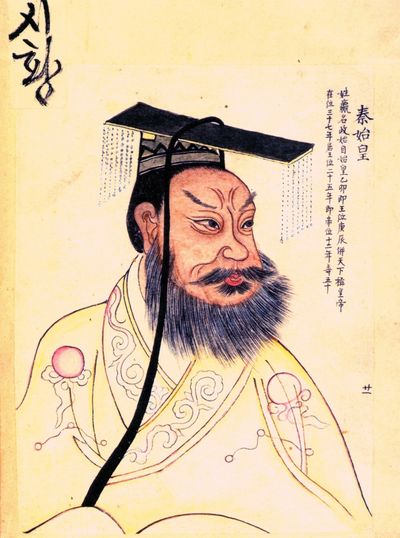
Qin Shi Huang
Emperor · Ancient
83.5Total
Basic Information
Born
-384
-259
Died
-322
-210
Era
Ancient
Ancient
Nationality
Greece
China
Occupation
Politician
Emperor
Civilization
Western
Eastern
Score Comparison
Military (10%)
64.5
80.0
Political (20%)
72.0
88.0
Influence (20%)
88.0
82.0
Legacy (20%)
79.0
85.0
Leadership (15%)
72.0
88.0
Strategy (15%)
64.3
75.0
TOTAL
74.7
83.5
Rankings
🥇
Qin Shi HuangLeader
Mil: 80.0Pol: 88.0Inf: 82.0
83.5
🥈
Demosthenes
Mil: 64.5Pol: 72.0Inf: 88.0
74.7
+8.8 behind
How This Comparison Works
Algorithm
Each figure is scored on 6 dimensions (0—100 scale) based on structured historical data: Military (10%), Political (20%), Influence (20%), Legacy (20%), Leadership (15%), Strategy (15%). The weighted total produces the final ranking.
Data Sources
Scores are computed from structured sub-indicators in the database. Scale factors adjust for era (Ancient ×0.85, Modern ×1.0) and civilization size (Eastern ×1.05, Other ×0.80) to account for differences in population and military scale.
Maximum 3 Figures
Comparisons are limited to 2—3 figures to ensure readability and statistical meaningfulness.
Error Margins
±5 points per dimension — Sub-scores are derived from historical records with inherent uncertainty. Two figures within 5 points on a dimension should be considered roughly equivalent in that area.
Total Score Accuracy
±3 points overall — The weighted combination of 6 dimensions produces a total score with approximately ±3 points of uncertainty. Differences of less than 3 points are not statistically significant— the figures are effectively tied.
Known Limitations
- Historical records are incomplete and uneven across civilizations
- Figures from oral-tradition societies may be underrepresented
- Occupation labels can misclassify multi-role figures
- Scores measure capability and impact, not moral character
- Quantitative scoring is a comparison tool, not absolute truth
Capability Radar
Military (10%) — Battles & Warfare
Battles
53
85
Win Rate
60
90
Expansion
64
90
Political (20%) — Governance & Reform
Reform
30
95
Diplomacy
70
75
Economy
20
90
Influence (20%) — Cultural & Global Reach
Cultural
85
95
Global
70
85
Legacy (20%) — Historical Impact
Historical
80
95
Longevity
85
95
Leadership (15%) — Power & Stability
Tenure
40
70
Stability
20
65
Strategy (15%) — Tactics & Innovation
Strategy
65
85
Tactics
65
80
Reform
74
95
Analysis will be generated on first visit.
Scores and timeline are available below. The page will refresh automatically when ready.
Demosthenes — Complete Timeline
351 BC
First Philippic (351 BC)Political Action◆ Major
Demosthenes delivered his first speech against Philip II of Macedon, warning Athenians of the threat posed by Macedonian expansion. He urged Athens to take military action and prepare for war, marking the beginning of his lifelong opposition to Philip.
OratoryAnti-MacedonianAthens
Impact: national
338 BC
Battle of Chaeronea (338 BC)War
Demosthenes fought as a hoplite in the Athenian army at Chaeronea against Philip II of Macedon. The decisive Macedonian victory ended Greek independence and established Macedonian hegemony. Demosthenes fled the battlefield, but continued to resist Macedonian rule.
Macedonian ConquestBattleGreek Defeat
Impact: regionaltragic
330 BC
On the Crown (330 BC)Political Action◆ Major
Demosthenes delivered his most famous speech, 'On the Crown,' defending his political career against attacks by Aeschines. The speech successfully argued for his patriotic service and resulted in Aeschines' exile, solidifying Demosthenes' reputation as Athens' greatest orator.
OratoryLegal SpeechAthens
Impact: national
324 BC
The Harpalus Affair (324 BC)Political Action◆ Major
Demosthenes was accused of accepting bribes from Harpalus, Alexander's fugitive treasurer. He was convicted, fined 50 talents, and imprisoned. He later escaped and went into exile, a major setback in his political career.
ScandalExileCorruption
Impact: nationaltragic
322 BC
Death by Poison (322 BC)Other◆ Major
After Athens' defeat in the Lamian War, Demosthenes was condemned to death by the pro-Macedonian regime. He fled to the Temple of Poseidon on Calauria and took poison to avoid capture, ending his life as a symbol of resistance to Macedonian domination.
DeathResistanceMacedon
Impact: nationaltragic
Qin Shi Huang — Complete Timeline
246 BC
Construction of the Mausoleum and Terracotta ArmyOther◆ Major
Qin Shi Huang commissioned a vast mausoleum complex near Xi'an, guarded by thousands of life-sized terracotta soldiers, horses, and chariots. The project employed hundreds of thousands of workers and reflected his obsession with immortality and imperial power.
Impact: global
230 BC
Conquest of the Six Warring StatesWar
From 230 to 221 BCE, Ying Zheng led the Qin state in a series of campaigns that conquered the Han, Zhao, Wei, Chu, Yan, and Qi states. This unified China under a single ruler for the first time, ending the Warring States period.
Impact: global
221 BC
Standardization of Writing, Currency, and MeasurementsReform◆ Major
Qin Shi Huang ordered the standardization of Chinese script, currency, and weights and measures across the unified empire. This facilitated administration, trade, and cultural integration, laying a foundation for future dynasties.
Impact: globalconstructive
Proclamation of the Qin DynastyPolitical Action
After conquering the last independent state, Ying Zheng declared himself Shi Huangdi (First Emperor), founding the Qin Dynasty. He adopted a new title to signify his supreme authority and initiated centralized imperial rule.
Impact: global
214 BC
Initiation of the Great Wall ConstructionOther◆ Major
Qin Shi Huang ordered the connection and extension of existing northern fortifications to create a unified defensive wall against nomadic Xiongnu raids. This project involved massive conscripted labor and became the precursor to the later Great Wall.
Impact: regional
213 BC
Burning of Books and Burying of ScholarsPolitical Action◆ Major
On the advice of Li Si, Qin Shi Huang ordered the burning of historical records and philosophical texts not aligned with Legalist doctrine. He also had 460 Confucian scholars buried alive to suppress dissent and consolidate ideological control.
Impact: nationaldestructive
Similar Comparisons
Comments & Discussion
🏛️Spear-Tongue6/17/2026
Demosthenes with pebbles in his mouth beats a clay army any day. Qin Shi Huang spent decades and thousands of lives building a mausoleum for himself—Emperor-Level vanity project. Meanwhile, Demosthenes turned a speech impediment into a political superpower with zero human sacrifice. The First Emperor's immortality is a museum exhibit; Demosthenes' words still echo in every parliament. I'll take the stammering rebel over the silent dictator.
🏺Bronze-Word6/17/2026
说秦始皇只靠武力统一天下的人,根本不懂历史。他推行书同文、车同轨,用标准度量衡捏合了七国碎片——这比德摩斯梯尼的演讲实用多了。雅典民主死在马其顿铁蹄下,而秦始皇的帝国框架用了两千年。后者装了陶瓷军队,前者只有墨水。给老子选,我宁可住长城内,不要碎在海边的伊索克拉底式挽歌里。
📜Pebble-Politic6/17/2026
Demosthenes bit poisoned reeds, Qin bit real bullets of rebellion like Lao Ai. But look at the scale: one guy ranted against Philip II with some nice metaphors about "freedom," while the other crushed rival states, standardized script, and linked canals. Demosthenes preserved his ego in speech anthologies; Qin preserved China. Sorry, orator bro—your Philippics didn't stop a single Macedonian phalanx.
🕯️Tomb-Talker6/17/2026
德摩斯梯尼是民主制的最后叹息,而秦始皇是帝国的第一声啼哭。前者靠记忆中的雅典荣耀维生,后者靠法家与青铜剑重构现实。历史不是悲剧对决:雅典输给马其顿,是因为德摩斯梯尼只喊了"团结"却从未铸成真正的力量——秦始皇却把六国熔成一座硬核机器。别跟我提殉葬;那个时代谁不血腥?问题是:谁的血结了硕果?
⚖️Clay-Stutter6/17/2026
Let's be real—both were control freaks. Demosthenes micro-managed his own voice till he dropped dead from poison, Qin micro-managed an entire civilization from the grave. The difference? Demosthenes' Athens vanished under Roman boots, while Qin's blueprint outlived his dynasty. One crafted perfect sentences, the other a perfect state. I'll take the emperor's long-term ROI over the orator's fleeting applause. Mortality isn't a speech—it's infrastructure.