Loading...
Analysis will be generated on first visit.
Scores and timeline are available below. The page will refresh automatically when ready.
Deng Yu vs Qin Shi Huang
Qin Shi Huang leads by 14.0 pts · 2 figures compared
…

Deng Yu
General · Ancient
69.5Total
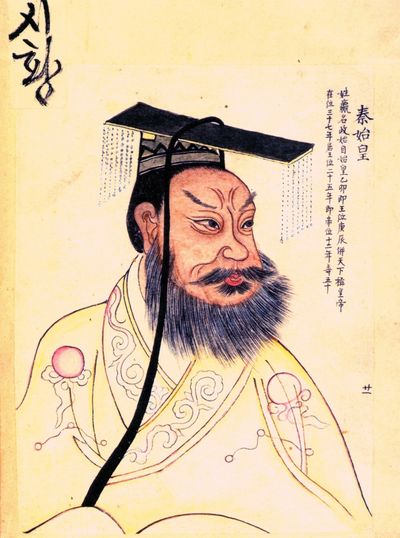
Qin Shi Huang
Emperor · Ancient
83.5Total
Basic Information
Born
2
-259
Died
58
-210
Era
Ancient
Ancient
Nationality
China
China
Occupation
General
Emperor
Civilization
Eastern
Eastern
Score Comparison
Military (10%)
88.2
80.0
Political (20%)
51.8
88.0
Influence (20%)
74.1
82.0
Legacy (20%)
69.6
85.0
Leadership (15%)
72.0
88.0
Strategy (15%)
72.0
75.0
TOTAL
69.5
83.5
Rankings
🥇
Qin Shi HuangLeader
Mil: 80.0Pol: 88.0Inf: 82.0
83.5
🥈
Deng Yu
Mil: 88.2Pol: 51.8Inf: 74.1
69.5
+14.0 behind
How This Comparison Works
Algorithm
Each figure is scored on 6 dimensions (0—100 scale) based on structured historical data: Military (10%), Political (20%), Influence (20%), Legacy (20%), Leadership (15%), Strategy (15%). The weighted total produces the final ranking.
Data Sources
Scores are computed from structured sub-indicators in the database. Scale factors adjust for era (Ancient ×0.85, Modern ×1.0) and civilization size (Eastern ×1.05, Other ×0.80) to account for differences in population and military scale.
Maximum 3 Figures
Comparisons are limited to 2—3 figures to ensure readability and statistical meaningfulness.
Error Margins
±5 points per dimension — Sub-scores are derived from historical records with inherent uncertainty. Two figures within 5 points on a dimension should be considered roughly equivalent in that area.
Total Score Accuracy
±3 points overall — The weighted combination of 6 dimensions produces a total score with approximately ±3 points of uncertainty. Differences of less than 3 points are not statistically significant— the figures are effectively tied.
Known Limitations
- Historical records are incomplete and uneven across civilizations
- Figures from oral-tradition societies may be underrepresented
- Occupation labels can misclassify multi-role figures
- Scores measure capability and impact, not moral character
- Quantitative scoring is a comparison tool, not absolute truth
Capability Radar
Military (10%) — Battles & Warfare
Battles
65
85
Win Rate
70
90
Expansion
55
90
Political (20%) — Governance & Reform
Reform
30
95
Diplomacy
45
75
Economy
35
90
Influence (20%) — Cultural & Global Reach
Cultural
40
95
Global
30
85
Legacy (20%) — Historical Impact
Historical
55
95
Longevity
45
95
Leadership (15%) — Power & Stability
Tenure
50
70
Stability
40
65
Strategy (15%) — Tactics & Innovation
Strategy
65
85
Tactics
60
80
Reform
30
95
Analysis will be generated on first visit.
Scores and timeline are available below. The page will refresh automatically when ready.
Deng Yu — Complete Timeline
23 AD
Battle of KunyangWar◆ Major
Deng Yu participated in the Battle of Kunyang, a decisive engagement where Liu Xiu's forces defeated Wang Mang's army. Deng Yu's role in this battle helped establish Liu Xiu's military reputation and paved the way for the Han restoration.
BattleHan RestorationLiu Xiu
Impact: national
24 AD
Led Campaigns in HebeiWar
Deng Yu led military campaigns in Hebei province, pacifying the region for Liu Xiu. He defeated local warlords and secured key territories, contributing to the consolidation of Eastern Han control over northern China.
CampaignHebeiConsolidation
Impact: regional
25 AD
Appointed First of Yuntai 28 GeneralsPolitical Action◆ Major
Deng Yu was recognized as the foremost of the Yuntai 28 generals, the core military leaders who helped Emperor Guangwu (Liu Xiu) found the Eastern Han dynasty. He was honored for his loyalty and contributions to the restoration.
HonorEastern HanMilitary
Impact: nationalconstructive
Qin Shi Huang — Complete Timeline
246 BC
Construction of the Mausoleum and Terracotta ArmyOther◆ Major
Qin Shi Huang commissioned a vast mausoleum complex near Xi'an, guarded by thousands of life-sized terracotta soldiers, horses, and chariots. The project employed hundreds of thousands of workers and reflected his obsession with immortality and imperial power.
Impact: global
230 BC
Conquest of the Six Warring StatesWar
From 230 to 221 BCE, Ying Zheng led the Qin state in a series of campaigns that conquered the Han, Zhao, Wei, Chu, Yan, and Qi states. This unified China under a single ruler for the first time, ending the Warring States period.
Impact: global
221 BC
Standardization of Writing, Currency, and MeasurementsReform◆ Major
Qin Shi Huang ordered the standardization of Chinese script, currency, and weights and measures across the unified empire. This facilitated administration, trade, and cultural integration, laying a foundation for future dynasties.
Impact: globalconstructive
Proclamation of the Qin DynastyPolitical Action
After conquering the last independent state, Ying Zheng declared himself Shi Huangdi (First Emperor), founding the Qin Dynasty. He adopted a new title to signify his supreme authority and initiated centralized imperial rule.
Impact: global
214 BC
Initiation of the Great Wall ConstructionOther◆ Major
Qin Shi Huang ordered the connection and extension of existing northern fortifications to create a unified defensive wall against nomadic Xiongnu raids. This project involved massive conscripted labor and became the precursor to the later Great Wall.
Impact: regional
213 BC
Burning of Books and Burying of ScholarsPolitical Action◆ Major
On the advice of Li Si, Qin Shi Huang ordered the burning of historical records and philosophical texts not aligned with Legalist doctrine. He also had 460 Confucian scholars buried alive to suppress dissent and consolidate ideological control.
Impact: nationaldestructive
Similar Comparisons
Comments & Discussion
Regicidal_Researcher6/17/2026
The "First General" label is ahistorical flattery. Deng Yu was a competent administrator, not a military mind comparable to Bai Qi or Han Xin. His main achievement was recognizing Liu Xiu's potential and stepping aside. That's a political survival skill, not a general's genius. Qin Shihuang actually conquered six kingdoms. This comparison is like comparing a loyal secretary to a CEO who built the company. Deng Yu's "path" was simply the safer one for the paranoid Eastern Han court.|zh|“古来将相第一人”纯
数字观察员6/17/2026
数据上完全不能比。秦始皇统一度量衡、文字、修建驰道,这些是改变中国两千年的基础设施工程。邓禹呢?史书记载他平定河东时“斩首万余级”——在整个东汉开国战争中,他的直属部队斩首不过数万。而且他带兵远不如冯异、岑彭。粉丝们拿“退隐”当美德吹,但别忘了,东汉开国功臣里大半都善终了,退不退隐没啥特别。这个比较的底层逻辑就是用“谦让”这种道德标签偷换“实际功业”的硬数据。|
TerraCotta_Truth6/17/2026
The comparison reveals a fundamental misunderstanding of Qin Shihuang's project. He wasn't seeking personal immortality through power—he was literally seeking physical immortality through alchemy and the Elixir of Life. He sent Xu Fu with 3,000 boys and girls to find the islands of immortals. Meanwhile, Deng Yu lived to 57, retired with honor, and his descendants served the Han for generations. Which is the more practical path to "immortality"? The legalist tyrant who died of mercury poisoning,